
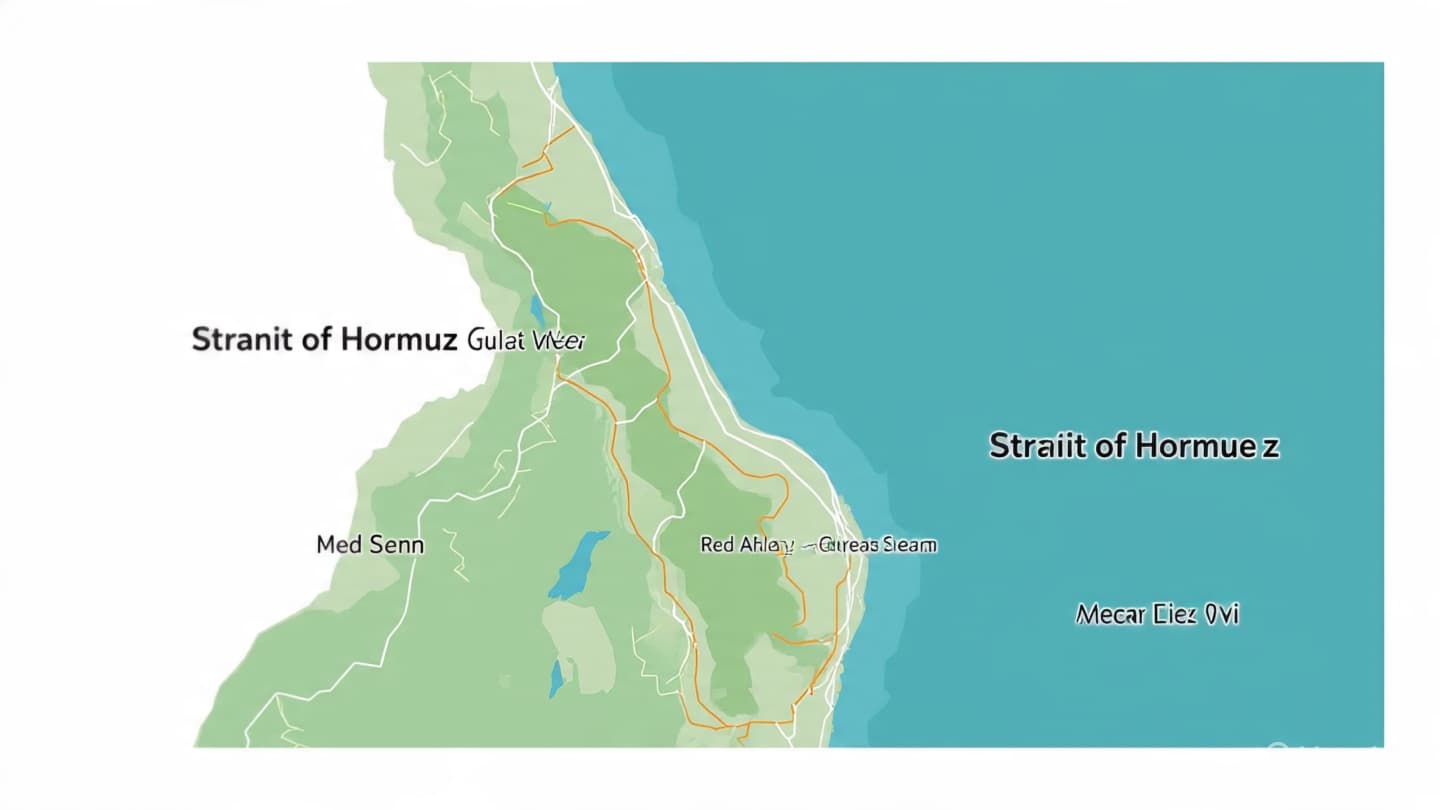
Key Highlights
- Iran issues ultimatum regarding potential closure of the Strait of Hormuz and Red Sea.
- The Red Sea is crucial for global shipping, linking Asia and Europe.
- Military analysts warn of significant disruptions even from partial closures.
Iran’s recent ultimatum to the United States, warning of a potential closure of the Strait of Hormuz and extending threats toward the Red Sea, marks a significant escalation in rhetoric. This warning suggests that pressure in one maritime corridor could reverberate across multiple routes, impacting global trade and security.
The Red Sea, while geographically distinct from the Persian Gulf, plays a critical role in international shipping. It connects to the Suez Canal, forming a vital link between Asia and Europe. Any disruption in this area would have immediate and far-reaching consequences for international trade, potentially leading to increased shipping costs and delays.
Iranian officials have framed their warning as a response to perceived escalations by the United States. By signaling a broader scope of potential disruption, Tehran appears to be leveraging its strategic geography as a form of deterrence. This tactic underscores the interconnectedness of global maritime routes, where tensions in one area can have cascading effects elsewhere.
Military analysts note that while closing major waterways is logistically complex, even partial disruptions can create significant uncertainty in global shipping. Shipping companies may be forced to reroute vessels, insurers may raise premiums, and supply chains could face delays, all of which would ripple through the global economy.
The United States and its allies maintain a strong naval presence in both the Persian Gulf and the Red Sea, emphasizing the importance of freedom of navigation. However, the challenge lies not only in ensuring physical security but also in managing perceptions and preventing escalation into broader conflict.
Regional stakeholders, including countries bordering the Red Sea, have expressed concern over being drawn into a wider conflict. Stability in these waters is essential not only for global trade but also for the economies of the nations involved. The potential for conflict in such a critical area raises alarms about the implications for regional security and economic stability.
Historically, maritime chokepoints have served as both gateways and flashpoints for conflict. The current situation highlights how interconnected these routes have become, where tension in one area can echo across another. As the situation develops, the international community will be closely monitoring Iran's actions and the responses from the United States and its allies.
For now, the threat remains largely rhetorical. Yet its implications are tangible, reminding observers that in a globalized world, no sea is entirely distant from another. The unfolding events will likely shape the geopolitical landscape in the coming months, with significant repercussions for global trade and security.
Published by Banx Network. This article is part of the Banx decentralized media programme, powered by the BXE token on the XRP Ledger.



