

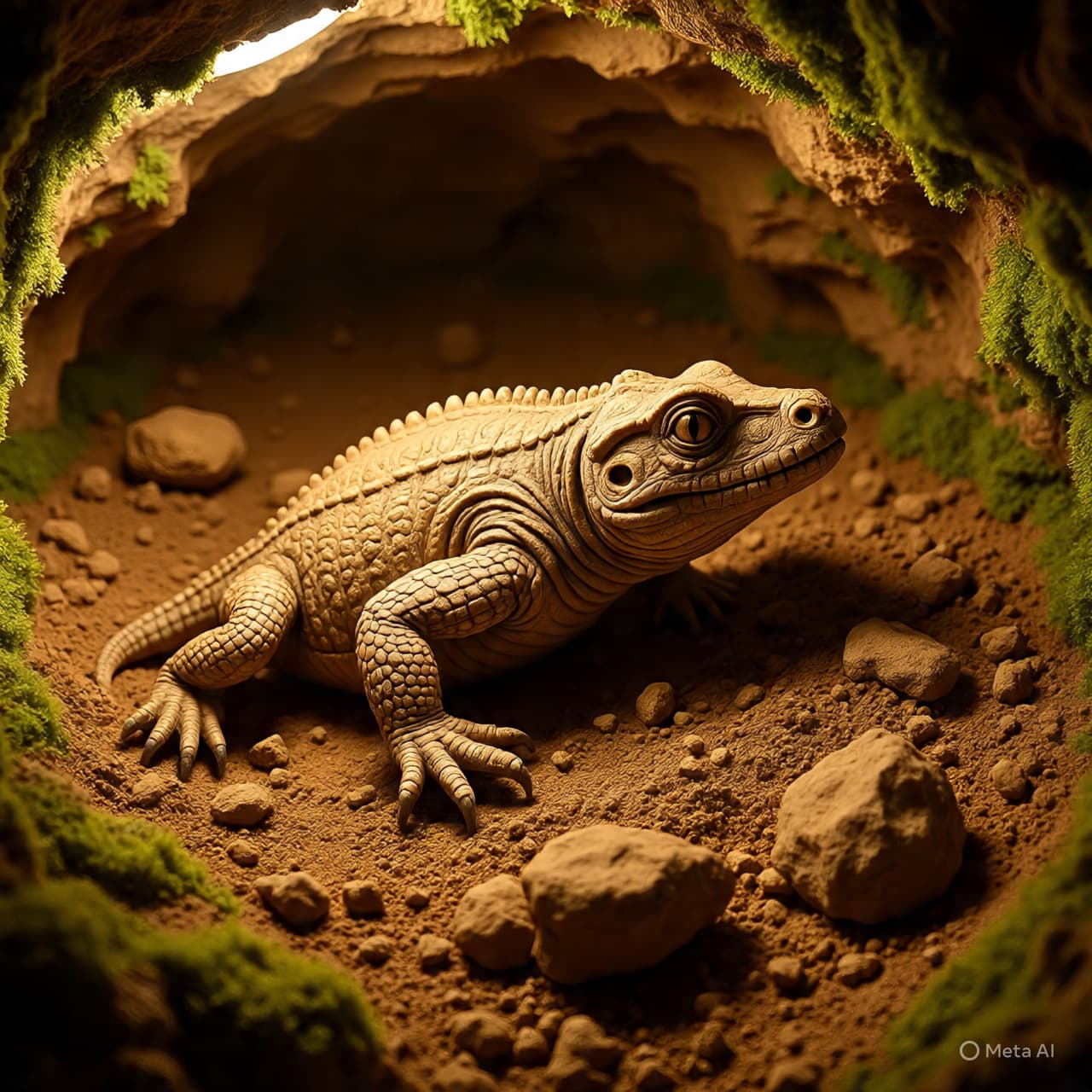
Key Highlights
- Discovery:A 289 million-year-old mummified reptile fossil found in Oklahoma.
- Significance:The fossil provides insights into the evolution of respiratory systems in early vertebrates.
- Preservation:Unique conditions in a cave environment allowed for the preservation of soft tissues.
The recent discovery of a mummified reptile fossil in an Oklahoma cave has captivated the scientific community, offering a rare glimpse into the evolutionary history of breathing. This fossil, dating back approximately 289 million years, is not just a relic of the past; it serves as a crucial piece in understanding how early vertebrates adapted to life on land.
Unlike typical fossils that primarily consist of bones, this specimen retains soft tissues, which are exceedingly rare in the fossil record. Researchers are particularly interested in these preserved features, as they provide vital clues about the respiratory systems of ancient reptiles. The fossil's anatomy suggests that these early creatures were beginning to develop more efficient breathing mechanisms, a significant evolutionary advancement that paved the way for the respiratory systems of modern mammals.
The structural characteristics of the fossil, including the arrangement of ribs and inferred musculature, indicate a transition from primitive breathing methods to more sophisticated systems. This challenges previous assumptions that complex respiratory adaptations emerged much later in the evolutionary timeline. The findings suggest that the evolutionary pressure for efficient respiration may have been present much earlier than previously thought, driven by the demands of a changing environment.
The cave environment where the fossil was discovered played a pivotal role in its preservation. The low oxygen levels, stable temperatures, and mineral-rich conditions contributed to the slow decomposition of the specimen, allowing for the retention of delicate soft tissues. Such natural preservation is uncommon, making this fossil an invaluable resource for scientists aiming to fill gaps in our understanding of vertebrate evolution.
As researchers continue to analyze the fossil using advanced imaging technologies like CT scanning and digital modeling, they hope to uncover more details about the respiratory systems of early reptiles. These modern techniques enable scientists to explore internal structures without causing damage, revealing insights that were previously inaccessible.
The implications of this discovery extend beyond anatomical insights; they prompt a broader reflection on the nature of evolution itself. The ability to breathe, a function we often take for granted, is the result of countless incremental changes over millions of years. Each adaptation, from the positioning of ribs to the development of muscles, tells a story of survival and adaptation.
In conclusion, the Oklahoma mummified reptile fossil serves as a bridge between ancient life and modern understanding. Its significance lies not only in its age but also in the evolutionary innovations it represents, which are part of the biological heritage shared by all air-breathing animals today. This fossil invites us to appreciate the profound continuity of life and the intricate history that has shaped our existence.
Published by Banx Network. This article is part of the Banx decentralized media programme, powered by the BXE token on the XRP Ledger.




