
Key Highlights
- Incident:A bus plunged off a cliff in Boyacá, Colombia, resulting in nine fatalities.
- Rescue Efforts:Emergency teams recovered bodies and assisted injured survivors.
- Investigation:Authorities are examining potential causes, including mechanical failure and road conditions.
On Monday afternoon, a devastating accident occurred in Boyacá, Colombia, when an inter-municipal passenger bus veered off a mountain cliff, leading to the tragic loss of nine lives. The bus was navigating a narrow highway when it lost control on a sharp bend, plummeting hundreds of meters into a steep ravine. Eyewitnesses reported that there were no braking marks on the asphalt, raising concerns about the circumstances leading to the crash.
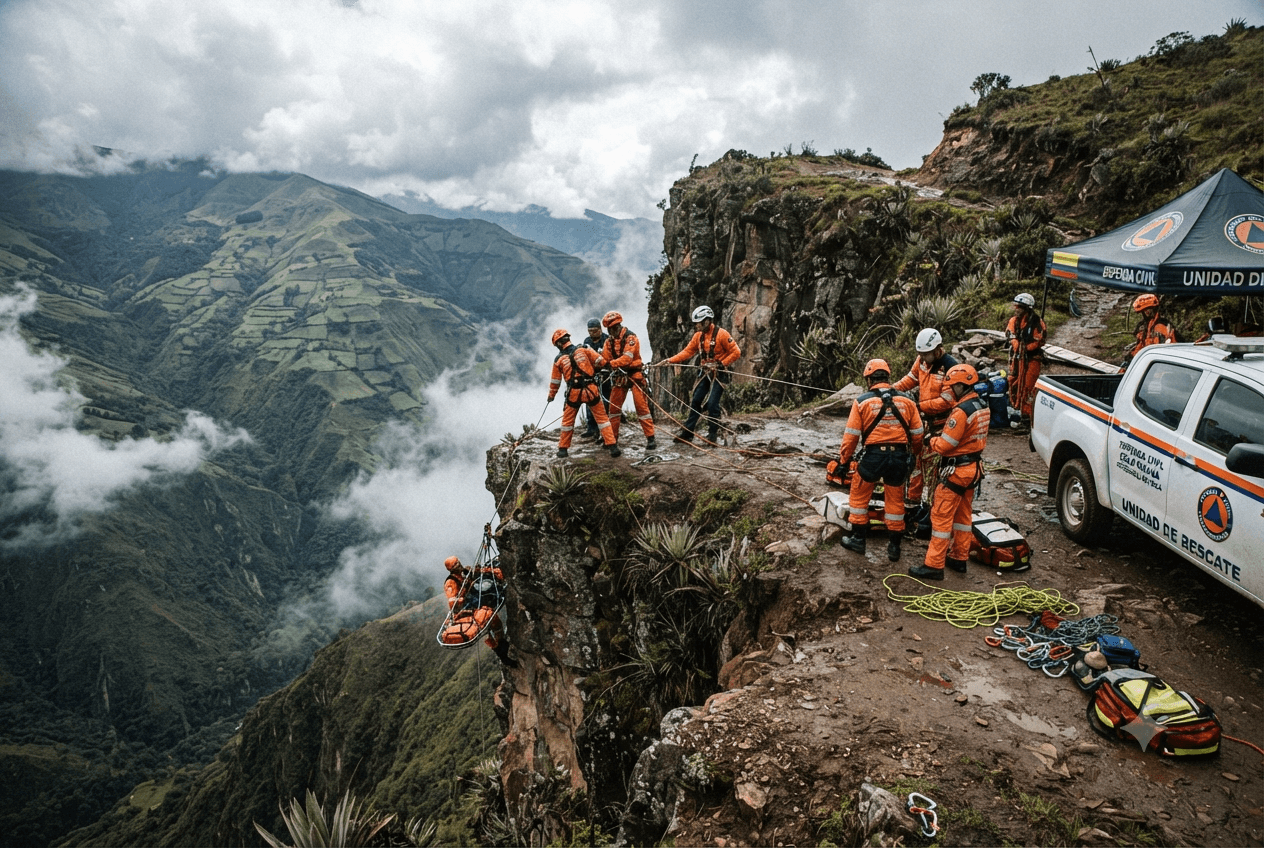
Rescue teams, including first responders and civil defense volunteers, faced challenging conditions as they rappelled down the rocky slope to reach the wreckage. Heavy fog and continuous mist severely limited visibility, complicating their efforts. Using manual cutting tools, rescuers worked tirelessly to extract trapped passengers from the mangled metal of the bus. Several critically injured survivors were hoisted up the cliff face using rescue harnesses and ropes, while local hospitals activated mass casualty protocols to prepare for incoming trauma patients.
As medical helicopters transported the most severely injured individuals to regional clinical centers, relatives anxiously gathered outside hospital emergency wards, seeking updates on their loved ones. Health ministry officials confirmed that at least twelve passengers suffered from severe polytrauma, highlighting the gravity of the situation.
In response to the accident, transport ministry inspectors arrived at the crash site to assess road conditions and the integrity of safety barriers. Initial police reports suggested that mechanical failure or excessive speed could have contributed to the incident. Local residents expressed frustration over the absence of guardrails along this frequently traveled route, emphasizing the need for infrastructure improvements. Commercial transport unions had previously petitioned regional authorities for upgrades to enhance safety on the road.
Investigators from the prosecutor's office cordoned off the departure terminal in the city where the bus originated, examining vehicle maintenance logs and driver shift schedules. Transport company executives refrained from making immediate statements to reporters, while forensic examiners began the process of identifying the recovered victims at the regional forensic morgue. The regional governor expressed condolences to the families affected and promised financial assistance for funeral expenses.
As recovery operations continued, civil defense directors warned motorists to exercise extreme caution when navigating high-altitude Andean passes, especially during wet weather conditions. Heavy tow trucks were deployed to prepare for the hoisting of the bus chassis, and state authorities maintained the closure of the mountain route to civilian traffic.
In light of the tragedy, federal transit authorities announced a comprehensive audit of all inter-municipal passenger carriers operating in the Andean region. Industry groups cautioned that sudden regulatory crackdowns could disrupt vital supply and travel routes. Independent safety experts pointed to systemic underfunding of regional highway maintenance as a significant factor contributing to frequent accidents. Lawmakers have scheduled an emergency congressional hearing to address national transportation safety standards, aiming to prevent future tragedies.
As evening shadows settled over the canyon, recovery crews continued their work under portable floodlights. Heavy excavation equipment arrived at the rim to stabilize the unstable slope above the wreckage. Investigators confirmed that flight data and GPS recorders recovered from the vehicle were sent to forensic labs for analysis. The highway closure remains indefinite as authorities conduct a thorough structural hazard assessment to ensure the safety of the area.
Published by Banx Network. This article is part of the Banx decentralized media programme, powered by the BXE token on the XRP Ledger.



