Bogotá, Colombia—An inter-municipal passenger bus carrying more than twenty passengers left the roadway and plunged down a steep sixty-meter ravine in rural Cundinamarca on Sunday afternoon, killing seven passengers and injuring fifteen others. Emergency medical units, highway patrol units, and local fire departments responded to the crash site shortly after eyewitnesses reported seeing the public transport vehicle lose control along a sharp curve and collapse over the unpaved highway shoulder.
The impact demolished the passenger cabin, leaving the wreckage overturned at the bottom of a densely vegetated gorge. Extrication crews deployed hydraulic rescue tools to cut through twisted sheet metal and structural framework to reach passengers trapped inside the crushed chassis. Paramedics established a triage zone along the bank of a small creek at the base of the abyss to stabilize severe trauma victims before hoisting them up the steep embankment using ropes and specialized basket stretchers.
Fifteen surviving passengers were transported to regional medical facilities in critical and moderate conditions, with several suffering complex fractures, severe head trauma, and internal injuries. Highway police commanders closed the mountain pass in both directions to facilitate the positioning of emergency cranes, heavy ambulances, and rescue vehicles along the narrow roadway shoulder. Early field reports indicate that environmental conditions at the time of the incident included dense fog and slick road surfaces caused by continuous mountain mist.
"The extraction process proved extremely hazardous due to the steep slope gradient and loose gravel conditions along the embankment," stated an operational commander from the Cundinamarca Fire Department. "Rescue personnel worked anchored to safety lines while deploying mechanical cutters to free victims pinned inside the primary seating section."
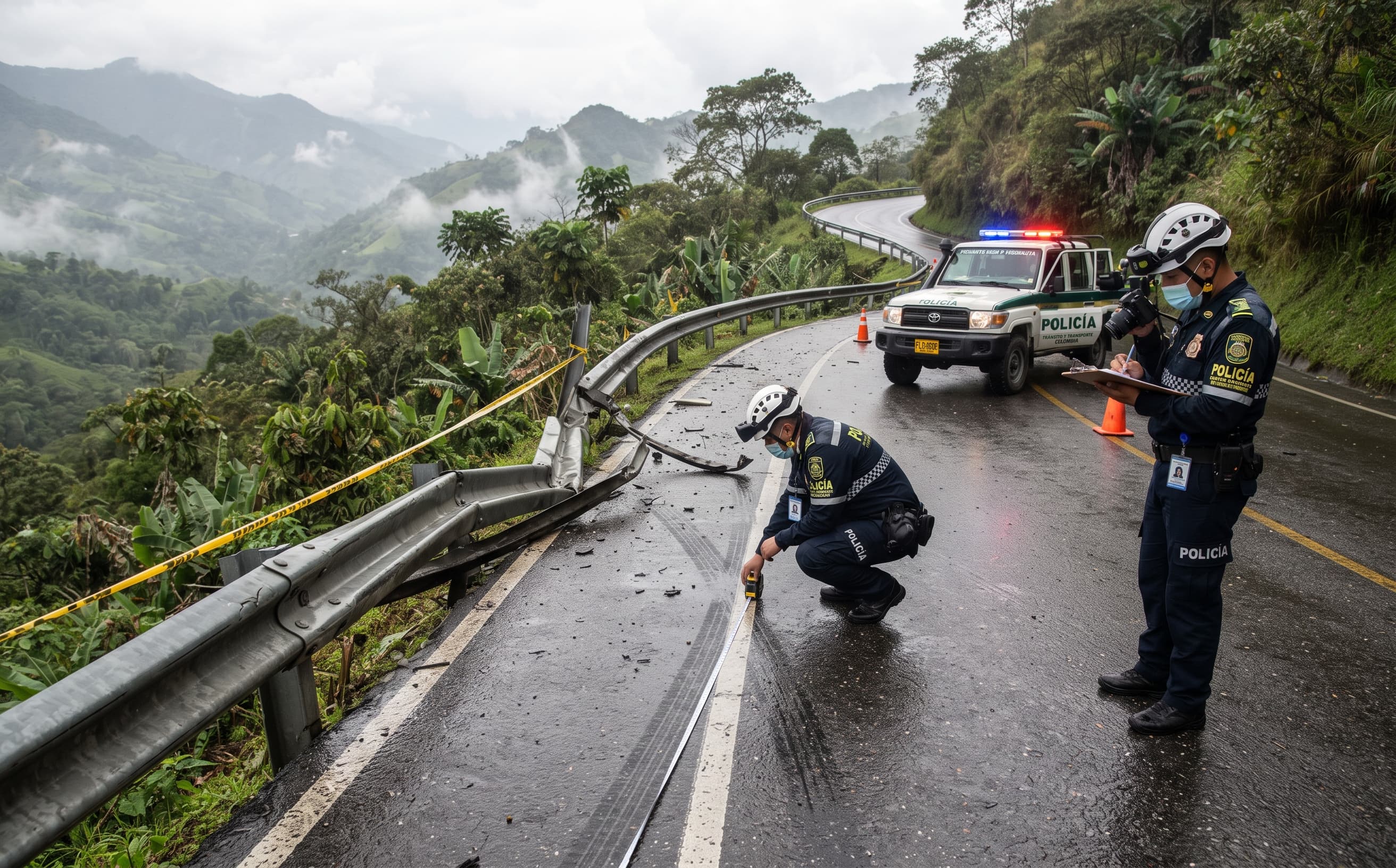
Traffic accident investigators from the national police service arrived at the scene to collect physical evidence, measure skid marks along the asphalt, and examine the braking mechanisms of the wreckage. Authorities have not yet determined whether mechanical failure, road deterioration, driver fatigue, or an operational error caused the vehicle to veer off the designated transit lane. The transit company's operational credentials, maintenance logs, and vehicle inspection records have been seized by prosecutors for formal regulatory review.
The local municipal hospital activated its maximum emergency protocol to handle the sudden inflow of trauma patients, calling in off-duty surgical teams and intensive care specialists. Medical directors reported that three of the injured passengers required immediate high-complexity surgical intervention upon arrival at the emergency ward. Identity verification procedures for the seven deceased victims are currently underway at the site under the supervision of judicial police forensic teams.
Heavy towing equipment arrived at the mountain ridge late in the afternoon to initiate the recovery of the destroyed vehicle chassis from the ravine bottom. Field technicians secured steel winch cables around the main axles of the bus to prevent further sliding toward the riverbed while forensic investigators finished collecting evidence from the interior of the cabin. Local transit authorities reported long vehicular backups along the corridor as recovery crews occupied the primary lane of travel.
Community members living near the crash site were among the first to descend the steep slope to offer assistance to injured passengers before professional emergency teams arrived. Local leaders emphasized that the specific stretch of roadway has long lacked steel safety guardrails despite steep drop-offs and frequent low-visibility weather patterns. Municipal authorities noted that formal requests for structural highway barrier installations along the pass had been submitted to regional transport ministries in previous fiscal cycles.
The investigation into the precise cause of the vehicle collapse remains open as forensic teams complete casualty identification procedures at the crash scene. Heavy equipment operators continue working under spotlight rigs to clear the damaged transport unit from the ravine floor while highway police maintain restricted access along the primary mountain road.
Published by Banx Network. This article is part of the Banx decentralized media programme, powered by the BXE token on the XRP Ledger.