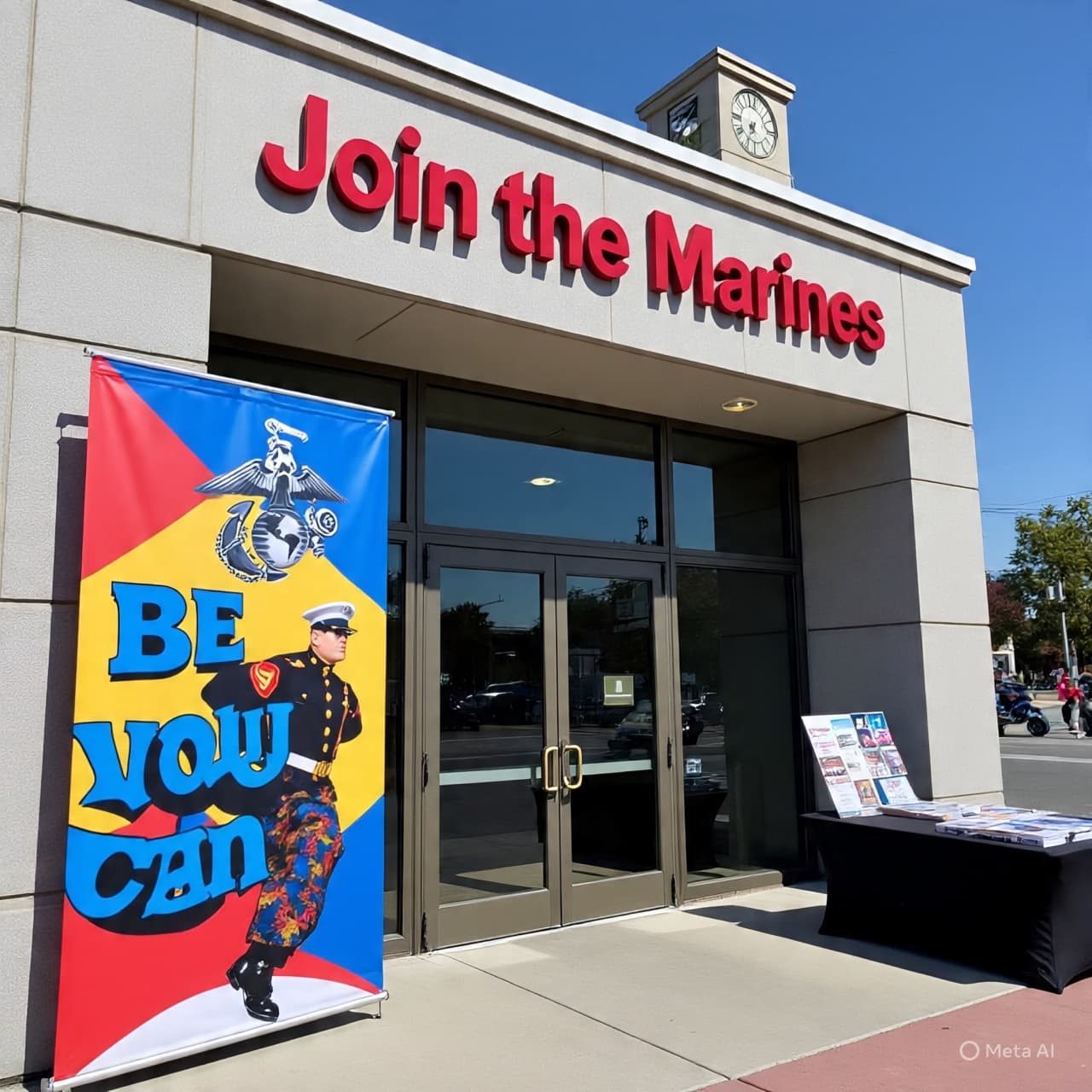
Behind the sharp uniforms, polished recruitment stations and proud slogans of the U.S. Marine Corps, there is another story — quieter, more human, and for many of the Marines involved, deeply personal. In the nation’s oldest expeditionary force, meeting recruiting goals has long been a point of pride. But recent reporting reveals a hidden strain beneath that success: Marines tasked with recruiting new enlistees are facing intense pressure, long hours and emotional costs that exceed what many expected when they raised their right hand. This is a story not just about numbers, but about the lived experience of those who are asked to fill the ranks of one of America’s most storied services — sometimes at a heavy personal toll.
Though the Corps consistently meets its annual enlistment targets — a contrast to other branches of the U.S. military — it does so through a system that many recruiters describe as relentless and unforgiving. Marine recruiters typically are expected to bring in about two new recruits per month, a quota that remains constant whether a recruiter is stationed in a populous metro area or a rural outpost. Days can stretch beyond 60 hours of work, often filled with outreach calls, school visits, social-media engagement and community events — all in a bid to persuade a generation that is generally less interested in military service.
For some, this mission orientation becomes gruelling rather than gratifying. Interviews with dozens of Marines highlight how recruiters confront daily rejection and fatigue, with tasks such as cold-calling teenagers’ parents or combing through leads that often go nowhere. One former recruiter described the job as a “constant mental breakdown,” where taking time off can mean falling behind — and falling behind feels like failing both the mission and one’s fellow Marines.
The emotional cost reaches beyond mere discomfort. Official surveys and internal data show that Marine recruiters experience elevated levels of stress, with a significantly higher rate of mental-health diagnoses compared with Marines not on recruiting duty. Issues such as PTSD, depression and family strains — including divorce — occur far more frequently among recruiters than their peers, according to Department of Defense-linked research cited in reporting.
Perhaps the most striking personal story highlighted in reporting is that of Sgt. Matthew Partyka, a Marine whose strength in combat and devotion to the Corps contrasted starkly with the day-to-day pressures of recruiting work. Partyka struggled under the emotional weight of the job and died by suicide after being repeatedly nudged back into recruiting duty despite clearly serious personal distress. His family described the role as profoundly mismatched with his temperament and background, noting that the endless grind of cold calls and quota pressure took a severe toll on his mental well-being.
Some Marines said the pressure drove others toward ethically questionable practices — padding data or expediting weak leads — as each month’s “mission” deadline loomed. They warned that the drive to meet quotas could tempt shortcuts that, if officially discovered, would be condemned by the Corps but are still difficult to resist under constant performance pressure.
Marine Corps spokespeople acknowledge the rarity of extreme outcomes and emphasise that most recruiters complete their tours successfully. They note steps taken to improve recruiter well-being, like increased mental health support, better leadership selections and more volunteers filling recruiting billets through incentives. Still, many Marines say the underlying culture — one where “failure” is inconceivable and peer pressure to succeed is immense — makes recruiting duty uniquely taxing.
What emerges from these accounts is a paradox: a service that prides itself on always making its mission is doing so in a way that may be straining the very Marines entrusted with its future. For a branch that sees itself as elite and resilient, the recruiting crisis reveals a different kind of challenge — one rooted not in battlefield readiness but in the toll exacted on those tasked with sustaining the Corps itself. Whether reforms can make recruiting duty healthier and more sustainable remains an open question, but the stories of those in the trenches of military recruiting offer stark insight into the costs of keeping America’s Marines strong on paper and behind the scenes.
AI Image Disclaimer “Visuals are created with AI tools and are not real photographs.”
Sources Business Insider / Investigative reporting on Marine recruiting pressures and recruiter well-being.
Published by Banx Network. This article is part of the Banx decentralized media programme, powered by the BXE token on the XRP Ledger.