

Key Highlights
- Bulgaria has officially withdrawn from the Coalition of the Willing supporting Ukraine's defense.
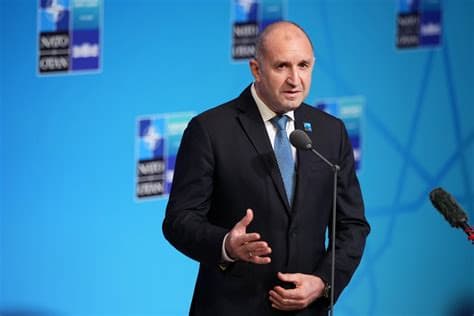
- Prime Minister Rumen Radev announced the decision, citing a preference for diplomatic solutions.
- This move reflects a significant shift in Bulgaria's foreign policy post-election.
Bulgaria has officially withdrawn from the Coalition of the Willing, a group formed to support Ukraine amid its ongoing conflict with Russia. Prime Minister Rumen Radev made the announcement, stating that he would not send a representative to the coalition's latest defense coordination meeting held in Paris. This decision marks a pivotal moment in Bulgaria's foreign policy, particularly as the country seeks to redefine its stance in the wake of recent elections.
Radev, who has been a vocal critic of Western military aid to Ukraine, expressed concerns that such support only serves to prolong the conflict. He emphasized the need for a diplomatic resolution, arguing that military assistance does not contribute to peace. This perspective aligns with a growing sentiment among certain political factions in Bulgaria that advocate for a more neutral stance in international conflicts.
The withdrawal from the coalition signals a broader shift in Bulgaria's foreign policy, as the country distances itself from many of its European Union partners. Historically, Bulgaria has maintained a pro-European stance, but recent political developments have led to a reevaluation of its commitments. The Prime Minister's decision may reflect internal pressures and a desire to align more closely with public sentiment, which has shown signs of skepticism towards foreign military involvement.
This move also raises questions about Bulgaria's future role within the EU and its relationships with other member states. As the conflict in Ukraine continues, the implications of Bulgaria's withdrawal could resonate beyond its borders, potentially influencing other nations' positions on military support and diplomatic engagement.
In conclusion, Bulgaria's exit from the Coalition of the Willing represents a significant shift in its foreign policy approach. As Prime Minister Rumen Radev advocates for diplomacy over military intervention, the country may find itself navigating a complex landscape of international relations, balancing national interests with its commitments to the EU and NATO.
Published by Banx Network. This article is part of the Banx decentralized media programme, powered by the BXE token on the XRP Ledger.




