
Key Highlights
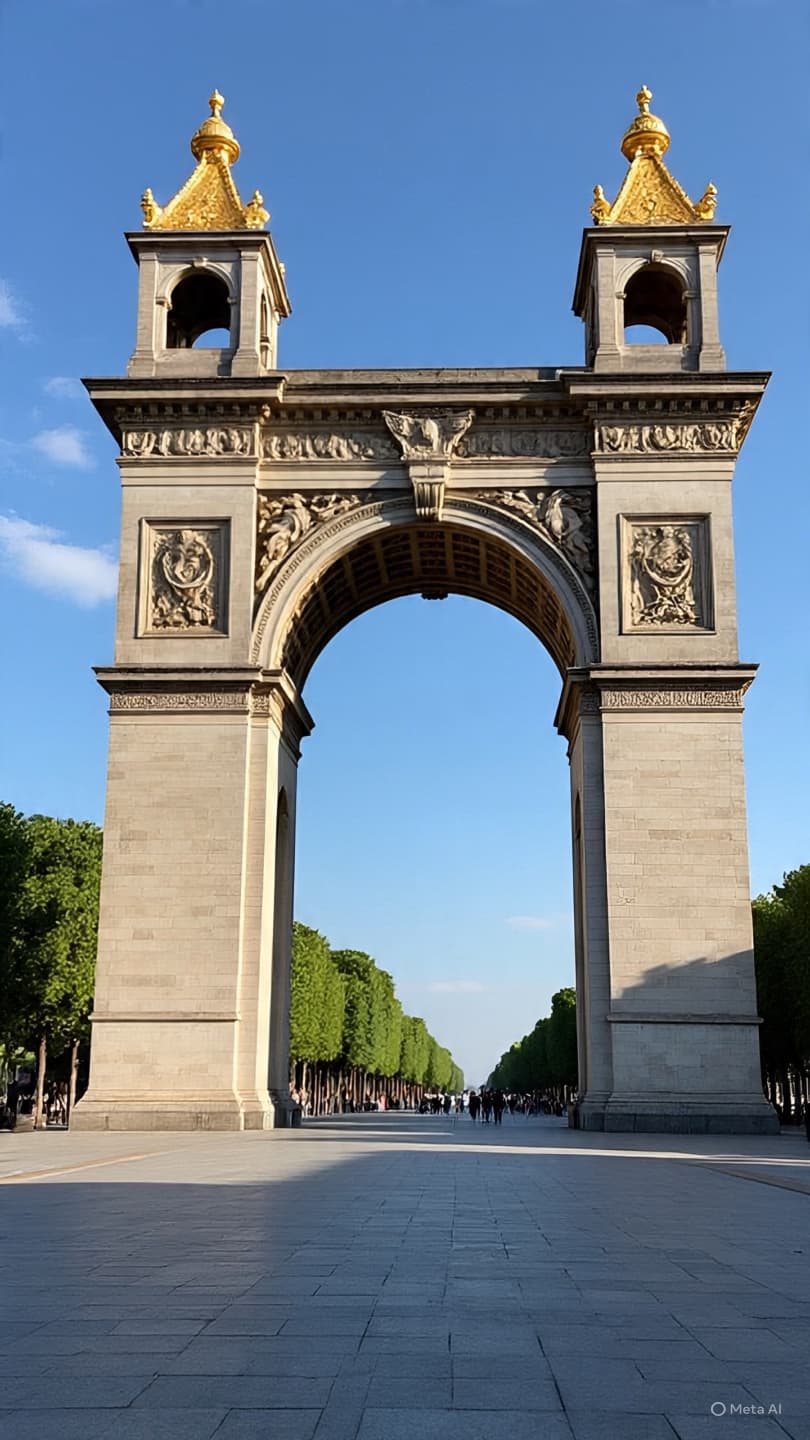
- Proposal:Donald Trump has unveiled plans for a gold-accented victory arch.
- Symbolism:The arch aims to symbolize achievement and permanence in public space.
- Public Reaction:The project raises questions about its significance and interpretation.
[The Proposal] Donald Trump has recently announced plans for a large, gold-accented victory arch, a structure designed to symbolize achievement and permanence. This proposal draws on classical architectural forms while utilizing materials that emphasize scale and visibility, suggesting a monument intended not just to exist but to command attention. The arch is envisioned as a significant addition to the public landscape, reflecting both ambition and a desire for recognition.
[Architectural Significance] In the tradition of monumental architecture, arches have historically marked victories and transitions, serving as powerful symbols within their environments. They are not merely structures; they are gestures that frame both space and meaning. The proposed victory arch aims to continue this tradition, embodying a narrative that intertwines public imagery with political messaging. As architecture increasingly intersects with narrative, the arch becomes a statement about how moments of achievement are understood and commemorated.
[Public Imagery and Political Messaging] The timing of this proposal is significant, as public imagery and political messaging are closely linked in contemporary discourse. Architecture, once primarily a domain of civic function and cultural expression, now plays a crucial role in shaping narratives. The gold accents of the arch, traditionally associated with value and distinction, add another layer of meaning, signaling a desire to elevate the structure beyond the ordinary. However, the interpretation of such a monument is not solely determined by its design; it is also influenced by the perspectives of those who engage with it.
[Community Reflection] Observers have noted the ambition of the project and the questions it raises about public monuments. Such structures often invite reflection on what they commemorate and how they fit within the broader civic landscape. Decisions regarding scale, location, and symbolism can significantly influence public reception, determining whether the arch is seen as an emblem of unity, a marker of achievement, or a contested symbol. The unveiling of the arch serves as a moment of narrative creation, inviting the public to engage with a vision that exists first in imagination.
[Historical Context] Historically, victory arches have marked significant transitions, such as entries into cities or acknowledgments of power. They stand at thresholds, framing movement from one state to another. The proposed structure's resonance will depend on its realization and integration into the surrounding space. As it stands, the facts outline a clear proposal: a large, gold-accented victory arch linked to a broader narrative of achievement and visibility. However, its interpretation remains open, shaped by context and time.
[Conclusion] Ultimately, the significance of the arch will not be fixed at the moment of its creation. It will evolve, influenced by those who pass beneath it and those who pause to consider its meaning. The arch, whether built or still imagined, stands at a threshold—between intention and interpretation, between the present moment and the memory it seeks to shape.
Published by Banx Network. This article is part of the Banx decentralized media programme, powered by the BXE token on the XRP Ledger.



