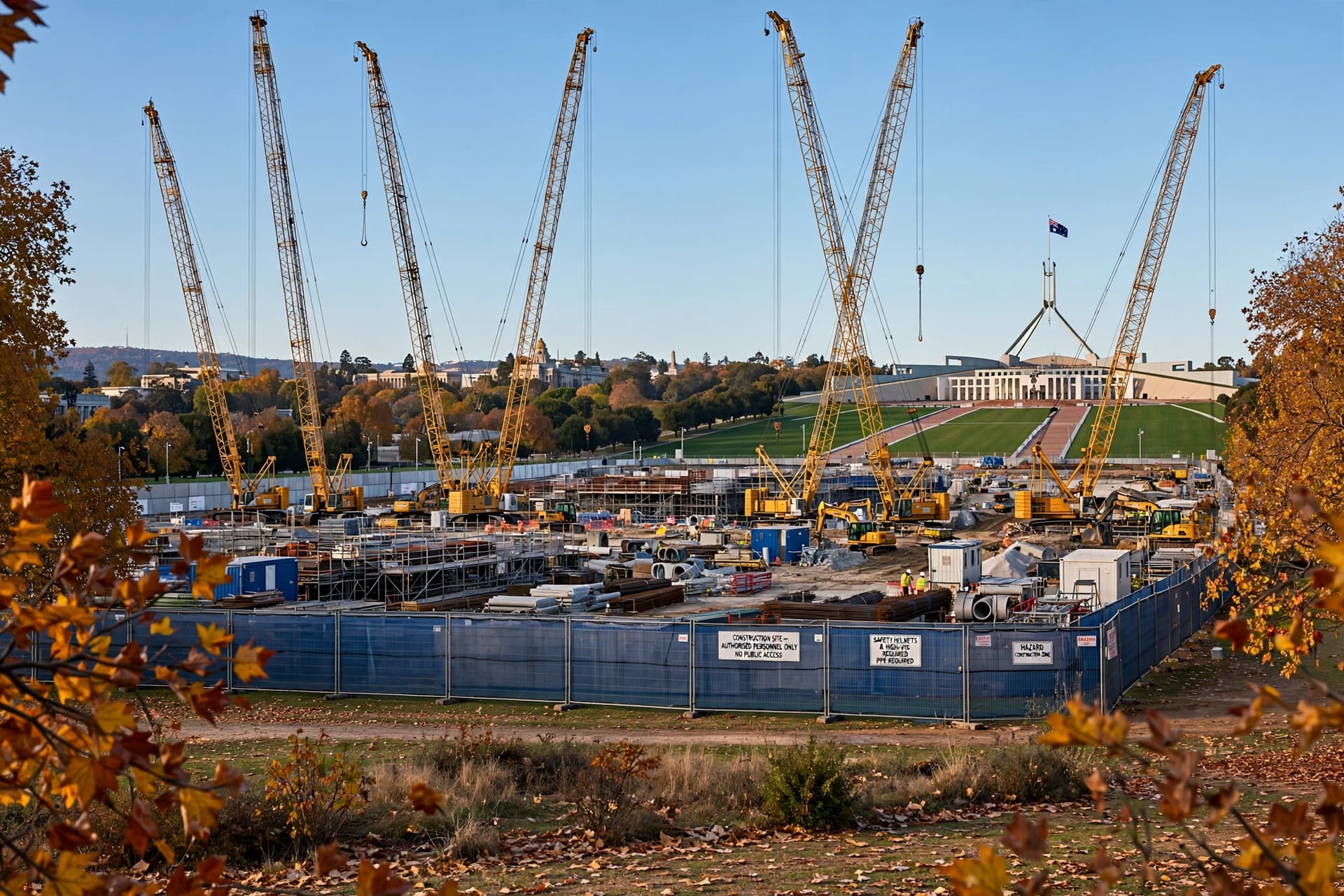
Morning light often finds housing developers staring not at blueprints, but at stacks of documents whose meanings seem to shift overnight. What was approved yesterday can quietly lose its footing today, like land that subtly moves beneath a carefully measured foundation. In this quiet uncertainty, planning becomes less an act of engineering and more an exercise in patience.
Across many regions, developers describe a similar rhythm: permits issued, revised, reconsidered, then altered again. Zoning classifications change names, spatial plans are adjusted, and interpretations differ between offices. Each revision may arrive politely, stamped and signed, yet its impact ripples through project timelines, financing arrangements, and commitments already made to buyers and contractors.
For developers, land permits are not abstract paperwork. They are the anchor of feasibility studies, loan agreements, and construction schedules. When a permit shifts unexpectedly, months of preparation can suddenly feel provisional. Projects pause, machines fall silent, and calculations are redone with careful restraint.
Many in the industry note that these changes are rarely framed as conflict. Instead, they arrive as administrative updates, regulatory harmonization, or alignment with newer spatial plans. Yet the frequency of such adjustments has created a sense of fatigue. Developers speak less of anger and more of confusion, as if navigating a map that quietly redraws itself.
Local governments, on their side, often emphasize the need to balance development with environmental protection, infrastructure planning, and public interest. Regulations evolve to reflect population growth, climate concerns, and urban density. In principle, these aims are difficult to dispute. In practice, however, the pace of regulatory change sometimes moves faster than projects can adapt.
Smaller developers feel the pressure most acutely. Unlike larger firms, they often lack dedicated legal teams to interpret shifting rules. Each change requires consultations, new submissions, and additional costs that are rarely recoverable. What was once a modest housing plan can slowly become a financial puzzle.
Banks, too, watch these developments carefully. Financing is tied to permit certainty, and uncertainty invites caution. Delays in permits can delay disbursements, stretching cash flow and extending project timelines beyond original forecasts.
Industry associations have repeatedly called for clearer coordination between central and regional authorities. They ask not for fewer rules, but for stability rules that hold long enough for plans to mature into buildings. Consistency, they argue, is as important as compliance.
In conversations behind closed doors, developers describe a hope rather than a demand. They hope that regulatory updates come with clearer transition periods, allowing projects already in motion to proceed without abrupt recalculations. They hope that planning once approved can be trusted, at least for a reasonable span of time.
Until then, many developers continue working with quiet caution. They plan carefully, revise frequently, and accept uncertainty as part of the landscape. In the end, homes will still rise, but perhaps more slowly, shaped not only by design and demand, but by the shifting contours of permission itself.
AI Image Disclaimer (Rotated Wording) Illustrations in this article were created using AI tools and are intended as conceptual visuals, not real photographs.
Source Check (Credible Media Scan)
Kompas Tempo Bisnis Indonesia Kontan CNBC Indonesia
Published by Banx Network. This article is part of the Banx decentralized media programme, powered by the BXE token on the XRP Ledger.