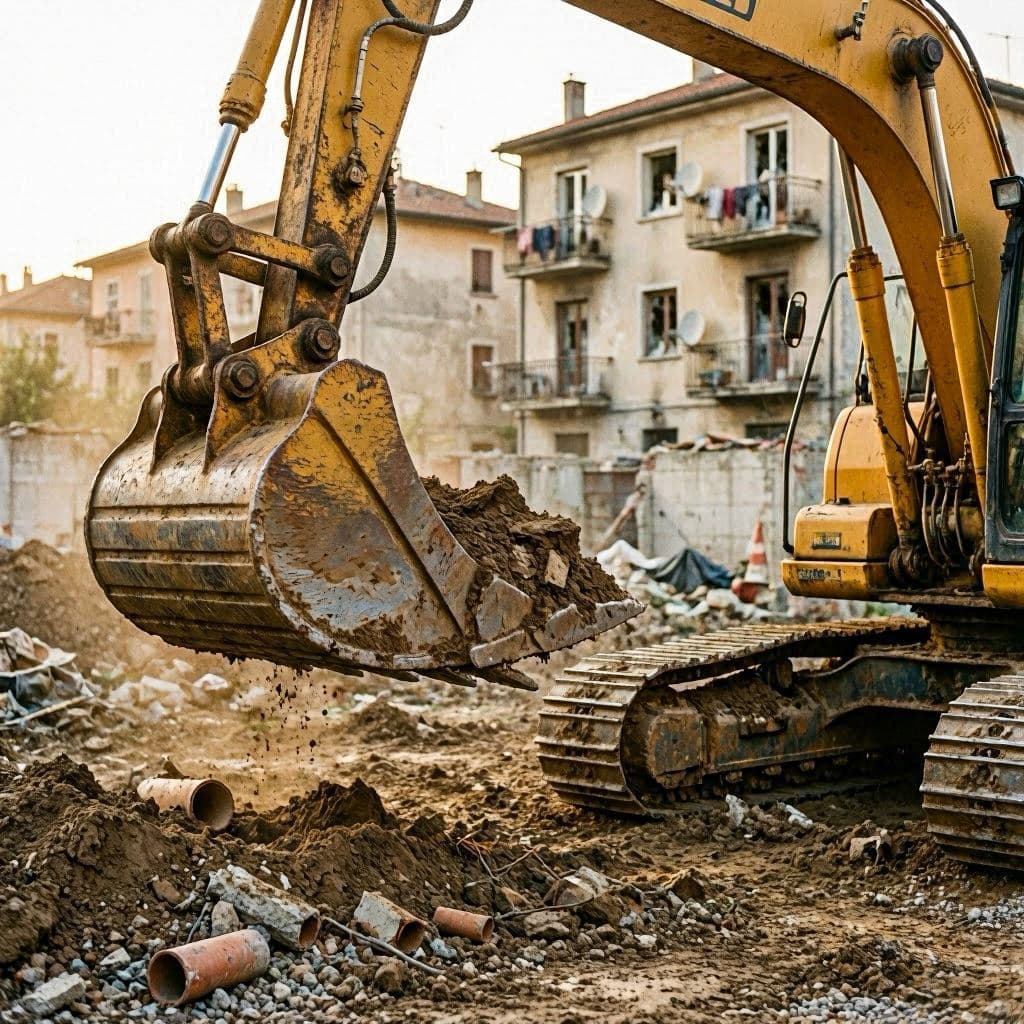
The landscape of Gaza is being reshaped not just by conflict, but by earth and engineering. In recent months, Israel has constructed a massive earthen barrier that cuts through the heart of the territory, effectively dividing it into distinct zones. This physical manifestation of strategic control marks a significant shift in the military’s approach to the region, moving from temporary incursions to a more permanent structural presence. It is a development that invites reflection on the long-term implications for governance, humanitarian access, and the future political geography of the strip.
Body: The barrier, stretching over twenty kilometers, is built from soil excavated from within Gaza itself. It serves as a fortified road and a defensive line, allowing Israeli forces to monitor movement and secure areas they have cleared. For the military, this infrastructure is a tool for maintaining security and preventing the resurgence of hostile groups. However, for the civilian population, it represents a new reality of fragmentation, where movement between north and south, or east and west, is heavily restricted and controlled.
Humanitarian organizations express deep concern about the impact of this division on aid delivery. The barrier complicates logistics, requiring additional checkpoints and coordination to move supplies across the lines. In a region already struggling with scarcity, any obstacle to the flow of food, medicine, and fuel can have severe consequences. Aid workers navigate a complex web of permissions, striving to reach those in need while adhering to strict security protocols imposed by the new layout.
The construction also raises questions about the eventual political status of Gaza. By entrenching a physical divide, the barrier may be seen as a precursor to a long-term partition or a buffer zone that limits Palestinian sovereignty. Critics argue that such measures undermine the possibility of a unified governance structure, while supporters view them as necessary for ensuring Israel’s security borders. The debate reflects broader tensions about the future of the conflict and the rights of those living within it.
For residents, the barrier is a daily reminder of their constrained existence. Families separated by the divide face challenges in reuniting, accessing healthcare, or returning to homes in different zones. The psychological toll of living in a fragmented territory adds to the physical hardships of war and displacement. Community ties are strained as the ease of movement, once a hallmark of urban life, is replaced by rigorous scrutiny and delay.
International observers watch these developments with apprehension, noting that physical barriers often harden political divisions. The barrier may stabilize the immediate security situation for Israel, but it could also entrench grievances among Palestinians, making future reconciliation more difficult. The challenge for diplomats is to address security concerns without foreclosing the path to a viable political solution.
As the construction continues, the focus shifts to how this new geography will be managed. Will the barrier become a permanent border, or a temporary measure pending a political agreement? The answer will shape the lives of millions and the trajectory of the peace process. For now, the earthworks stand as a silent testament to the enduring complexity of the conflict.
Closing: Israel’s construction of an earthen barrier inside Gaza marks a pivotal moment in the ongoing conflict. While intended to enhance security, it deepens the division of the territory and complicates humanitarian efforts. The long-term impact on the region’s stability and the prospects for peace remain uncertain, requiring careful international attention and dialogue.
AI Image Disclaimer: Please note that any accompanying visuals for this article are AI-generated representations intended for illustrative purposes only.
Sources: Times of Israel Ottumwa Courier Reuters Associated Press
Published by Banx Network. This article is part of the Banx decentralized media programme, powered by the BXE token on the XRP Ledger.