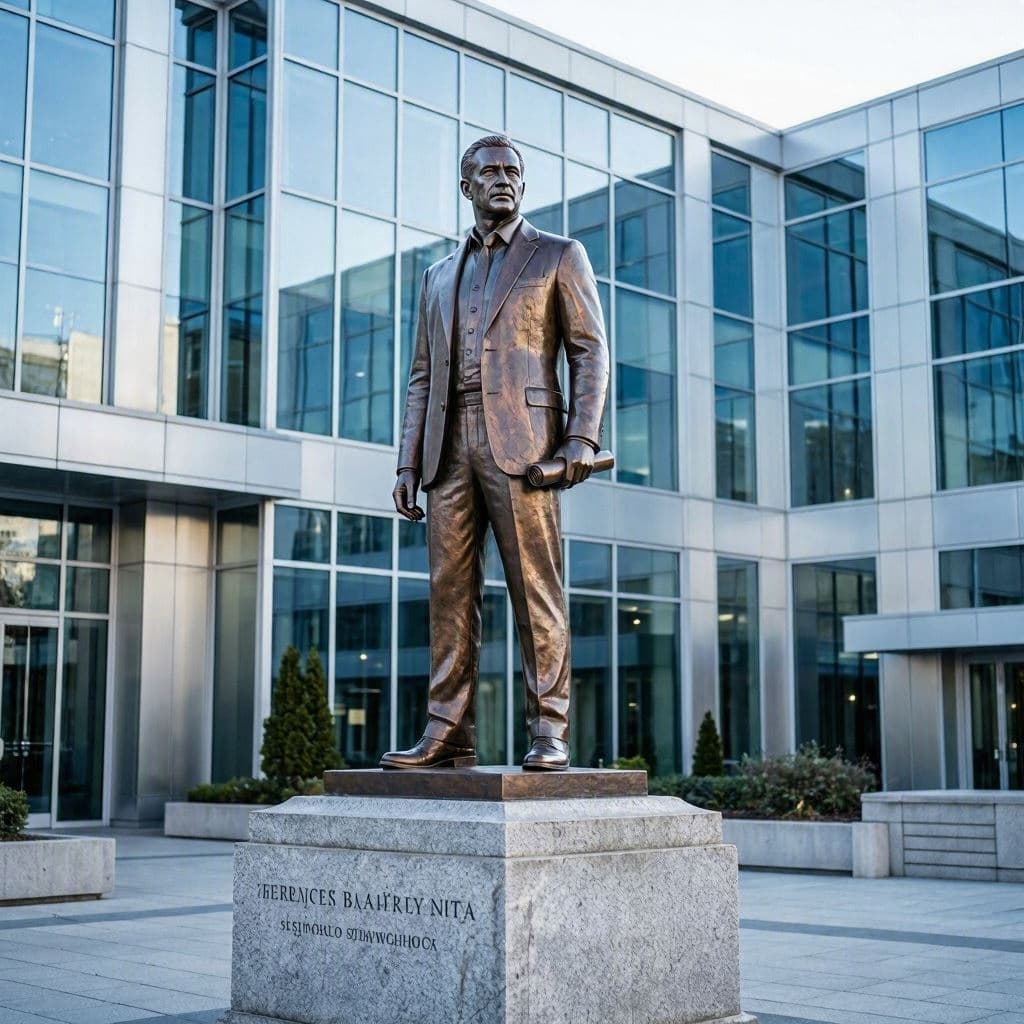
In the sun-drenched landscape of Phoenix, Arizona, where political discourse often mirrors the heat of the desert, a new monument was recently erected to honor a polarizing figure. An eight-foot bronze statue of Charlie Kirk, the late co-founder of Turning Point USA, stands outside the organization’s headquarters as a testament to his influence on conservative youth activism. However, just days after its unveiling, the statue became the target of vandalism, sparking a fresh wave of debate about free speech, memory, and political tension in America.
The incident occurred overnight, when unknown individuals spray-painted red paint across the statue’s face and neck. A nearby memorial poster was also defaced, with symbols such as a cross scratched out. The act of destruction was swift and visible, transforming a symbol of celebration for some into a canvas for protest for others. For Turning Point USA, the damage was not just to bronze but to the legacy they seek to preserve, prompting immediate condemnation and a call for justice.
Law enforcement responded quickly, reviewing surveillance footage from the area. Within hours, a 19-year-old man named Ryder Corral was arrested and charged with criminal damage. Video evidence reportedly shows him approaching the statue and applying the paint before fleeing the scene. The speed of the arrest highlights the effectiveness of modern security measures but also underscores the volatility of public monuments in a divided political climate.
For supporters of Charlie Kirk, the vandalism is seen as an attack on free expression and a disrespect to his memory. Kirk, who was assassinated in 2025, remains a symbolic figure for many young conservatives who view him as a martyr for their cause. The statue serves as a pilgrimage site for these followers, making the defacement feel like a personal affront to their community and values.
Conversely, critics argue that public spaces should not be dominated by partisan figures, especially those whose rhetoric has been controversial. For them, the vandalism may represent a form of political dissent, however illegal and destructive. This dichotomy reflects the broader cultural struggle over who gets to occupy public space and how history is remembered in real-time. It is a conflict played out not just in words but in physical acts against stone and metal.
Turning Point USA has vowed to restore the statue, viewing the repair as part of their mission to withstand opposition. They have framed the incident as evidence of the intolerance they claim to fight against, using it to rally support and donations. The organization’s response is strategic, turning a moment of loss into one of renewed purpose and solidarity among their base.
As the legal process moves forward, the community is left to reflect on the meaning of such acts. Vandalism rarely changes minds; instead, it often hardens positions and deepens divides. In Phoenix, the statue now bears the marks of this tension, a visible reminder that in America, even bronze is not immune to the passions of the present. The restoration will likely proceed, but the conversation it ignited will linger far longer.
AI Image Disclaimer: The visual representations in this article are AI-generated illustrations designed to convey the context of the statue and the surrounding political atmosphere.
Sources: KPTV, AZ Family, Fox 26 Houston
Published by Banx Network. This article is part of the Banx decentralized media programme, powered by the BXE token on the XRP Ledger.