In a hospital, a few millimeters can matter. On a farm, the timing of a harvest can shape the value of an entire season. These very different environments share a practical challenge: how to complete demanding work with greater precision, while making the best use of time, equipment, and human skill. Increasingly, robotics is being explored as one way to meet that challenge.
On October 9, 2026, the British government announced £40 million in support for a network of Robotics Adoption Hubs intended to help businesses and public services introduce robotic and autonomous technologies. The program spans multiple regions of the United Kingdom and is designed to provide practical advice, demonstrations, and assistance for organizations considering new equipment. GOV.UK
The hubs are intended to connect emerging technologies with workplaces that might benefit from them. Some businesses have access to advanced robotics but lack the technical knowledge or resources to evaluate whether a system would be suitable for their operations. By offering expert guidance and real-world demonstrations, the program aims to help organizations assess costs, practical requirements, and potential benefits before making an investment.
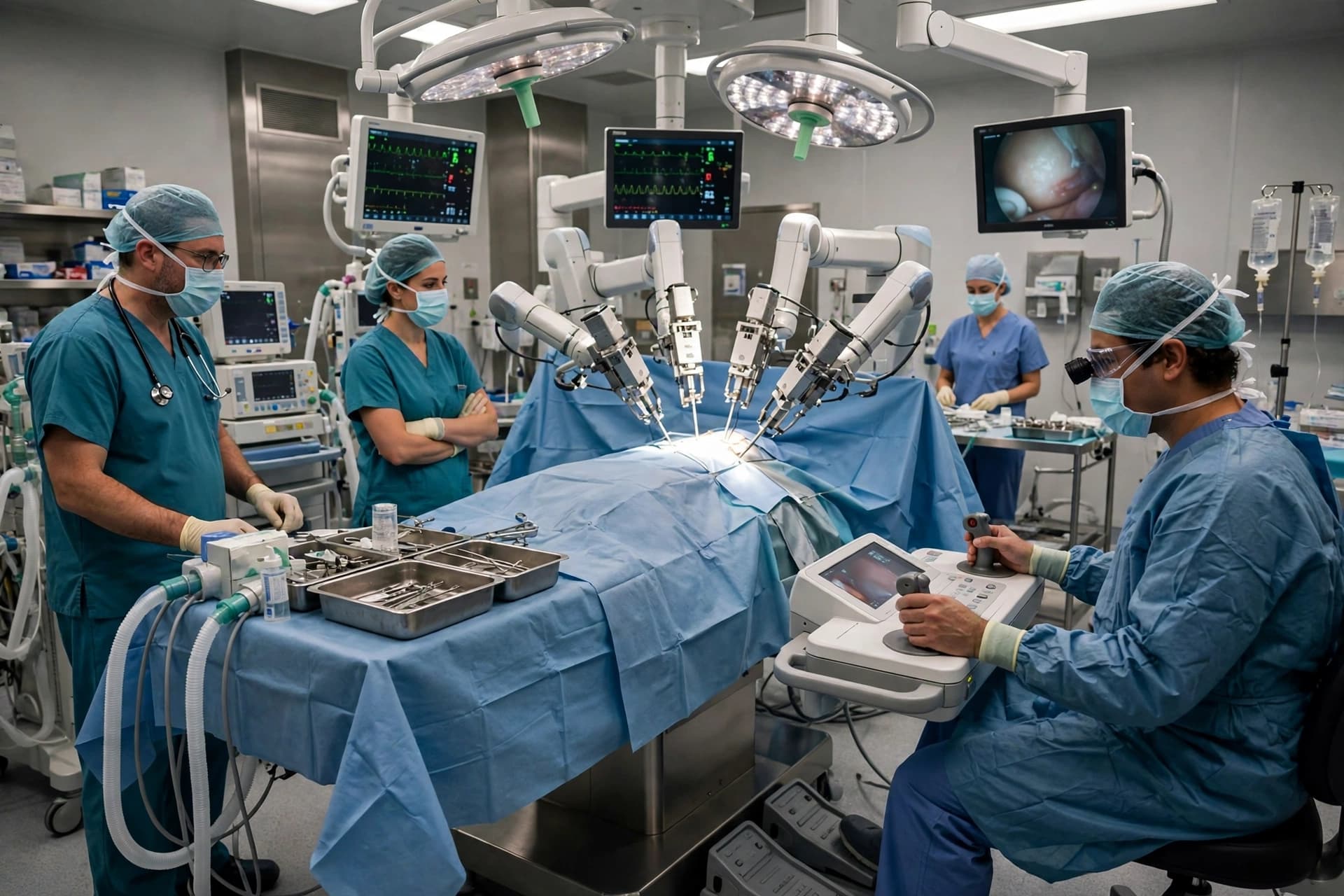
Healthcare is one of the areas receiving attention. Robotic-assisted surgical systems can help clinicians carry out certain procedures through smaller incisions and with precise instrument control. Depending on the procedure and the patient, minimally invasive techniques may reduce recovery time. The government’s announcement identifies surgical robotics as an area where wider adoption could improve care, although individual outcomes depend on clinical circumstances and the quality of treatment.
The initiative also includes work in agriculture, where automated machines can assist with harvesting fruit and other crops. Agricultural businesses often face seasonal pressure, changing labor availability, and narrow windows for gathering produce at the right stage of ripeness. Robotic systems may help perform repetitive tasks and allow workers to focus on other activities, though their usefulness depends on crop type, field conditions, maintenance needs, and cost.
Eight new adoption hubs are intended to support sectors including healthcare, agriculture, manufacturing, transport, logistics, and waste management. Each hub will draw on regional expertise and partnerships involving universities, research institutions, local authorities, and businesses. The approach recognizes that robotics adoption is not simply a matter of purchasing machines; organizations also need training, technical support, and an understanding of how automated systems fit into existing workflows.
The government cited estimates that robotics and autonomous systems could contribute £150 billion to the British economy by 2035 if adoption reaches its full potential. The same announcement placed the potential contribution under current adoption levels at £6.4 billion. These figures are projections, not guaranteed economic outcomes, and their realization would depend on investment, implementation, productivity gains, and the development of a skilled workforce.
For smaller businesses, the decision to introduce robotics may involve considerable uncertainty. Equipment can require substantial upfront investment, while integration may demand changes to facilities, software, and employee training. Demonstration centers could help businesses understand these requirements before committing resources, but each organization will still need to evaluate whether automation suits its own operations.
The program also includes funding for robotics training and workforce development. As machines become more common in factories, hospitals, farms, and logistics centers, workers may need new skills to operate, maintain, and supervise them. That transition can create opportunities for technical roles while changing the responsibilities of existing jobs, making education and practical training important parts of successful adoption.
Britain’s investment is intended to move robotics from experimental settings into more routine use. The program’s results will become clearer as businesses and public services begin testing and deploying the supported technologies. For now, the initiative establishes a network designed to help organizations make informed decisions about automation across several parts of the economy.
Fourth: AI Image Disclaimer
These illustrations were created using AI tools to depict potential applications of robotics. They are conceptual scenes rather than photographs of actual funded projects or surgical procedures.
Fifth: Sources
* GOV.UK
* Department for Business, Innovation and Skills
* Innovate UK
Published by Banx Network. This article is part of the Banx decentralized media programme, powered by the BXE token on the XRP Ledger.