

Key Highlights
- $110 billion: UAE's total investment in Africa from 2019 to 2023.
- 60 projects:Funded under the Africa Green Investment Initiative.
- Nine agreements:Comprehensive economic partnerships with African nations.
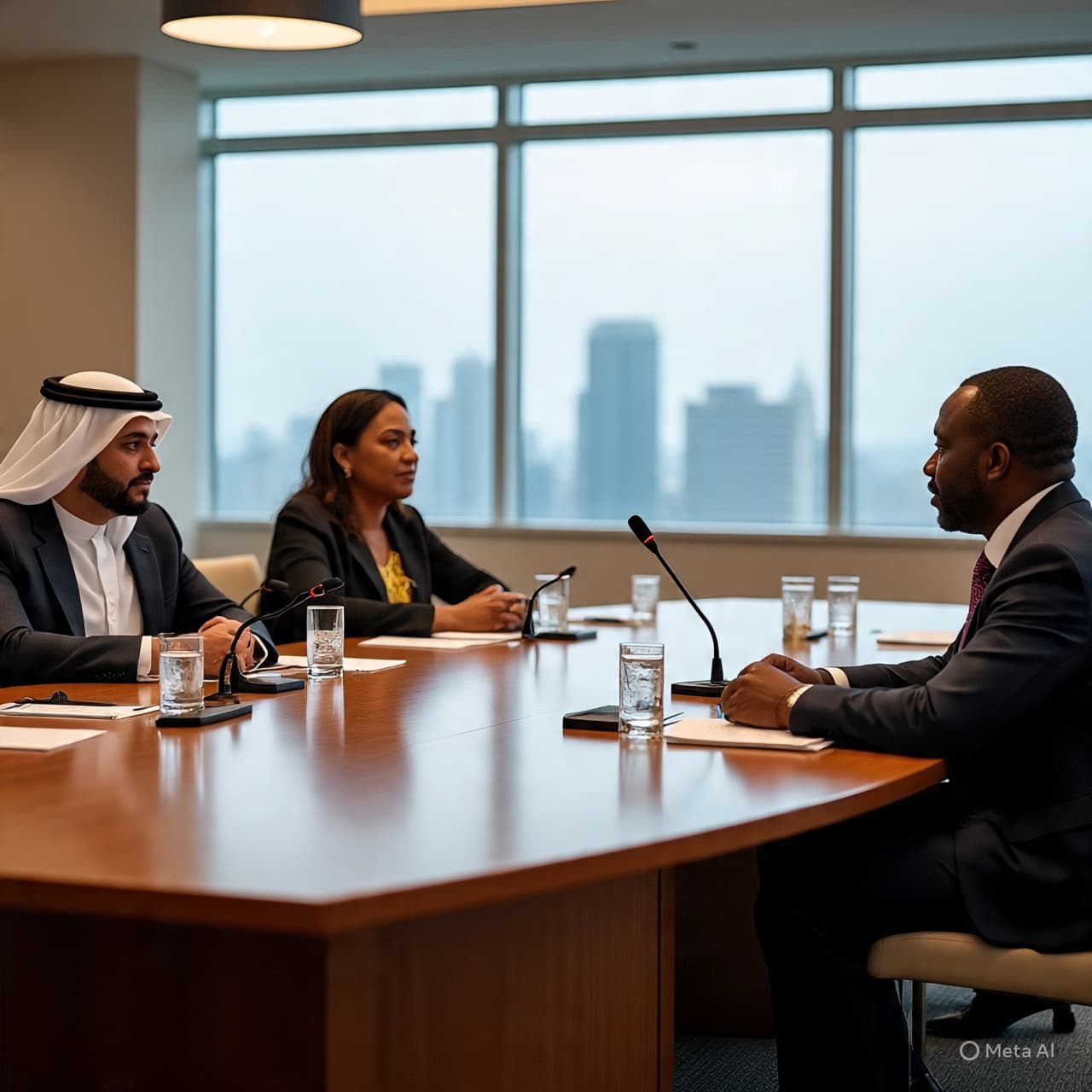
The United Arab Emirates (UAE) is increasingly establishing itself as a key player in Africa's economic landscape, with a remarkable investment of over $110 billion between 2019 and 2023. This figure represents the largest contribution from any single country during this period, highlighting the UAE's commitment to fostering economic ties with the African continent. At the recent 39th African Union Summit in Addis Ababa, UAE Minister of State Sheikh Shakhboot bin Nahyan Al Nahyan emphasized the importance of these investments, particularly in energy and renewable initiatives, which account for more than $70 billion of the total.
The investments are not just financial figures; they symbolize a deeper connection between the UAE and Africa. The Africa Green Investment Initiative has mobilized approximately $4.5 billion for over 60 clean energy projects, including solar, wind, and geothermal technologies. These projects aim to provide reliable energy access, which is essential for industrial growth and social transformation across the continent. The UAE's approach reflects a shared vision of sustainable development, where energy access serves as the foundation for economic progress.
In addition to energy projects, the UAE has forged nine comprehensive economic partnership agreements with various African nations, including Nigeria, Sierra Leone, Angola, and Kenya. These agreements encompass a wide range of areas, from tariff reductions to digital trade and investor protections. By aligning these partnerships with the African Continental Free Trade Area, the UAE aims to enhance value chains and bolster cross-border competitiveness in goods and services.
Infrastructure development is another critical aspect of the UAE's investment strategy in Africa. Global port operator DP World is currently undertaking a $1 billion upgrade of Tanzania’s Dar es Salaam Port, which is expected to improve trade logistics significantly. Furthermore, initiatives like Masdar’s $10 billion Africa program and the Etihad 7 initiative are designed to expand electricity access to millions of people by the mid-2030s, addressing structural gaps in power supply and connecting remote communities to economic opportunities.
The UAE's engagement in Africa goes beyond mere financial investment; it emphasizes the importance of partnership across various sectors. High-level forums and business delegations hosted in the UAE have facilitated discussions among African leaders and private-sector representatives, focusing on collaboration in areas such as digital infrastructure, transport, agriculture, and climate resilience. This multifaceted approach seeks to blend public and private interests, fostering mutual benefits for all parties involved.
As these investments continue to unfold, the UAE's role in Africa's energy and trade sectors is increasingly viewed as a dialogue rather than a one-sided transaction. Observers note that energy access and trade integration are central to the continent's development priorities. As projects are implemented and new partnerships are formed, the hopes of diverse nations are woven together under a shared vision of economic progress and sustainable growth.
In conclusion, the UAE's strategic investments in Africa represent a significant opportunity for both regions. By focusing on energy, infrastructure, and collaborative partnerships, the UAE is not only enhancing its economic footprint but also contributing to the broader development goals of the African continent. As these initiatives take shape, the potential for transformative change remains high, promising to elevate the prospects for millions across Africa.
Published by Banx Network. This article is part of the Banx decentralized media programme, powered by the BXE token on the XRP Ledger.




