
Key Highlights
- New Agreement:Cameroon and Tunisia sign an economic cooperation pact.
- Trade Focus:The agreement aims to enhance trade routes and reduce barriers.
- Long-term Vision:Joint committees will work on customs regulations and educational exchanges.
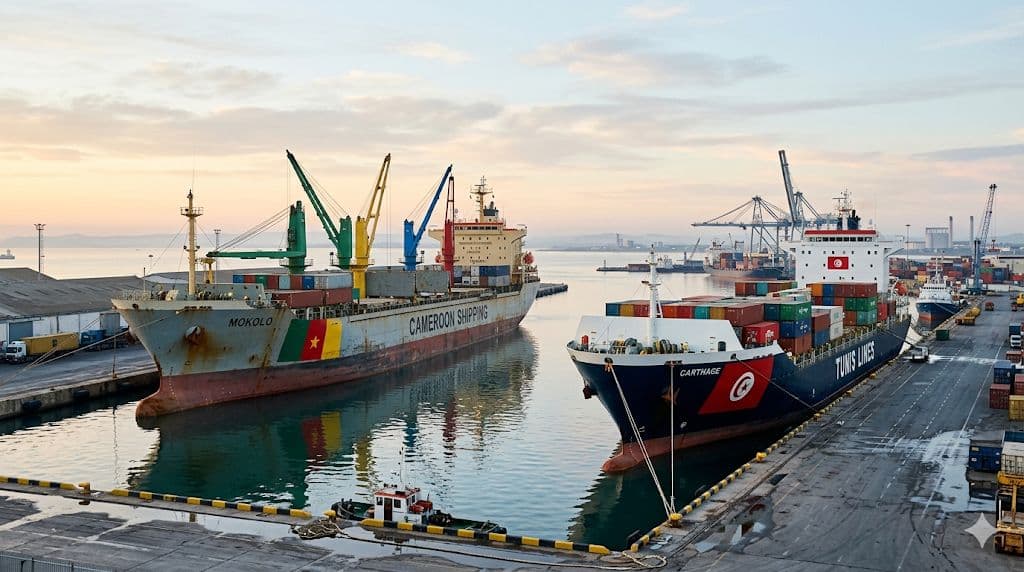
The morning sun rises over the Gulf of Guinea, casting a soft, golden warmth across the bustling ports of Cameroon, while thousands of miles to the north, the same light kisses the ancient, terracotta rooftops of Tunis. This imagery reflects a silent, invisible thread that stretches across the vast expanse of the African continent, pulling these two distinct worlds closer together. It is not the loud, clamorous connection of geographical proximity, but rather the quiet, deliberate alignment of purpose and shared aspiration. In the stillness of diplomacy, a new chapter is being written, one that seeks to bridge the expanse between the northern coast and the central forests.
A new economic cooperation agreement has emerged, acting as a gentle anchor for both nations in a rapidly shifting global landscape. For years, the trade routes between the Mediterranean shores and the heart of Central Africa remained understated, existing as quiet trickles rather than roaring rivers. Yet, the signing of this accord signals a subtle shifting of the tides, a recognition that the prosperity of one region is intimately bound to the resilience of another. It represents an opening of doors that have long stood heavy and closed, allowing a fresh breeze of collaborative potential to stir the air.
Within the rooms where these accords are finalized, there is a tangible sense of narrative distance, an understanding that true economic unity is a slow, methodical tapestry woven over time. The agreement focuses heavily on reducing barriers, encouraging the free flow of ideas, investments, and people across borders that once felt insurmountable. In the quiet prose of official decrees, such as the recent mutual easing of visa restrictions, one finds the poetic reality of a continent learning to depend more deeply upon its own internal strength. It is an acknowledgment that the solutions to local challenges often lie just across the next horizon.
For Cameroon, a nation characterized by its vibrant markets and rich agricultural tapestry, the agreement offers a pathway toward broader economic horizons and diversified partnerships. The heavy timber, rich cocoa, and emerging technological spirit of the country look northward, seeking new avenues of expression and integration. There is a quiet optimism in the way local entrepreneurs view these unfolding connections, seeing them not as distant political constructs, but as tangible bridges that might one day carry their endeavors to the edge of the Mediterranean. It is a slow broadening of the economic lens, focused on sustainability.
Tunisia, balancing its own complex economic realities along the sun-drenched northern coast, finds in this partnership a meaningful anchor in the central African market. The North African state brings with it a wealth of knowledge in digital infrastructure, specialized manufacturing, and renewable energy transitions. By looking southward, Tunis expands its reach beyond its traditional European neighbors, embracing a more profoundly continental identity that honors its geographic and historical roots. This mutual exchange is framed not by dominant dependency, but by an organic, balanced reciprocity that respects the unique sovereignty of each participant.
The rhythm of this cooperation is designed to be steady and long-term, steering clear of short-sighted gains or superficial triumphs. Joint committees are quietly forming, tasked with the intricate work of aligning customs regulations, harmonizing trade standards, and fostering educational exchanges between universities. It is in these unglamorous, everyday interactions that the true weight of the treaty lives, far away from the flashing lights of initial press conferences. The slow work of building institutional trust is akin to planting a tree whose shade will only be fully enjoyed by subsequent generations.
As global markets face unpredictable fluctuations and traditional alliances grow increasingly complicated, this continental turning-inward represents a thoughtful strategy for self-reliance. Both nations understand that relying solely on external economic superpowers carries inherent vulnerabilities, making regional diversification an act of quiet prudence. The agreement serves as an architectural blueprint for a south-south dialogue that prioritizes collective resilience over individual isolation. It is a reminder that even in an interconnected world, the shortest distance between two points is often a direct, respectful collaboration.
Published by Banx Network. This article is part of the Banx decentralized media programme, powered by the BXE token on the XRP Ledger.



