In several recent public statements, Armstrong argues that the debate over crypto regulation is no longer just about consumer protection or financial stability, but rather a power struggle designed to preserve the dominance of the traditional banking system.
A Regulatory Battle in Washington
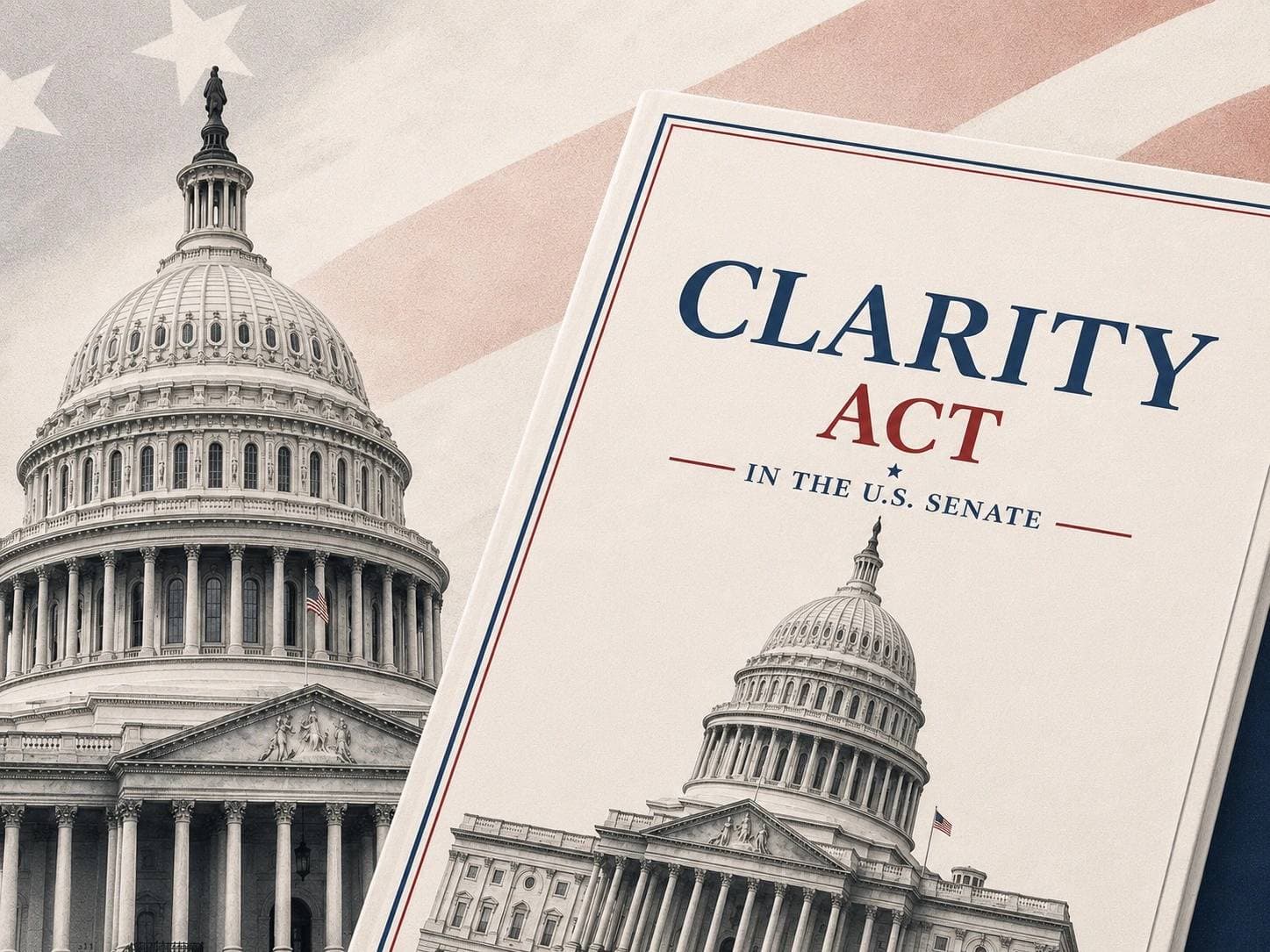
At the center of the controversy is a proposed crypto market structure bill, intended to bring regulatory clarity to an industry still governed by fragmented and outdated rules. While the bill’s stated goal is to establish clearer oversight, Brian Armstrong believes that, in its current form, it is fundamentally tilted in favor of banks.
According to the Coinbase CEO, certain provisions would grant traditional financial institutions significant competitive advantages, while imposing disproportionate constraints on crypto companies. The result, he warns, would be a regulatory environment that slows innovation, restricts consumer access to new financial products, and discourages the development of decentralized solutions.
“This kind of legislation does not create fair competition,” Armstrong has said. “It protects entrenched players and penalizes new entrants.”
Stablecoins: The Core Point of Conflict
One of the most contentious issues involves stablecoins and the reward programs associated with them. These dollar-pegged digital assets allow users to earn yields that often exceed those offered by traditional bank savings accounts.
For Armstrong, this direct competition explains much of the banking sector’s resistance. Stablecoins challenge a business model long built on wide margins and low returns for depositors.
He accuses banking lobbyists of attempting to restrict or ban these mechanisms, not for safety reasons, but to prevent consumers from accessing more attractive financial alternatives.
Crypto vs. Banks: A Structural Rivalry
While Armstrong acknowledges that some major banks are actively exploring blockchain technology, asset tokenization, and crypto custody services, he views many of these initiatives as defensive rather than transformative. In his view, the real conflict is not technological, but political and regulatory.
Cryptocurrency introduces a fundamentally different paradigm:
direct access to financial services,
fewer intermediaries,
transparent transactions,
and global, open markets.
These principles challenge the traditional role of banks as gatekeepers of financial flows.
Coinbase Positions Itself as a Defender of Innovation
By withdrawing its support for the current bill, Coinbase says it is attempting to reset the conversation. Brian Armstrong argues that a poorly designed law would be more damaging than a temporary lack of regulatory clarity, as it would lock in structural advantages for legacy institutions.
He calls for regulation built on:
technological neutrality,
fair competition,
and consumer protection without stifling innovation.
For Coinbase, the stakes extend far beyond one company or one industry. The outcome will help determine what the global financial system will look like in the decades ahead.
A Strong Signal to the Market
Armstrong’s comments have resonated strongly across the crypto ecosystem, where many view this confrontation as a defining moment. Once considered a fringe sector, the crypto industry is now asserting itself as a political force capable of challenging the most powerful financial institutions.
As debates continue in Congress, one thing is clear: the conflict between banks and crypto is no longer happening behind closed doors. It is now public, strategic, and increasingly influential—potentially reshaping the balance of power in global finance for years to come.
Published by Banx Network. This article is part of the Banx decentralized media programme, powered by the BXE token on the XRP Ledger.