Coinbase: A Company at the Center of Financial Stakes
Coinbase has been a publicly traded company for several years, and under Armstrong’s leadership, the firm has steadily expanded its role:
It positions itself as a core technological infrastructure for the crypto ecosystem and digital finance.
It promotes a “crypto-as-a-service” strategy, providing tools and technological rails to established financial institutions.
The company is also developing products aimed at integrating real-world and tokenized assets on blockchain, notably through initiatives such as Coinbase Tokenize.
Armstrong frequently emphasizes that Coinbase is not merely a crypto trading platform, but is evolving into something akin to an “AWS for global crypto infrastructure.”
Confrontation with Banks and Regulators
In recent months, Armstrong has found himself at the center of major political and institutional disputes.
1. Disagreement Over a Major U.S. Crypto Bill
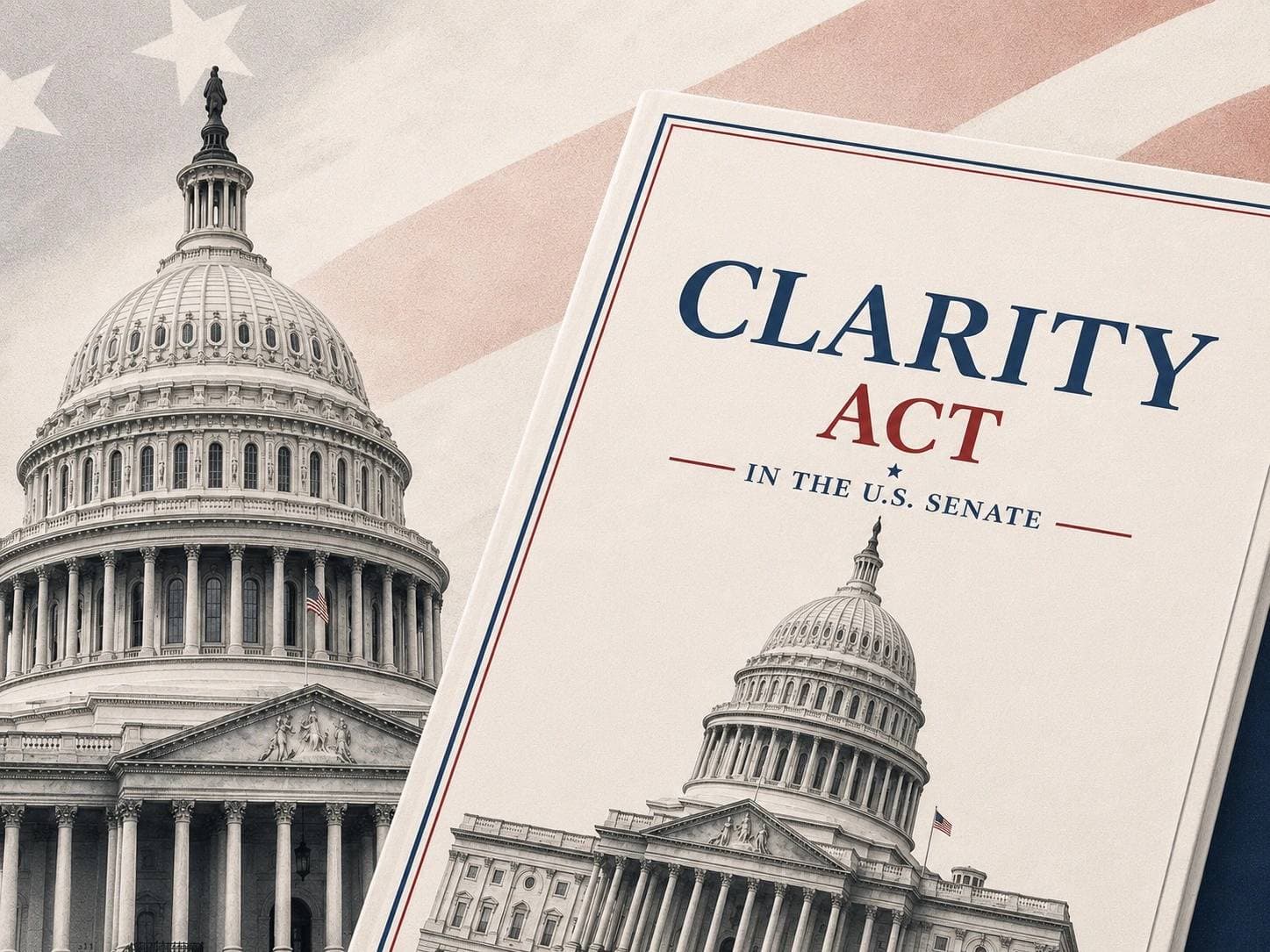
Coinbase withdrew its support for a U.S. market structure bill for cryptocurrencies (the Clarity Act) after amendments were deemed “too unfavorable” to the crypto sector.
Armstrong argues that certain provisions — particularly those restricting platforms’ ability to offer yield on assets such as stablecoins — could weaken innovation rather than support it.
2. Tensions with Traditional Banks
At the World Economic Forum in Davos, Armstrong reportedly engaged in tense exchanges with banking executives and European central bank officials, particularly regarding the role of stablecoins and the future of the financial system.
In parallel, influential bankers such as Jamie Dimon (JPMorgan) have publicly criticized him, reflecting a climate in which some traditional financial players view Coinbase as a potential competitor rather than a simple service provider.
3. White House Meeting Between Banks and Crypto Firms
The White House recently convened leaders from the banking sector and crypto platforms, including Coinbase, in an effort to move toward a more consensual legislative framework. This meeting took place against a backdrop of market volatility and ongoing disagreements in Congress over digital asset regulation.
A CEO Defending a Clear Vision: Crypto and Finance Are Not Opposites
Armstrong’s vision extends far beyond crypto trading.
💡 A More Open, Blockchain-Based Financial System
He advocates for a future in which traditional financial functions — payments, credit, lending, capital raising — could be conducted entirely on blockchain, using structures such as DAOs and fully on-chain fundraising mechanisms.
🚀 A Long-Term Vision for Bitcoin
Armstrong has also drawn attention with bold predictions about Bitcoin’s price, suggesting it could reach $1,000,000 by 2030, driven by institutional adoption and improved regulatory clarity.
Banks: Rivals and Potential Partners
Recent developments highlight the ambivalent relationship between traditional banks and crypto.
🏦 Regulatory Friction
Some banks support legal provisions that would limit crypto platforms’ ability to offer services resembling banking products, such as yield-bearing stablecoins — a move Coinbase criticizes as an attempt to stifle competition.
🤝 Behind-the-Scenes Collaboration
Despite public rhetoric, banks are already testing pilot programs with Coinbase involving stablecoins, digital asset custody, and crypto trading. Institutional vaults and tokenized settlement rails are actively being explored.
This confirms that the traditional financial sector is experimenting with crypto integration, even if regulatory alignment has not progressed as quickly as many would like.
In Summary: Coinbase, Banks, and Crypto — An Ecosystem in Transformation
Coinbase and Brian Armstrong play a central role in the global debate on cryptocurrency regulation, often in direct opposition to traditional banks and major financial institutions.
Institutional tensions remain high, particularly around U.S. legislative proposals and the issue of yield-bearing stablecoins.
At the same time, collaboration is gradually taking shape, through pilot programs and high-level discussions that point toward a future in which banks and crypto coexist in a more integrated financial system.
Published by Banx Network. This article is part of the Banx decentralized media programme, powered by the BXE token on the XRP Ledger.