

Key Highlights
- United Airlines is removing middle seats in select rows of its Airbus A321XLR aircraft.
- The new seating arrangement aims to enhance passenger comfort on longer flights.
- Public reaction has been largely positive, indicating a demand for more spacious travel options.
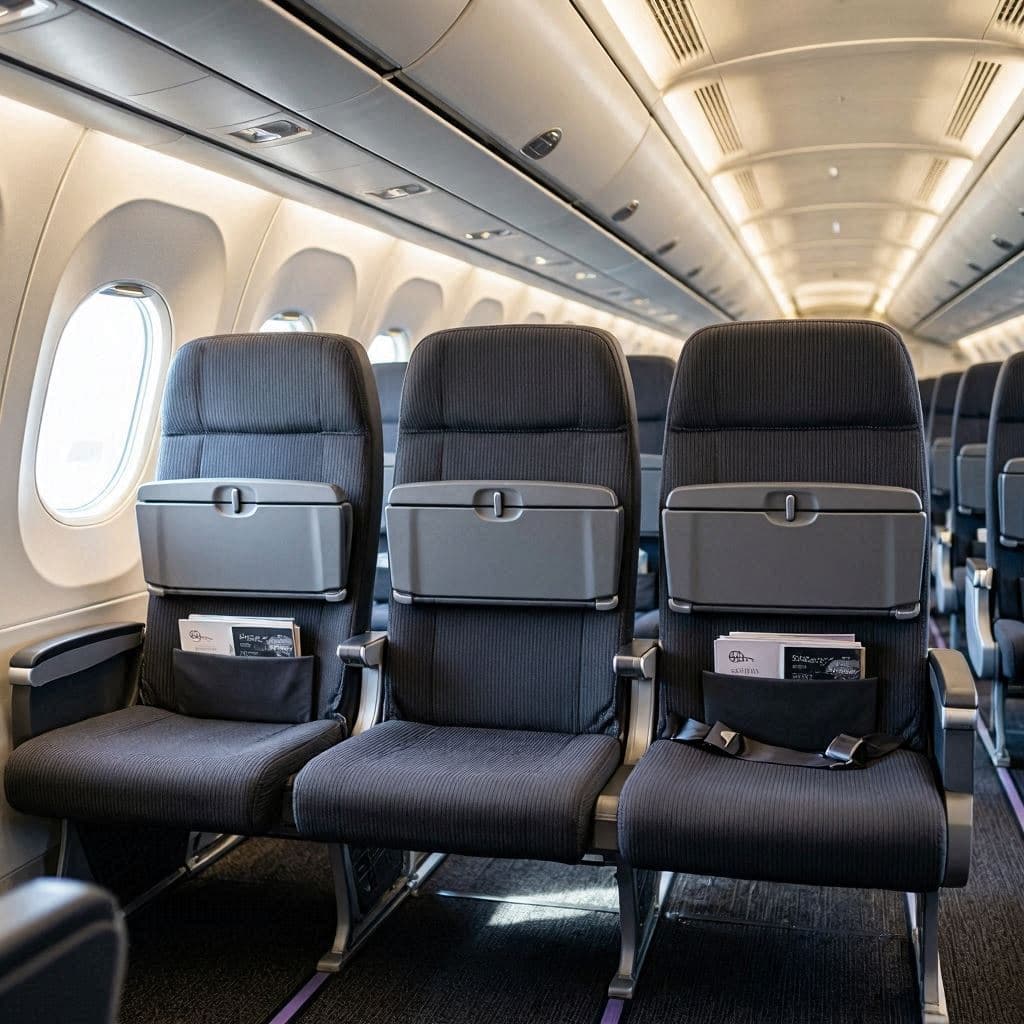
United Airlines is making a significant change to its seating configuration in an effort to improve the air travel experience. The airline has announced plans to remove the middle seat in select rows of its new Airbus A321XLR aircraft. This decision is not just a minor adjustment; it represents a thoughtful reimagining of economy class space, aiming to enhance passenger comfort and redefine the flying experience.
The modification involves replacing the traditional three-seat configuration with a two-seat arrangement in specific rows, effectively creating a 'pseudo-business' class within the economy cabin. By blocking off the middle seat, United provides passengers with extra elbow room and a sense of spatial autonomy that is often missing in crowded cabins. This design, reminiscent of European business class layouts, offers a tangible improvement in quality of life for travelers who may not be able to afford premium upgrades.
For frequent flyers, the middle seat has long been a symbol of compromise, a space where personal boundaries are inevitably tested. Removing it acknowledges the psychological and physical discomfort associated with close quarters. It validates the desire for dignity in travel, recognizing that even in economy, passengers deserve a measure of respect and space. This gesture, while limited in scope, signals a broader awareness of customer needs and preferences.
The decision also reflects strategic considerations for United Airlines. The Airbus A321XLR is designed for longer transatlantic routes, where passenger fatigue can significantly impact the travel experience. By enhancing comfort on these flights, United aims to differentiate itself in a competitive market. This calculated investment in customer loyalty suggests that improved experiences will lead to repeat business and positive word-of-mouth, which are crucial in an industry where price is often the primary driver.
However, the change is not without its trade-offs. Reducing seat density means fewer tickets sold per flight, which could impact revenue unless offset by higher fares or increased demand. United has indicated that the configuration will be used selectively, balancing capacity with comfort. This cautious approach allows the airline to test the market response before considering wider implementation, a prudent step in an uncertain economic landscape.
From a regulatory perspective, the reduction in seats may also offer operational benefits. Under certain aviation rules, lower passenger counts can allow for reduced crew requirements, potentially offsetting some of the revenue loss. This interplay between safety regulations, labor costs, and customer experience highlights the complex calculus of airline management. It demonstrates how multiple factors converge to shape policy decisions in the aviation industry.
Public reaction has been largely positive, with travelers expressing appreciation for the innovation. Social media has buzzed with excitement, as passengers imagine the relief of having an empty buffer zone beside them. This enthusiasm underscores the deep-seated desire for more comfortable travel options and reminds airlines that listening to customer feedback can yield creative solutions that benefit both parties.
As the new aircraft enter service, the focus will be on execution and consistency. Ensuring that the promised comfort is delivered reliably will be crucial for maintaining trust. If successful, this model could inspire other carriers to follow suit, raising the standard for economy class across the industry. It represents a potential turning point in the evolution of air travel, where comfort and customer experience take precedence.
In conclusion, United’s decision to remove middle seats in some rows is a welcome step toward more compassionate design. It acknowledges the human need for space and comfort, even in the confines of an airplane. As we look to the future of travel, the hope is that such innovations will become the norm, making journeys less stressful and more enjoyable for all.
Published by Banx Network. This article is part of the Banx decentralized media programme, powered by the BXE token on the XRP Ledger.




