
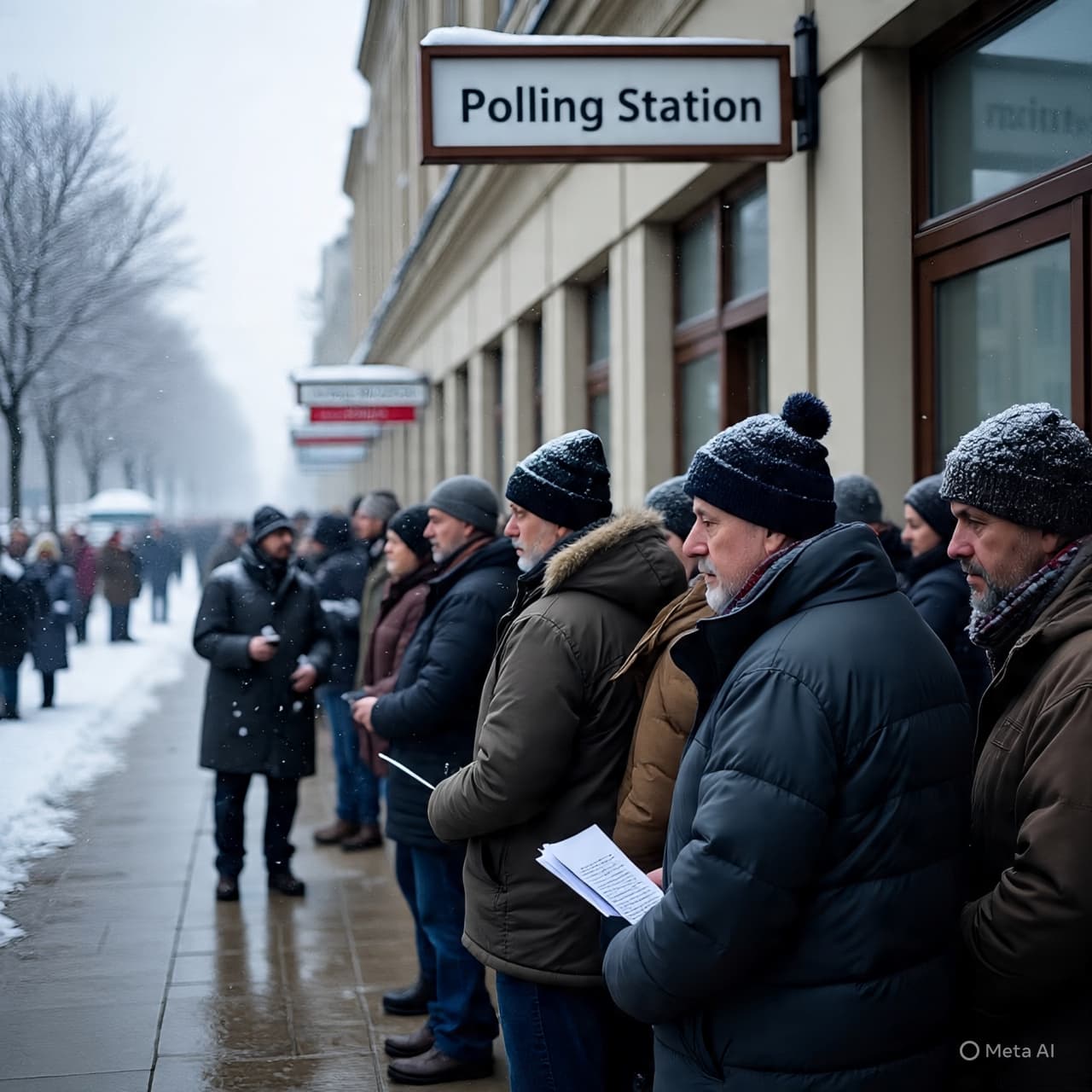
For months, Kosovo’s political life felt like a room where the clock kept ticking but no one moved. Parliament sat frozen, decisions deferred, and public patience stretched thin as the echo of unresolved negotiations lingered in the background. When voters returned to the polls, it was not merely another election day — it was an attempt to restart time itself, to let institutions breathe again after a long, deliberate pause.
Kosovo’s ruling party emerged as the clear winner in snap parliamentary elections held after months of political deadlock that left the country without a fully functioning legislature. The vote was called following repeated failures to form a governing coalition after earlier elections, a stalemate that stalled lawmaking, delayed budgets, and slowed international cooperation.
Preliminary results showed the governing movement securing a commanding share of the vote, well ahead of its nearest rivals. While the margin did not immediately guarantee an outright parliamentary majority, it placed the party in a dominant position to shape the next government and reopen the legislative process that had been effectively suspended.
The deadlock that preceded the election had tangible consequences. Without a seated parliament, Kosovo struggled to advance reforms, approve international funding agreements, and respond decisively to economic pressures. For ordinary citizens, the impasse translated into uncertainty — not dramatic collapse, but a persistent sense of drift.
Supporters of the ruling party framed the outcome as a renewed mandate, arguing that voters endorsed continuity and stability over prolonged negotiation. The leadership promised swift steps to constitute parliament and move toward forming a government, emphasizing the need to restore normal political rhythms and address delayed priorities.
Opposition parties, while acknowledging the results, cautioned against over-concentration of power and signaled they would scrutinize coalition talks closely. Analysts noted that Kosovo’s political landscape remains fragmented, and even a strong electoral showing does not eliminate the need for compromise in a diverse assembly.
Beyond party arithmetic, the election carried broader symbolic weight. It reaffirmed Kosovo’s reliance on electoral mechanisms to resolve political paralysis, even when outcomes remain uncertain. In a region where governance has often been shaped by crisis rather than consensus, the vote offered a quieter, procedural reset.
As results are finalized and negotiations begin, Kosovo now stands at a familiar threshold — between promise and practice. The months ahead will test whether electoral clarity can translate into durable governance. For now, the ballots have spoken, and the machinery of politics has been nudged back into motion, one measured step at a time.
AI Image Disclaimer “Illustrations were produced with AI and serve as conceptual depictions.”
Sources Reuters Associated Press BBC News Al Jazeera Euronews
Published by Banx Network. This article is part of the Banx decentralized media programme, powered by the BXE token on the XRP Ledger.


.jpg&w=3840&q=75 "Zelensky Warns China Is Helping Russia Develop a Starlink Rival")