
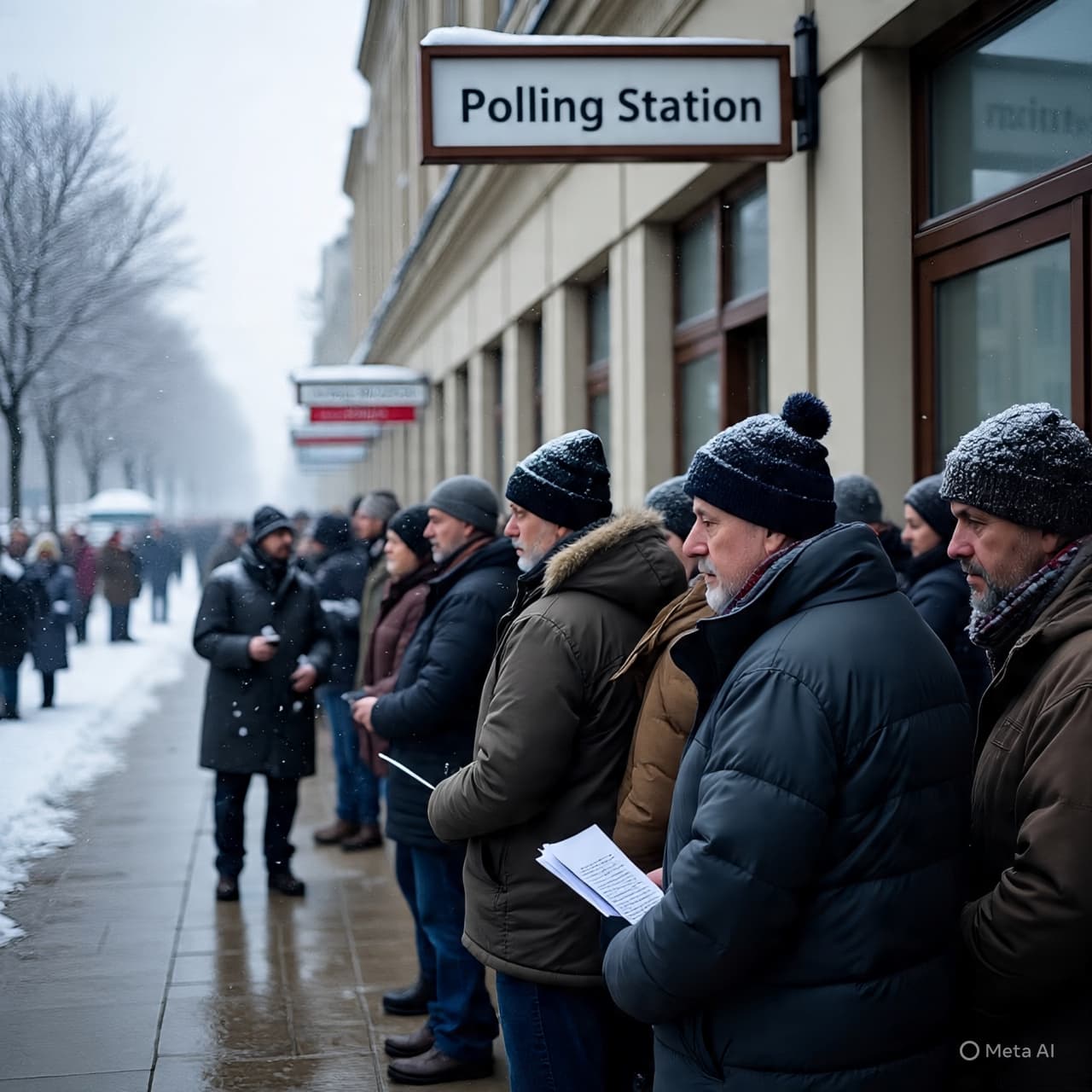
Key Highlights
- Election Outcome:Kosovo's ruling party wins snap elections aimed at breaking a political deadlock.
- Legislative Stalemate:The previous deadlock left the country without a functioning parliament for months.
- Future Governance:The election results may lead to a renewed government and legislative activity.
Kosovo’s political landscape has been characterized by stagnation in recent months, akin to a clock ticking in a still room. With parliament frozen and critical decisions deferred, the public's patience wore thin as unresolved negotiations loomed large. The snap parliamentary elections held recently were not just another electoral event; they represented a crucial attempt to restart the political machinery of the nation, allowing institutions to regain their momentum after a prolonged period of inactivity.
In these elections, the ruling party emerged as the clear victor, securing a significant share of the vote amidst a backdrop of political deadlock that had left Kosovo without a fully functioning legislature. This election was called after repeated failures to form a governing coalition following earlier elections, which had stalled lawmaking processes, delayed budget approvals, and hampered international cooperation efforts.
Preliminary results indicate that the governing movement has achieved a commanding lead over its nearest rivals. While this margin does not guarantee an outright parliamentary majority, it positions the party favorably to influence the formation of the next government and to revive the legislative process that had been effectively suspended for months.
The political deadlock preceding this election had real-world consequences for Kosovo. Without an active parliament, the country faced challenges in advancing necessary reforms, approving international funding agreements, and responding effectively to economic pressures. For the citizens of Kosovo, this impasse translated into a sense of uncertainty, characterized not by dramatic failures but by a pervasive feeling of stagnation.
Supporters of the ruling party have framed the election outcome as a renewed mandate from the electorate, arguing that voters have chosen continuity and stability over the prolonged negotiations that had characterized the previous months. The party leadership has promised to take swift action to convene parliament and initiate the formation of a new government, emphasizing the urgent need to restore normal political operations and address pressing priorities that had been sidelined.
Opposition parties, while acknowledging the election results, have expressed concerns regarding the potential over-concentration of power. They have indicated their intention to closely monitor coalition negotiations, highlighting that Kosovo's political landscape remains fragmented. Even a strong electoral performance does not eliminate the necessity for compromise in a diverse assembly.
Beyond the arithmetic of party representation, the election carries significant symbolic weight. It reaffirms Kosovo's reliance on electoral processes to navigate political paralysis, even when the outcomes remain uncertain. In a region where governance has often been dictated by crises rather than consensus, this election represents a procedural reset, albeit one that is still fraught with challenges.
As the final results are tallied and negotiations commence, Kosovo finds itself at a familiar crossroads — balancing the promise of electoral clarity against the realities of governance. The coming months will be critical in determining whether this electoral clarity can translate into effective and durable governance. For now, the ballots have been cast, and the political machinery has been nudged back into motion, albeit cautiously and incrementally.
Published by Banx Network. This article is part of the Banx decentralized media programme, powered by the BXE token on the XRP Ledger.



