In the grand spiral of the Milky Way, most stars move in orderly orbits, circling the galactic center with predictable grace. But occasionally, a rogue traveler breaks the rhythm, hurtling through space at speeds that defy conventional dynamics. Recently, astronomers have identified the fastest known star in our galaxy, a celestial sprinter whose velocity offers a dramatic glimpse into the violent events that can eject stars from their homes.
This hypervelocity star, designated as J0927+6335 (or similar designation depending on the specific recent discovery context, often referred to generally in recent news as a record-breaker), is moving at an astonishing speed relative to the galactic rest frame. Traveling at millions of miles per hour, it is on a trajectory that will eventually lead it out of the Milky Way entirely, escaping the gravitational pull that binds most stars to the galaxy. Its speed is so great that it traverses the distance from Earth to the Moon in just a few minutes.
The origin of such extreme velocity is typically traced back to the supermassive black hole at the center of our galaxy, Sagittarius A*. One leading theory suggests that this star was once part of a binary system. When the pair wandered too close to the black hole, the intense gravitational forces tore them apart. One star was captured by the black hole, while the other was flung outward at tremendous speed, like a stone from a slingshot.
Studying this star provides valuable information about the environment near the galactic center. It serves as a probe, carrying chemical signatures from the dense, chaotic region where it originated. By analyzing its spectrum, astronomers can determine its composition and age, helping to reconstruct the history of interactions in the heart of the Milky Way. It is a messenger from a place we cannot easily visit.
The detection of such stars is challenging due to their rarity and the vastness of the sky. It requires precise measurements of proper motion and radial velocity, often combining data from multiple surveys like Gaia and ground-based spectrographs. The identification of the current record-holder is a triumph of modern astrometry, showcasing the precision with which we can now map the movements of celestial bodies.
Beyond its scientific value, the existence of hypervelocity stars captures the imagination. It reminds us that the universe is dynamic and often violent, capable of accelerating objects to extremes that seem almost fictional. These stars are outliers, but they help define the boundaries of normal stellar behavior and the limits of gravitational mechanics.
As tracking technologies improve, astronomers expect to find more of these cosmic speedsters. Each new discovery adds to the statistical sample, allowing for better models of galactic dynamics. They may also help constrain the mass distribution of the Milky Way, including the elusive dark matter halo that surrounds it.
The fastest known star in the Milky Way is more than a record holder; it is a witness to the powerful forces at play in our galaxy. As it races toward intergalactic space, it carries with it stories of black holes and broken binaries. In tracking its journey, we gain a deeper appreciation for the dynamic and sometimes chaotic nature of the cosmos we call home.
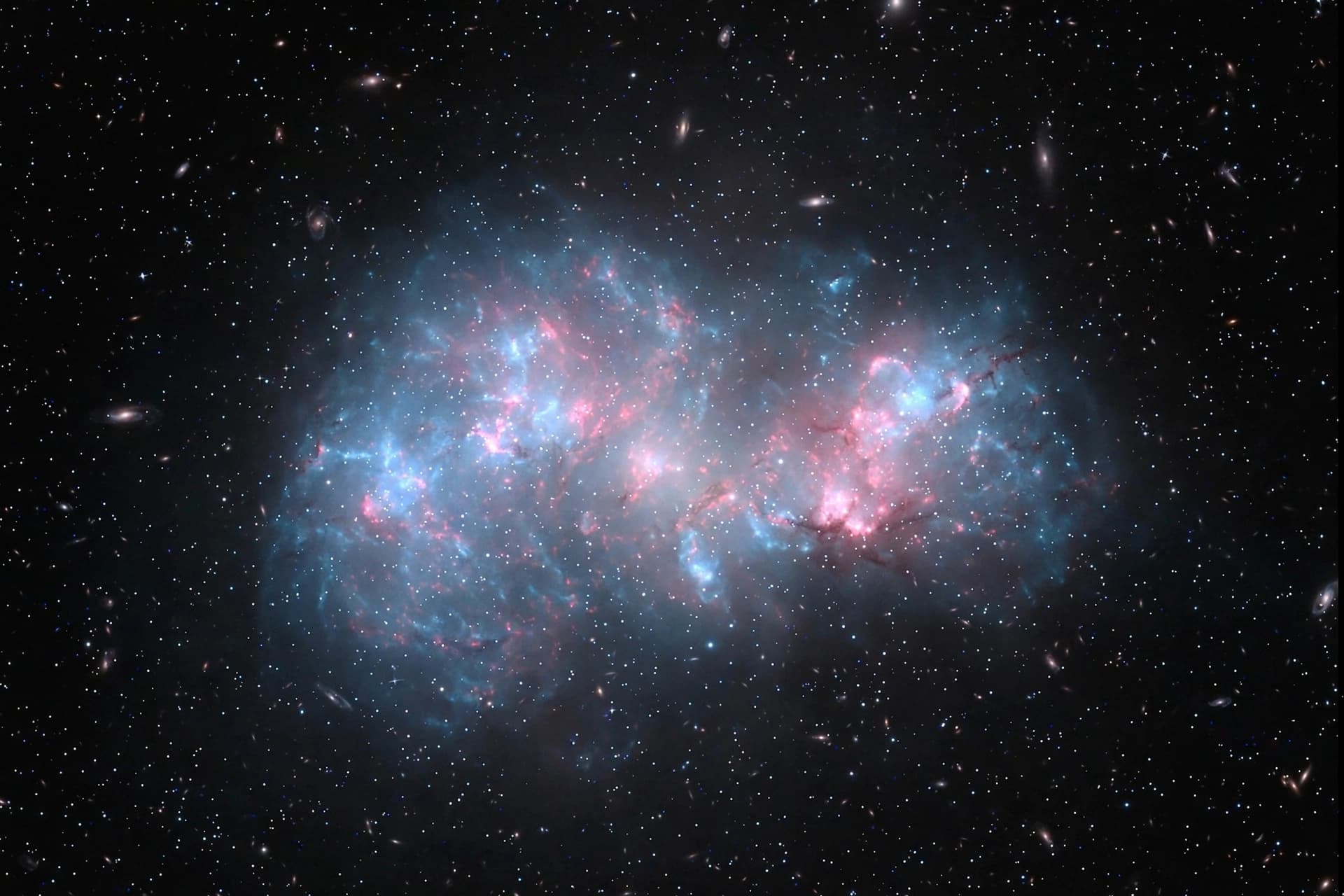
AI Image Disclaimer: Please note that any accompanying visuals for this article are AI-generated representations intended for illustrative purposes only.
Sources: NASA, ESA/Gaia, The Astrophysical Journal Letters, Sky & Telescope
Published by Banx Network. This article is part of the Banx decentralized media programme, powered by the BXE token on the XRP Ledger.