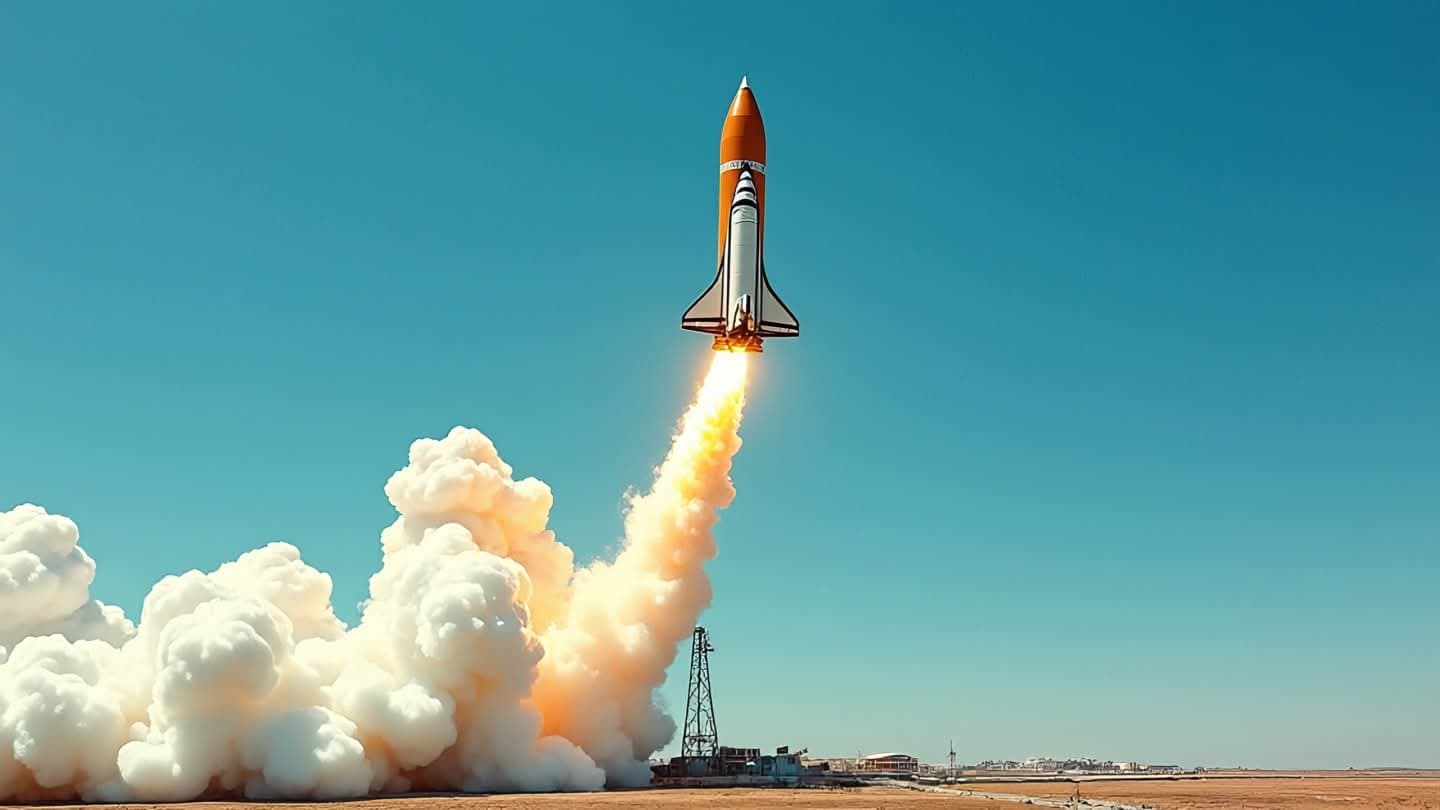
History is often marked by quiet moments that precede monumental leaps. On a summer morning in 1962, the sky above Cape Canaveral cleared to reveal not just a rocket, but a vessel of human curiosity aimed at our nearest planetary neighbor. The launch of Mariner 2 was more than a technical achievement; it was a declaration that humanity was ready to step beyond the moon and touch the edges of the solar system, seeking answers in the clouds of Venus.
Mariner 2 was the second spacecraft in NASA’s Mariner program, following the partial success of Mariner 1. Its mission was ambitious: to fly by Venus and return data about its atmosphere and surface conditions. At the time, Venus was shrouded in mystery, with scientists debating whether it was a swampy jungle world or a barren desert. The spacecraft carried instruments designed to measure temperature, magnetic fields, and solar wind, promising to peel back the layers of speculation.
The launch itself was a testament to the engineering prowess of the early space age. Using an Atlas-Agena B rocket, NASA propelled the 447-pound probe into a trajectory that would take it millions of miles from Earth. The journey required precise navigation and robust systems capable of surviving the harsh environment of deep space, including intense solar radiation and extreme temperatures.
For three months, Mariner 2 traveled through the void, sending back faint signals that tracked its progress. When it finally approached Venus in December 1962, it became the first successful interplanetary mission in history. The data it returned was revolutionary, revealing a planet with surface temperatures hot enough to melt lead and an atmosphere composed primarily of carbon dioxide.
These findings dispelled the romantic notions of a habitable Venus, replacing them with a picture of a hostile, greenhouse-gas-dominated world. This discovery was crucial for understanding planetary evolution and the potential for life elsewhere. It also highlighted the power of direct observation over theoretical assumption, setting a precedent for future exploration.
The success of Mariner 2 paved the way for subsequent missions to Mars, Jupiter, and beyond. It demonstrated that long-duration spaceflight was possible and that scientific payloads could survive the journey. The mission’s legacy is not just in the data it collected, but in the confidence it instilled in a generation of scientists and engineers.
Today, as we look back on that August day, we see it as a pivot point in our cosmic journey. Mariner 2 did not just visit Venus; it opened the door to the rest of the solar system. It reminded us that even the most familiar neighbors can hold surprising secrets, waiting only for the courage to look closer.
NASA continues to honor the legacy of Mariner 2 as a cornerstone of planetary science. The mission remains a benchmark for success in early space exploration, inspiring current and future endeavors to explore the mysteries of our solar system.
AI Image Disclaimer: Please note that the visual accompaniments for this article are AI-generated illustrations created to reflect the historical context of early space exploration and the Mariner 2 mission.
Sources: NASA History Office Smithsonian National Air and Space Museum BBC News Space.com The New York Times Archives
Published by Banx Network. This article is part of the Banx decentralized media programme, powered by the BXE token on the XRP Ledger.