Key Highlights
- Major U.S. banks are adopting XRP for cross-border transactions.
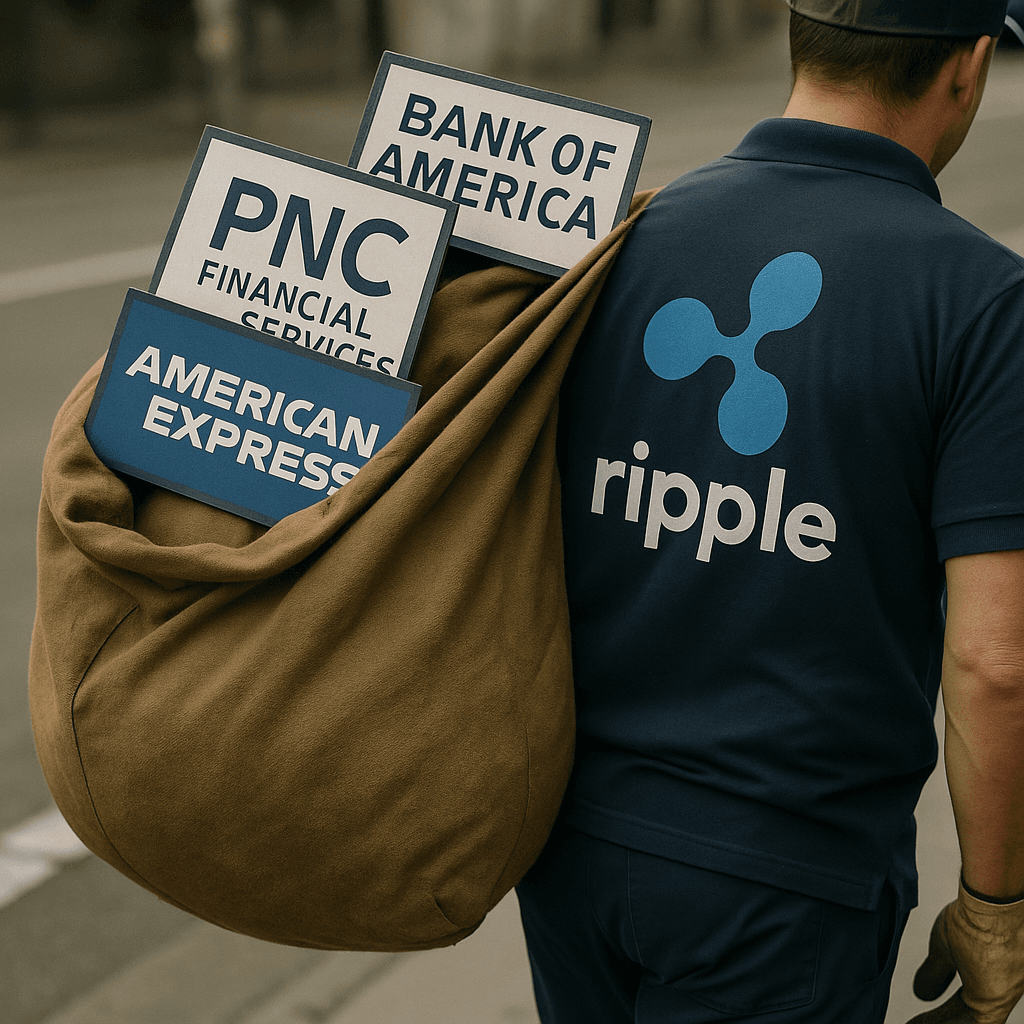
- PNC Financial Services, Bank of America, and American Express are leading the charge.
- XRP enhances payment efficiency and reduces liquidity costs.
U.S. Financial Institutions Harnessing XRP for Cross-Border Payments
Ripple’s blockchain technology, particularly its digital asset XRP, is gaining traction among several major U.S. financial institutions. These organizations are utilizing RippleNet and its On-Demand Liquidity (ODL) solutions to enhance the efficiency of international transactions. This article explores the key players involved, their current usage of XRP, and the implications for the financial landscape.
PNC Financial Services (PNC Bank) What it uses: RippleNet (via xCurrent), with plans to transition to XRP-powered ODL (formerly xRapid) for liquidity.
In September 2018, PNC Treasury Management joined RippleNet, initially leveraging xCurrent to expedite overseas payments. The bank has expressed intentions to adopt XRP in the future, aiming to provide real-time settlement and reduce liquidity costs. As one of the first U.S. megabanks to embrace Ripple’s ODL product, PNC is paving the way for on-chain adoption in the domestic market.
Bank of America What it uses: RippleNet (xCurrent), exploring On-Demand Liquidity via XRP.
Multiple sources confirm that Bank of America is actively participating in RippleNet. Reports suggest that the bank is either using XRP for liquidity or is awaiting the resolution of Ripple’s ongoing SEC case before fully deploying the asset. As a leading U.S. bank, its involvement in XRP usage represents a significant step toward institutional adoption in global remittance corridors.
American Express What it uses: RippleNet (xCurrent), with ODL pilots leveraging XRP.
American Express has been a partner of Ripple since 2017, focusing on streamlining B2B international payments. The company has conducted pilots utilizing XRP-based On-Demand Liquidity to facilitate efficient transaction settlements. As a global payments leader, AmEx’s engagement with XRP underscores the credibility and scalability of the digital asset in enterprise contexts.
Noteworthy Clarification: RippleNet vs. On-Demand Liquidity RippleNet, specifically xCurrent, serves as a messaging and settlement framework that enables faster cross-border approvals without requiring XRP for operation. In contrast, On-Demand Liquidity (ODL) utilizes XRP as a bridge currency, eliminating the necessity for pre-funded accounts and involving actual XRP transactions. Several leading institutions are either exploring or actively using this service.
Why It Matters The adoption of XRP by these major banks signifies a shift towards real-time liquidity, allowing for cross-border payments to be settled in seconds rather than days. The increased efficiency provided by ODL with XRP alleviates the burden of maintaining costly pre-funded nostro accounts. Furthermore, the involvement of U.S. banks enhances XRP’s credibility and could pave the way for broader regulatory acceptance.
Reality Check & Next Steps While many U.S. banks are currently utilizing RippleNet/xCurrent, which does not involve XRP, the deployment of XRP-powered ODL is still in its early stages. PNC, Bank of America, and American Express are at the forefront of this adoption. However, broader scaling may depend on regulatory clarity, particularly regarding the resolution of Ripple’s legal challenges.
In summary, while numerous U.S. banks connect via RippleNet, PNC Financial Services, Bank of America, and American Express are notable for actively piloting or using XRP within On-Demand Liquidity frameworks. As the regulatory environment evolves and Ripple’s solutions mature, it is likely that more institutions will follow suit.
Published by Banx Network. This article is part of the Banx decentralized media programme, powered by the BXE token on the XRP Ledger.