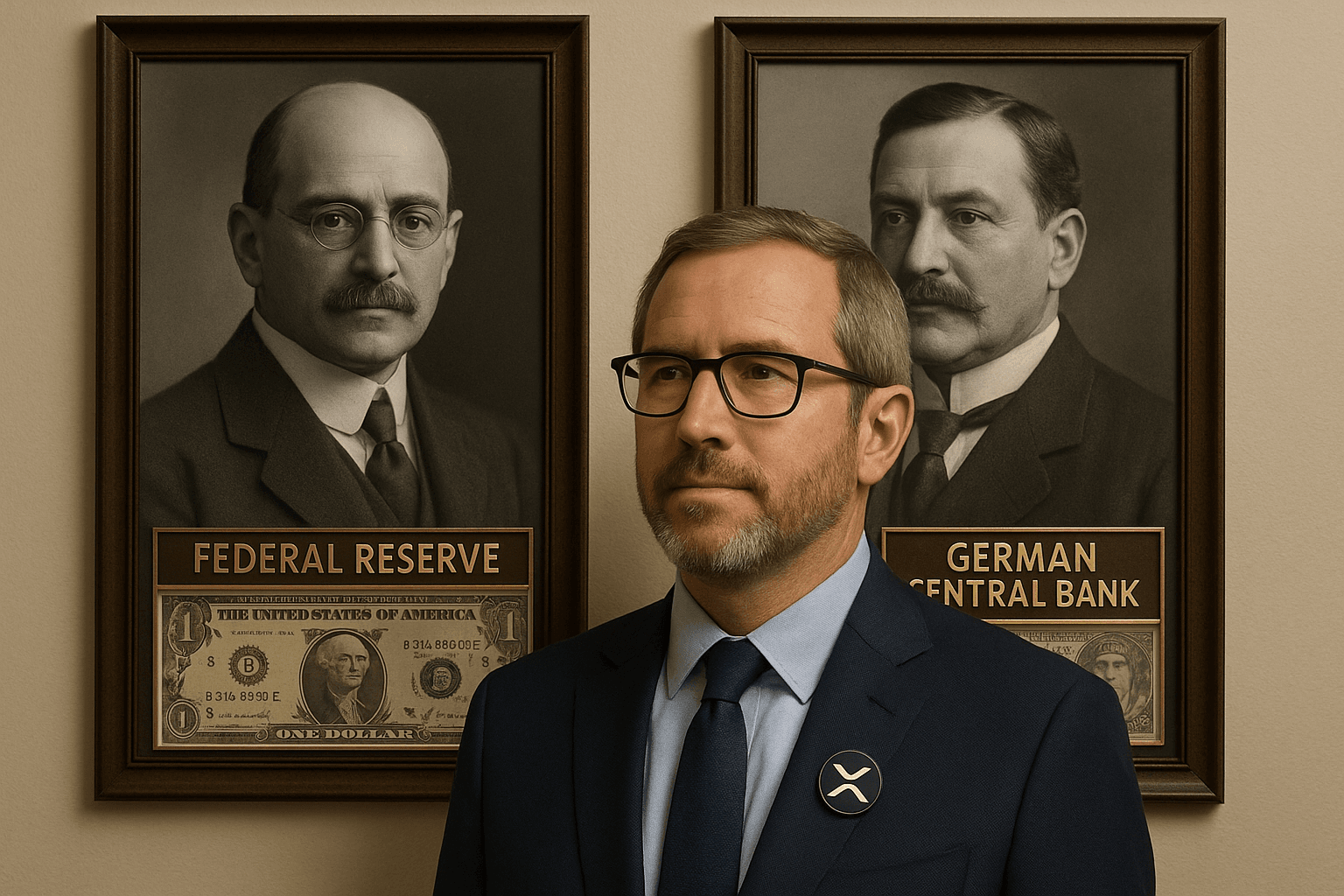
Key Highlights
- Historical Influence:The Warburg brothers shaped the U.S. Federal Reserve and German Central Bank.
- Modern Innovations:Their descendants are now involved in Web3 payments powered by XRP.
- Financial Evolution:The shift from centralized banking to decentralized systems reflects ongoing financial transformation.
The Warburg family has long been synonymous with banking power and influence, particularly in the early 20th century. Paul Moritz Warburg and Max Moritz Warburg were pivotal figures in shaping monetary policy in both the United States and Germany. Paul Warburg, who emigrated from Germany, played a crucial role in the establishment of the Federal Reserve System, serving as its Vice Chairman from 1916 to 1918. His brother, Max, was equally influential in Germany, advising the Reichsbank and the German government on financial matters during a transformative period in global finance.
This historical connection between the Warburgs and the world's leading monetary systems highlights a unique legacy that has persisted through generations. While their direct influence waned with the passage of time, the Warburg name continues to resonate in the financial sector, particularly as new technologies emerge.
In recent years, members of the Warburg lineage have reportedly become involved in fintech and blockchain initiatives, particularly in the realm of Web3 payments. The XRP Ledger (XRPL) has emerged as a significant player in this space, offering solutions that promise to revolutionize cross-border transactions. Industry experts suggest that the capabilities of the XRP ecosystem, which allows for instant value transfers at low costs, echo the Warburgs' original vision for a more efficient and interconnected financial system.
As the financial landscape evolves, the descendants of the Warburg family are believed to be supporting or advising on next-generation payment systems that leverage blockchain technology. This transition from traditional banking frameworks to decentralized, blockchain-driven infrastructures marks a significant shift in the narrative of global finance, one that the Warburgs once helped to define.
The parallels between the Warburg brothers' historical contributions and the current innovations in Web3 payments are striking. Just as they once navigated the complexities of international finance, their modern counterparts are now at the forefront of a technological revolution that promises to reshape how value is exchanged globally. The question remains whether these Web3 innovators will be remembered with the same reverence as their early 20th-century predecessors, but their efforts are undeniably significant in the ongoing evolution of financial systems.
As we look to the future, the Warburg name is once again poised to play a central role in the narrative of financial evolution, bridging the gap between historical banking practices and the cutting-edge developments of blockchain technology.
Published by Banx Network. This article is part of the Banx decentralized media programme, powered by the BXE token on the XRP Ledger.