Brazil is approaching its October 4 presidential vote with the contest between President Luiz Inácio Lula da Silva and Senator Flávio Bolsonaro occupying much of the political spotlight. The latest surveys show a competitive race, particularly in potential second-round matchups, as millions of voters prepare to choose among a broad field of candidates.
There is an important distinction in the headline: the Bolsonaro running against Lula is Flávio Bolsonaro, the son of former President Jair Bolsonaro. Jair Bolsonaro is not the candidate in this election. Flávio, a senator, has emerged as the principal Bolsonaro-aligned candidate in the presidential contest.
Brazil's electoral calendar calls for the first round on October 4. If no presidential candidate receives more than half of the valid votes, a runoff between the two leading candidates is scheduled for October 25. That possibility has become central to polling analysis because several recent surveys show Lula and Flávio Bolsonaro within or close to their respective margins of error in a hypothetical second round.
An AtlasIntel/Bloomberg poll reported by Reuters on September 29 put Flávio Bolsonaro at 47.7% and Lula at 47.6% in a simulated runoff, a difference of just 0.1 percentage point and therefore within the poll's margin of error. In the same survey's first-round scenario, Lula had 45.3% and Flávio Bolsonaro 42.2%. The poll surveyed 5,005 people between September 23 and 28.
Other surveys have produced somewhat different numbers while showing a similarly competitive picture. A Datafolha poll reported by Reuters on September 24 gave Lula 47% and Flávio Bolsonaro 45% in a hypothetical runoff. A BTG/Nexus poll published September 28 showed Lula ahead in its first-round scenario but within a statistically close range in the simulated second round.
The campaign has also moved into its final televised moments. Lula chose not to participate in the final TV Globo presidential debate on October 1, while Flávio Bolsonaro was scheduled to attend alongside other candidates. Reuters reported that a recent Quaest poll placed Lula at 39% and Flávio at 34% in the first round, with the two tied at 42% in a simulated runoff.
Beyond the polling numbers, the election is being fought over issues including the economy, household costs, public security and social programs. Reuters reported that Lula's campaign has highlighted reductions in inequality and unemployment while facing concerns over living costs and crime. Flávio Bolsonaro has emphasized security measures as a central campaign theme. These competing priorities reflect different approaches that voters will weigh at the ballot box.
With voting only days away, polls provide snapshots of voter sentiment rather than final results. Their margins of error, methodologies, field dates and changing campaign circumstances all matter when interpreting the figures. What is clear from the recent surveys is that Brazil enters the final stretch with a closely watched contest between Lula and Flávio Bolsonaro, while the possibility of a second round remains firmly part of the electoral calendar.
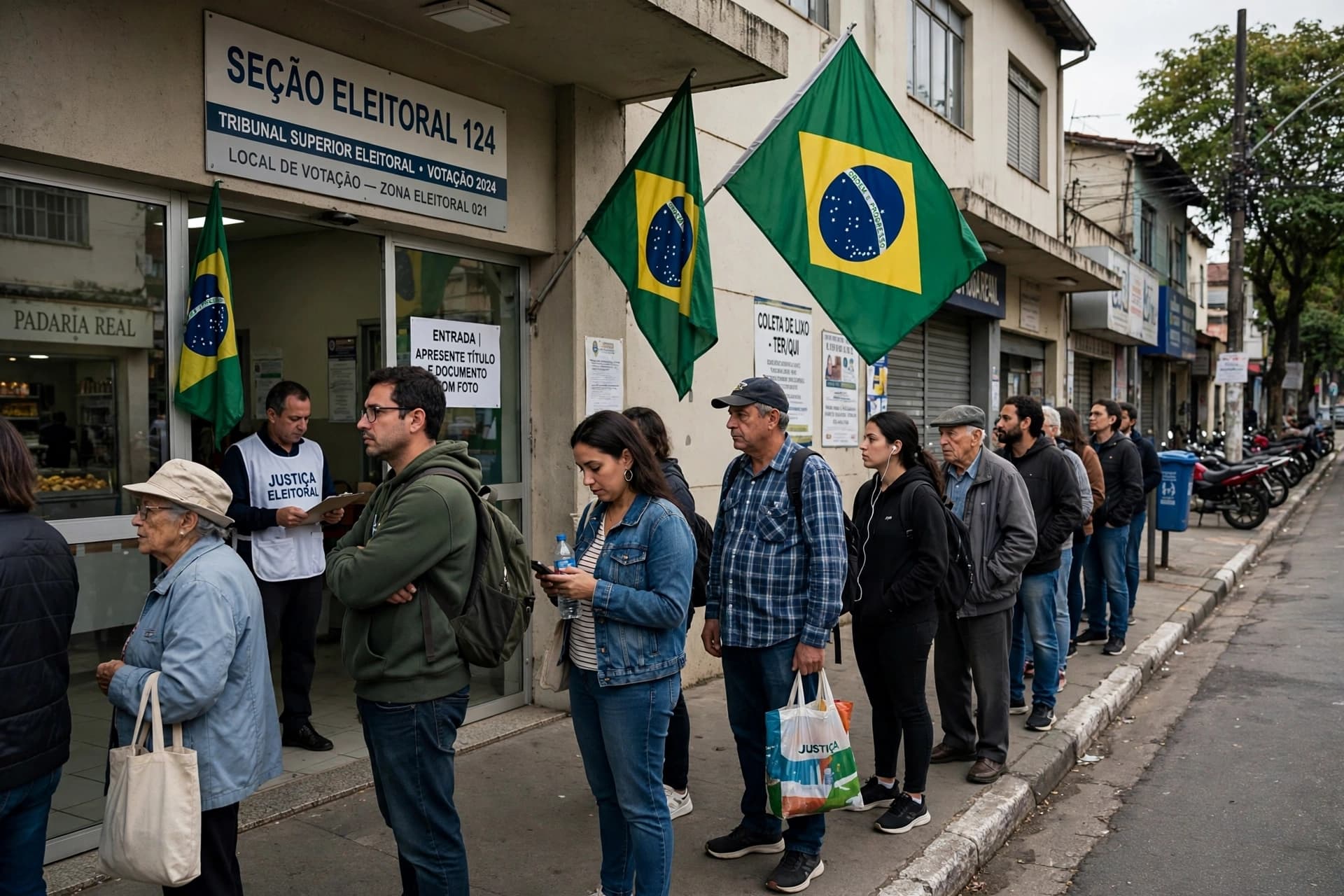
AI Image Disclaimer: The accompanying election image is AI-generated and is intended only as a neutral visual representation.
Sources: Reuters, Associated Press, Al Jazeera, Datafolha, AtlasIntel/Bloomberg, Quaest, Tribunal Superior Eleitoral
Published by Banx Network. This article is part of the Banx decentralized media programme, powered by the BXE token on the XRP Ledger.