
Key Highlights
- Iran's IRGC claims to have intercepted U.S. weapons near Iraq.
- The allegations come amid rising tensions between Iran and the U.S.
- Concerns over arms trafficking persist in the Middle East.
Recent claims from Iran's Islamic Revolutionary Guard Corps (IRGC) have intensified scrutiny on the Iraq-Iran border, a region already fraught with geopolitical tensions. The IRGC announced that it had seized weapons allegedly smuggled by the United States, a claim that has drawn attention amid ongoing security operations and military presence in the Middle East.
According to reports linked to Iranian state media, security forces intercepted shipments purportedly containing arms and military equipment. Iranian officials framed this operation as part of their broader efforts to secure the border and prevent destabilizing activities that could exacerbate regional conflicts. This announcement comes at a time when relations between Iran and the United States are particularly strained, marked by military warnings and sanctions disputes.
The U.S. government has not publicly confirmed these allegations, and independent verification of the claims remains limited. Analysts emphasize that during periods of heightened geopolitical tension, competing narratives often emerge, complicating the understanding of the situation on the ground. The lack of transparency surrounding the origin and intended destination of the seized weapons raises questions about the veracity of the IRGC's claims.
Historically, the Iraq-Iran border has been a sensitive area due to the presence of armed groups, smuggling routes, and military operations by various state and non-state actors. Security incidents in this region frequently have broader diplomatic implications, affecting relationships among multiple governments and influencing the actions of non-state actors involved in the conflict.
Experts caution that claims regarding intercepted weapons can serve dual purposes. Governments may use such announcements to bolster domestic security narratives or to send strategic messages to both rivals and allies. The IRGC's recent claims could be interpreted as an attempt to assert Iran's military capabilities and reinforce its position in the ongoing geopolitical rivalry with the United States.
Despite the political motivations that may underlie such claims, concerns about illicit arms trafficking remain a genuine issue across several conflict zones in the Middle East. International monitoring organizations, alongside regional governments, are actively working to curb unauthorized weapon flows that could escalate violence and destabilize already fragile regions.
As tensions between Iran and the United States continue to rise, allegations involving border security and weapons smuggling are likely to attract increased international attention. The IRGC's assertions reflect the ongoing atmosphere of suspicion and strategic competition that characterizes security dynamics throughout the Middle East, highlighting the complex interplay of military, political, and economic factors at play.
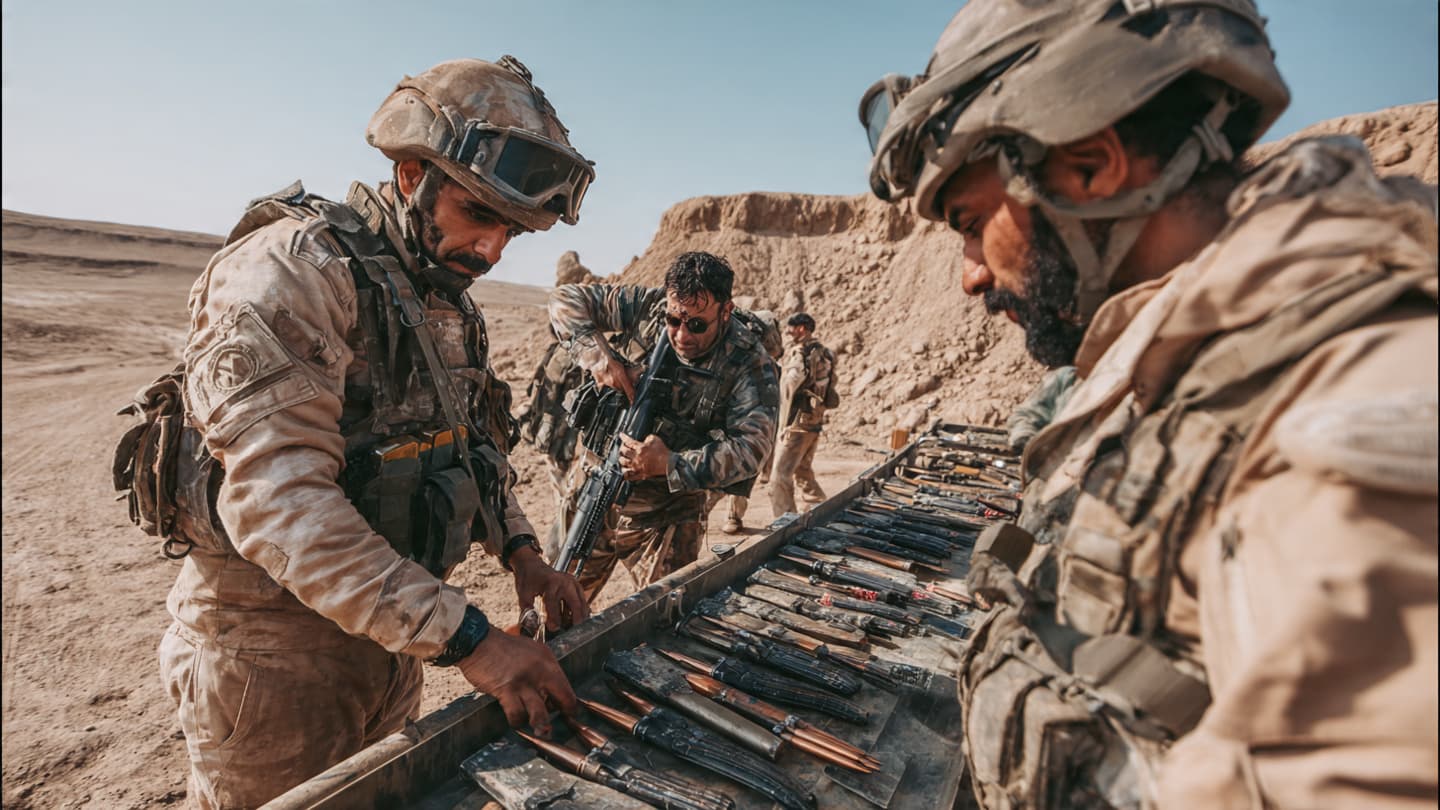
The visuals accompanying this article are AI-generated illustrations designed to enhance the reporting on geopolitical and border security issues.
Published by Banx Network. This article is part of the Banx decentralized media programme, powered by the BXE token on the XRP Ledger.



