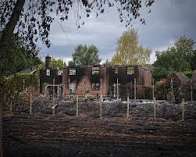
CUCUTA, Colombia — Severe armed clashes and a dramatic escalation in targeted homicides have destabilized multiple border sectors over the past 48 hours, as the transnational criminal organization Tren de Aragua battles for absolute control over lucrative illicit crossing routes. The violent surge, heavily concentrated along the porous frontier dividing Colombia and Venezuela, has forced international security agencies to raise their domestic threat levels. Local police officials confirmed that coordinated firefights involving automatic weapons erupted across several informal transit pathways, leaving at least 14 people dead and forcing hundreds of border residents to seek immediate shelter.
The Overseas Security Advisory Council (OSAC) issued an urgent security alert advising diplomatic personnel and international transport operators to avoid critical border corridors due to the unpredictable nature of the fighting. Intelligence briefs indicate that the Venezuelan-born syndicate is aggressively expanding its territorial footprint, utilizing tactical ambushes to systematically eliminate local contraband networks. The combat zones have spilled over from remote rural tracks into densely populated border towns, where stray gunfire has damaged civilian infrastructure and disrupted cross-border commercial trade.
Law enforcement agencies in neighboring jurisdictions report that the gang’s operational methods have become increasingly brazen, featuring daylight executions and coordinated assaults on rival safe houses. Forensic teams recovering bodies from the recent border clashes noted that the victims exhibited signs of close-range execution, a hallmark tactic used by the syndicate to terrorize local populations and enforce strict territorial compliance. The rapid escalation has completely overwhelmed local municipal mortuaries and strained the investigative capacities of regional police units.
The expanding influence of Tren de Aragua has triggered an emergency diplomatic coordination effort among South American interior ministries, who view the syndicate as a major threat to hemispheric stability. Border patrols have been heavily reinforced with tactical military units, who are executing sweep operations to dismantle illegal checkpoints established by the gang to extort migrants and merchants. Despite these deployments, the group's highly decentralized structure enables its operational cells to quickly retreat across international boundaries to evade direct military engagement.
Socioeconomic instability in the frontier zones continues to exacerbate the security crisis, providing a steady stream of vulnerable individuals whom the syndicate systematically exploits for forced labor, human trafficking, and narcotics distribution. Human rights monitors stationed at border transit centers report that the pervasive atmosphere of fear has caused a near-total cessation of normal community activities, with schools and markets remaining shuttered indefinitely. Local leaders are urgently requesting international humanitarian intervention to protect civilian populations caught directly in the operational crossfire.
As security forces attempt to re-establish formal administrative control over the fractured border zones, prosecutors are working to identify the high-ranking gang lieutenants orchestrating the offensive from remote command hubs. Intelligence sharing between regional governments has intensified, focusing on tracking the financial flows and international weapons supply chains that feed the syndicate's front-line cells. The border environment remains highly volatile, with tactical commanders preparing for sustained counter-insurgency operations to prevent further territorial consolidation by the group.
Published by Banx Network. This article is part of the Banx decentralized media programme, powered by the BXE token on the XRP Ledger.