
Key Highlights
- Eight fatalities confirmed in a bus crash near La Paz.
- Fifteen passengers injured, with ongoing medical evacuations.
- Investigations launched into potential mechanical failures.
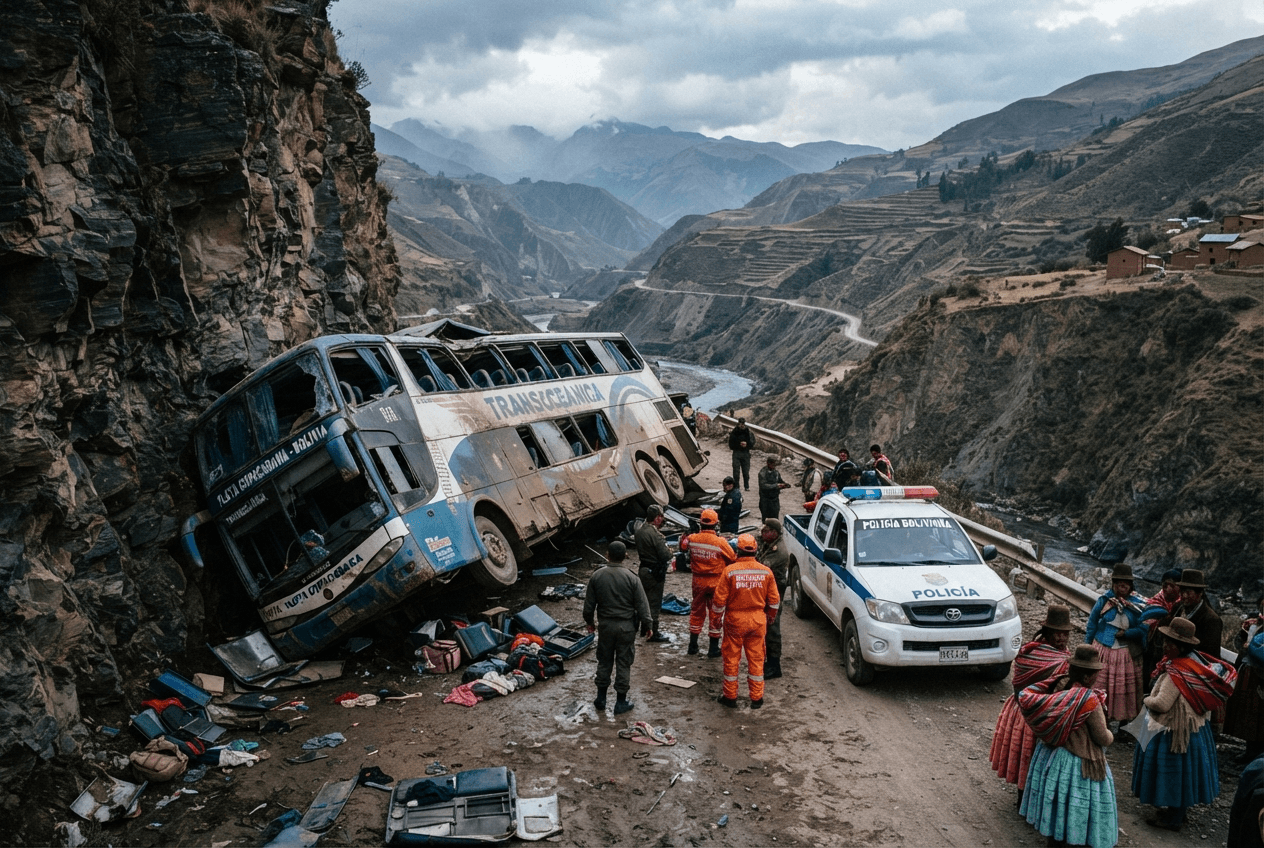
La Paz, Bolivia—An intercity passenger bus lost control on a steep mountain curve early Wednesday morning, resulting in a tragic accident that claimed the lives of eight passengers and left fifteen others injured. The bus, which was traveling along a highway connecting La Paz with rural highland communities, flipped onto its side after sliding across two lanes of asphalt and crashing into a rocky cliff wall. Emergency response teams were dispatched to the remote high-altitude location shortly after dawn to assist with the aftermath of the incident.
Rescue crews utilized hydraulic cutters to free passengers trapped in the crushed front section of the bus. Paramedics quickly established a field triage post on the roadside to stabilize those suffering from serious injuries, including bone fractures and head trauma. Air force transport helicopters and regional ambulances were mobilized to evacuate the injured survivors to hospitals in El Alto and La Paz, ensuring they received immediate medical attention.
Highway police confirmed eight fatalities at the crash site, including the bus driver. Investigators noted deep skid marks extending several meters back from the point of impact, suggesting that the bus may have experienced brake failure or was traveling at excessive speed on the winding mountain corridor. In response to the incident, transit authorities ordered an immediate inspection of the passenger transport company's fleet maintenance records and operational permits to ensure compliance with safety regulations.
The national highway safety directorate has expressed ongoing concerns about mechanical failures on high-altitude transit routes, which are known for their challenging conditions. Mechanical engineering specialists were dispatched to the crash site to conduct a thorough inspection of the vehicle's braking systems and tire conditions, aiming to determine the exact cause of the accident.
A surviving passenger, who sustained arm injuries, recounted the moments leading up to the crash, stating, "The bus started shaking violently before it struck the embankment and tipped over." She described how passengers shouted warnings to the driver just moments before the bus lost control. Meanwhile, distraught relatives gathered at hospital emergency rooms in El Alto, anxiously searching for casualty manifests and medical updates on their loved ones.
Heavy tow cranes were brought to the scene to lift the overturned bus and clear the obstructed highway lanes. Highway patrol officers managed traffic along a single lane, resulting in multi-mile delays for commercial trucks and other vehicles. Road crews worked diligently to spread sand over fuel spills and clear broken glass from the pavement, ensuring the safety of remaining motorists.
In light of the incident, regional prosecutors have opened a formal investigation into the transport company to assess liability and compliance with driver shift regulations. The Ministry of Transport announced plans for an audit of safety enforcement along high-risk Andean road corridors, aiming to prevent future tragedies. Municipal authorities coordinated emergency shelter and assistance for stranded travelers affected by the road blockages, ensuring their safety and comfort.
As heavy lifting machinery continues to work on removing the destroyed vehicle frame from the highway right-of-way, highway police remain stationed along the mountain route to manage residual traffic backlogs as evening approaches. The investigation into the mechanical cause of this devastating crash remains open and unresolved, with authorities committed to uncovering the truth behind this tragic event.
Published by Banx Network. This article is part of the Banx decentralized media programme, powered by the BXE token on the XRP Ledger.



