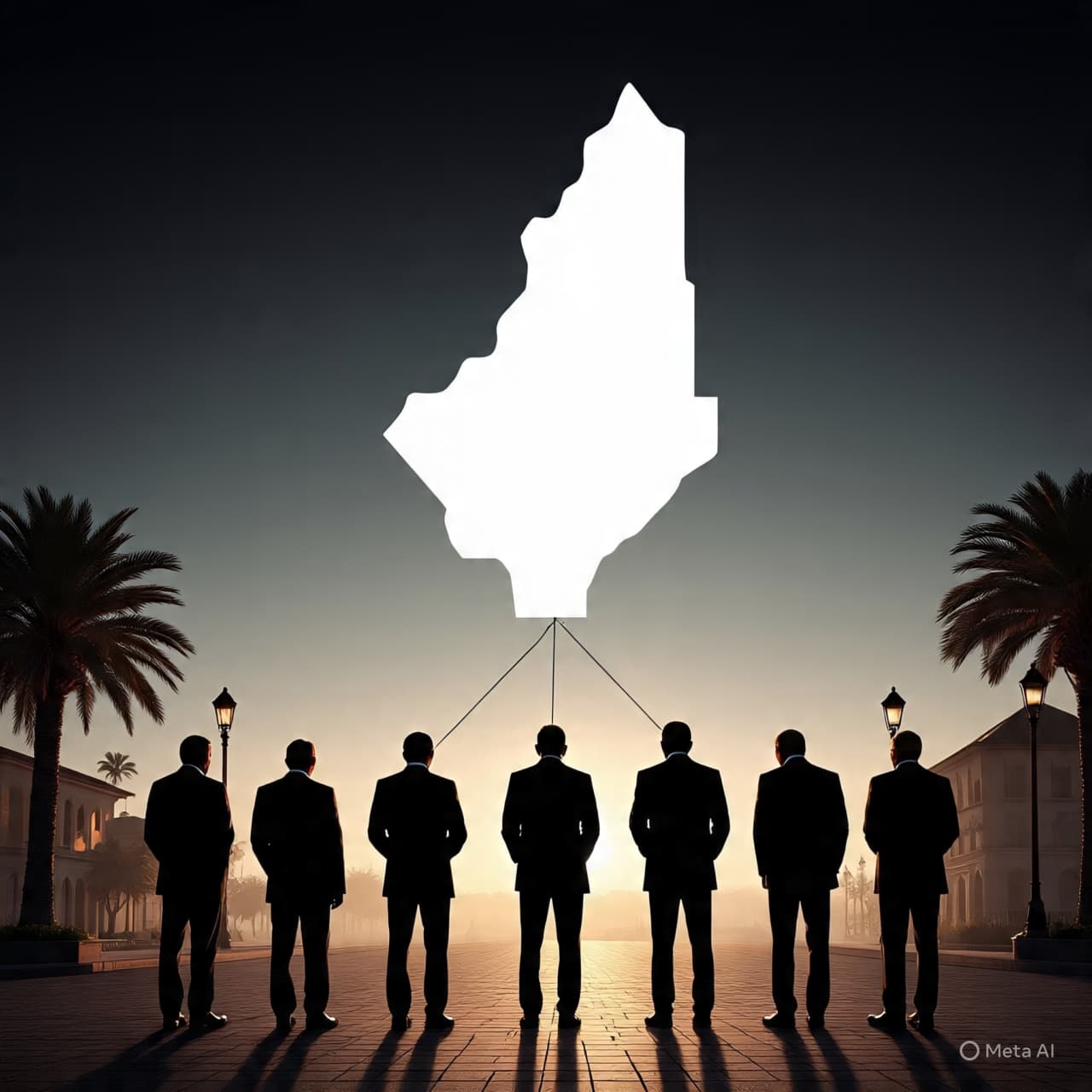
In the corridors of power, where decisions echo far beyond their walls, a new chapter is quietly being written for Gaza. President Donald Trump’s announcement of a “Board of Peace” feels like an attempt to sketch order amid a landscape long marked by uncertainty. In politics, as in architecture, frameworks often come before the bricks—plans before progress, committees before calm. This board, composed of familiar figures from international diplomacy and the Trump orbit, stands as a gesture of direction, if not yet of certainty.
Among the named members are Sir Tony Blair, the former British prime minister with decades of Middle East experience, and Jared Kushner, Trump’s son-in-law and architect of previous peace initiatives. Their presence signals a blend of institutional memory and personal influence, combining the weight of global politics with the immediacy of presidential trust. Alongside them are figures like Marco Rubio, Ajay Banga, and Steve Witkoff, forming a constellation intended to guide Gaza’s recovery and governance, with President Trump himself as chair.
The initiative is ambitious: the board is tasked with supervising Gaza’s reconstruction, supporting governance reforms, and attracting investment—an effort to shape stability from the fragile calm following ceasefires. Yet, its composition raises questions. Critics note the absence of Palestinian representation, a gap that may challenge legitimacy on the ground. Some see it as a top-down approach, where international guidance precedes local ownership. Still, for proponents, the move represents a tangible plan where previously only rhetoric existed—a blueprint, however imperfect, to address humanitarian needs and governance challenges.
This duality—between intent and reception—is a familiar rhythm in diplomacy. While the board’s creation is framed as a step toward peace, its impact will ultimately depend on cooperation, perception, and the complexities of local politics. The act of naming respected international figures signals seriousness, but the human and political realities of Gaza may test the limits of any external oversight. As plans unfold, the world watches a delicate balance between ambition and sensitivity, between oversight and sovereignty, and between hope and the hard edge of geopolitics.
Ultimately, the board’s formation invites reflection on the nature of peace itself. It is rarely instantaneous; it is often scaffolded through careful planning, patient dialogue, and incremental steps. Whether this initiative can bridge divides, enable reconstruction, and foster governance will remain an unfolding story—one whose success depends as much on quiet negotiation as on bold announcements.
AI Image Disclaimer “Visuals are created with AI tools and are not real photographs; they illustrate concepts only.”
Sources Al Jazeera The Guardian Reuters Australian Financial Review (AFR) Associated Press / mainstream reporting
Published by Banx Network. This article is part of the Banx decentralized media programme, powered by the BXE token on the XRP Ledger.