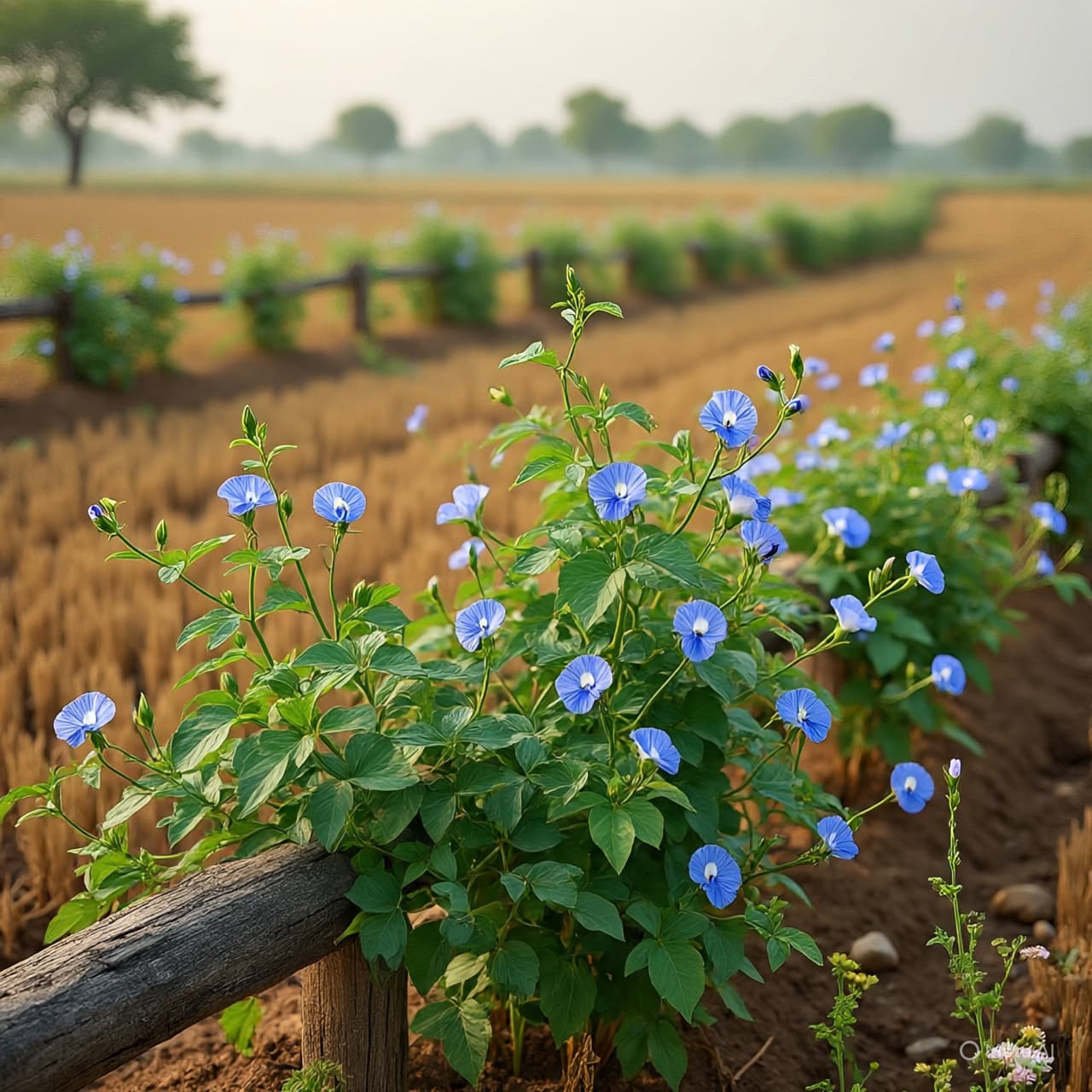
In the lush fields and small farms of India’s rural heartland, a humble climbing plant with striking blue flowers has begun to weave a new story of economic hope. Once largely overlooked as a wild or ornamental vine, the butterfly pea flower — known locally as aparajita — is attracting growing attention from farmers, entrepreneurs and global buyers alike for its vibrant hue, versatile uses and emerging market value.
The plant itself grows naturally across many parts of India, with its deep blue blossoms prized for brewing striking teas, creating natural food colourants and producing blue dyes. What once was a backyard plant is now a commercial crop that some farmers are cultivating with purpose, selling flowers to buyers who export dried blooms or process them for value‑added products.
For farmers like Nilam Brahma in Assam, this shift hasn’t just been agricultural — it has been transformative. Brahma says her first sale of dried flowers earned her about $50 (roughly ₹4,000), a surprising and empowering return that helped spur her to invest in solar dryers and quality preservation techniques to meet buyer standards. The experience sparked a small business that now supports her family and connects her with wider networks of growers.
Entrepreneurs and startups — such as Blue Tea in northern India — are actively building partnerships with farmers to scale production. They provide contracts, agronomy support and cultivation guidance, encouraging growers to improve yields and quality for both domestic and export markets. Though challenges remain — including ensuring consistent quality and seed standards — the butterfly pea community is growing.
The global appetite for natural colourants and clean‑label ingredients has helped fuel interest in butterfly pea. Its ability to brew into a vivid blue tea that changes colour to purple with a squeeze of lemon makes it highly attractive in specialty food and beverage markets. While regulatory approval varies by region, demand in markets such as the United States has already been supported by food additive approvals, bolstering overseas opportunities.
Farmers in states such as Uttar Pradesh and West Bengal report that growing butterfly pea has offered them diversification from traditional crops, increased incomes, and even the ability to lease more land or expand workforces. This floral boom reflects how innovation and market linkages — even around a plant growing wild for generations — can open routes to prosperity for small‑scale growers.
AI Image Disclaimer Visuals are created with AI tools and are not real photographs.
Sources Butterfly Pea Flower Finds New Commercial Life in India Indian Farmers Cultivate Butterfly Pea Flower for Global Demand
Published by Banx Network. This article is part of the Banx decentralized media programme, powered by the BXE token on the XRP Ledger.