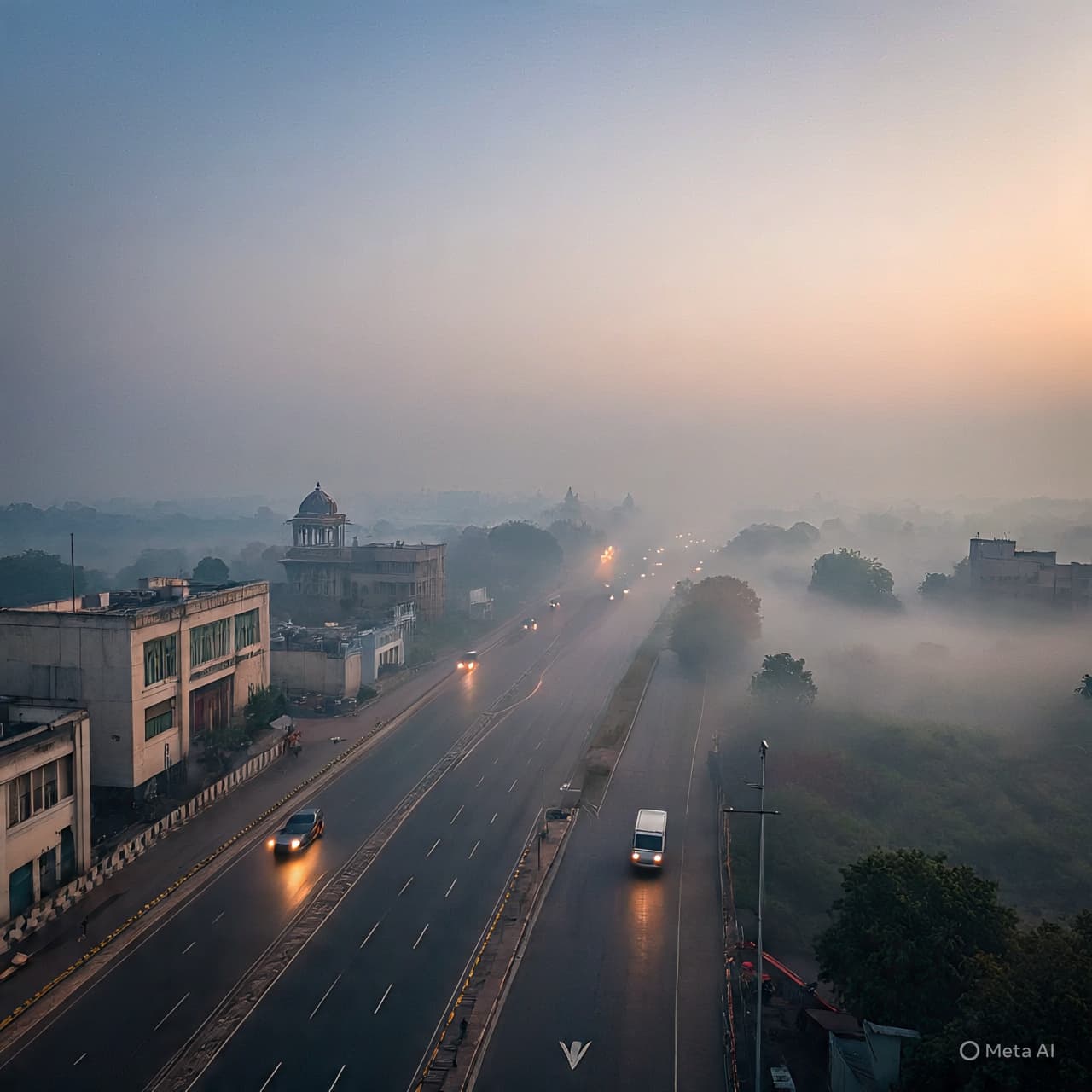
On a winter morning in Delhi‑NCR, the city that often buzzes with dawn activity found itself wrapped in a thick, ghostly blanket of fog — a weather phenomenon that felt almost tangible to commuters, travellers, and residents alike. The heavy mist, a familiar companion during India’s cold wave season, moved slowly through streets and over fields, turning familiar landmarks into muted silhouettes. But beneath this serene veneer lay tangible disruption: flight delays, poor air quality and slowed travel that reminded everyone of the complex interplay between climate, urban life and human mobility.
From early Saturday, dense fog spread across the national capital and surrounding regions, significantly reducing visibility and affecting normal routines. The cold wave gripping Delhi‑NCR acted as a catalyst, combining with stagnant air to intensify the fog’s reach and persistence. Road traffic moved at a crawl in many areas, while rail services also experienced disruptions as the mist lingered well into the morning.
At Indira Gandhi International (IGI) Airport, the thick fog had a noticeable impact on flight operations. With visibility sharply diminished in the early hours, several flights scheduled to take off or land were delayed, prompting airlines and airport authorities to adjust timings and advise passengers to stay updated on status changes. While many flights eventually resumed under specialised low‑visibility procedures, the initial chaos underscored how quickly winter weather can ripple through travel systems.
But the disruption extended beyond air travel. Across the broader Delhi‑NCR area — including Gurugram, Noida and Ghaziabad — residents reported haze that seemed thicker than usual, mixing fog with lingering pollution and driving air quality into the “very poor” category. Local authorities re‑imposed Stage III restrictions under the Graded Response Action Plan (GRAP) to try to mitigate the public health toll.
The India Meteorological Department (IMD) forecasts that the cold spell will persist over the next several days, with dry winter weather continuing and shallow fog expected each morning before lifting as the sun rises. Daytime temperatures are likely to inch higher, but early mornings will remain chilly, and visibility challenges may recur as long as the atmosphere remains still and cold.
For many in the region, the fog served as both a scenic hallmark of winter and a reminder of the operational challenges seasonal weather can bring to everyday life — from travel plans disrupted in the skies to breaths drawn through a haze on the ground.
AI Image Disclaimer “Visuals are created with AI tools and are not real photographs.”
Sources India Today Times of India PTC News
Published by Banx Network. This article is part of the Banx decentralized media programme, powered by the BXE token on the XRP Ledger.