
Key Highlights
- Two fatalities reported due to flash floods in Trabzon, Turkey.
- Torrential rains overwhelmed drainage systems, causing severe flooding.
- Emergency services deployed to rescue stranded residents and restore utilities.
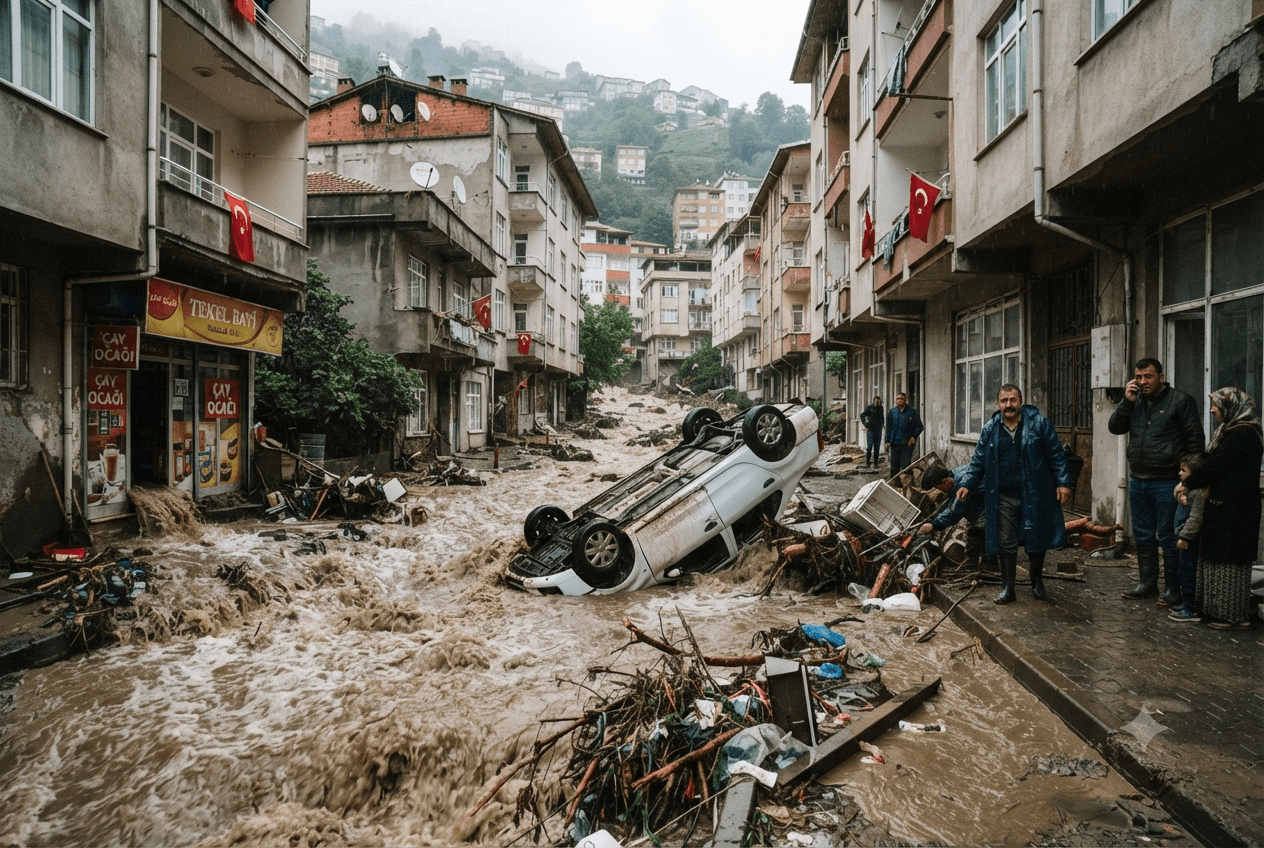
Torrential downpours triggered violent flash floods across the Black Sea coastal province of Trabzon, Turkey, on Tuesday afternoon, resulting in the tragic loss of two lives. The unprecedented rainfall overwhelmed municipal drainage systems within minutes, leading to swift and destructive torrents cascading down steep hillside neighborhoods into commercial districts.
Local residents were forced to scramble to upper-story balconies as surging water levels lifted parked vehicles and carried them down narrow streets, reminiscent of children's toys swept away in a flood. Disaster management teams and local firefighters quickly mobilized, deploying rubber rescue boats and high-clearance tracked vehicles to evacuate families trapped in flooded ground-floor apartments. Emergency medical personnel established temporary triage stations along elevated roadway shoulders to treat citizens suffering from hypothermia and minor injuries.
Search and rescue squads worked tirelessly to recover two bodies from the debris-choked river mouth hours after the initial surge subsided. The municipal infrastructure sustained heavy damage, with retaining walls collapsing and power lines dragged down by sliding mud banks. In response to the disaster, regional authorities suspended educational classes and commercial activities across the hardest-hit districts while engineering teams inspected compromised bridges for safety.
Provincial governor Ismail Ustoglu addressed the media during an emergency press conference, stating, "We are mobilizing all provincial civil protection units to clear blocked culverts and search for any missing individuals trapped in the mud." Meteorological offices issued continued red alerts, warning of persistent heavy precipitation moving eastward along the coastline. Heavy excavation equipment began clearing tons of stone and silt from main transport arteries to restore access.
As grieving families gathered near regional medical centers, local authorities finalized formal victim identification protocols. Utility workers labored through the evening to restore electrical power and clean drinking water networks to isolated villages affected by the flooding. The coastal zone remains under strict weather surveillance as unstable atmospheric conditions persist, raising concerns about further flooding in the coming days.
The impact of this disaster highlights the vulnerability of coastal regions to extreme weather events, underscoring the need for improved infrastructure and emergency preparedness in the face of climate change.
Published by Banx Network. This article is part of the Banx decentralized media programme, powered by the BXE token on the XRP Ledger.



