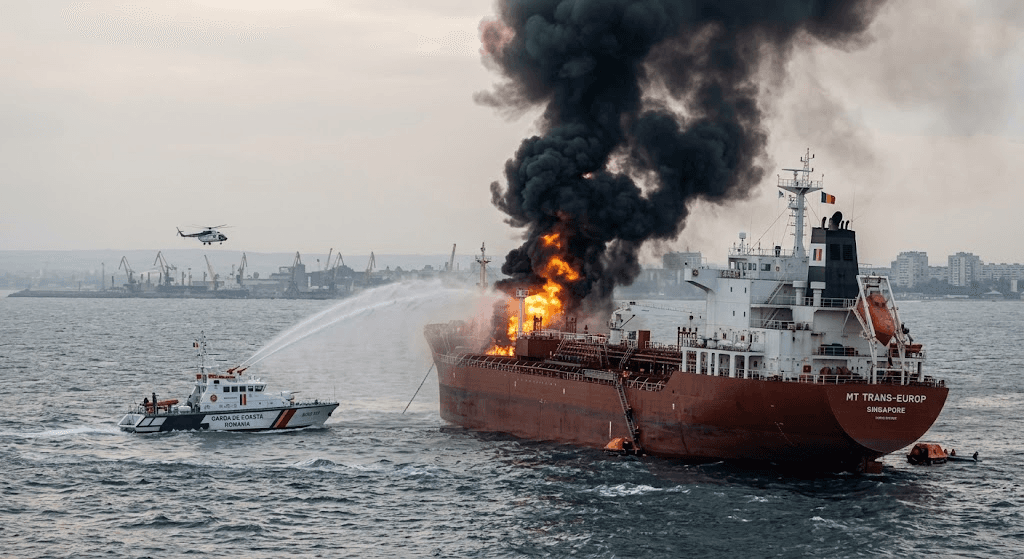
BUCHAREST, Romania — Security concerns along NATO's eastern flank intensified sharply on Wednesday, October 14, 2026, after a commercial chemical and oil tanker anchored in Romanian territorial waters caught fire following a suspected drone strike.
The incident highlights a mounting wave of maritime hazards affecting commercial shipping lanes near the coasts of NATO member states.
According to Romania’s naval authority, emergency services received an urgent distress notification from the Comoros-flagged tanker Yara J late Wednesday. The vessel was anchored approximately 8 to 10 nautical miles southeast of the Sulina Canal—a critical navigation channel for Danube River traffic and Ukrainian grain exports—when a fire erupted onboard.
The ship's crew successfully evacuated the burning vessel into lifeboats before rescue teams arrived. Defense officials later confirmed that the crew managed to extinguish the onboard flames independently, subsequently declining further assistance or entry into port. No casualties were reported among the personnel.
While Romanian defense authorities noted that an official investigation is underway to determine the precise cause of the blast, preliminary reports point toward a possible drone attack.
The incident marks the latest in a string of violent disruptions across the Black Sea. Since early October, at least five commercial vessels have been struck off the coasts of Romania and Bulgaria, resulting in approximately 23 sailors dead or missing. Analysts attribute the surge in maritime perils to expanding drone warfare and regional escalations linked to the ongoing conflict in Ukraine.
The repeated proximity of maritime strikes to NATO territorial waters has prompted defense commands and naval authorities in the region to elevate monitoring levels. With commercial navigation companies facing unprecedented risks along vital European trade corridors, international maritime bodies continue to urge heightened caution for all vessels transiting the western Black Sea.
In response to the escalating threats, regional maritime coalitions are currently reviewing enhanced escort and intelligence-sharing frameworks to safeguard commercial tonnage traversing western Black Sea transit corridors. Shipping associations continue to emphasize the urgent need for reinforced surveillance and rapid-response protocols to protect civilian mariners from ongoing collateral hazards.
Published by Banx Network. This article is part of the Banx decentralized media programme, powered by the BXE token on the XRP Ledger.