
Key Highlights
- Six fatalities reported due to flash floods and mudslides.
- Emergency teams deployed to rescue stranded residents.
- Significant damage to infrastructure and homes across the region.
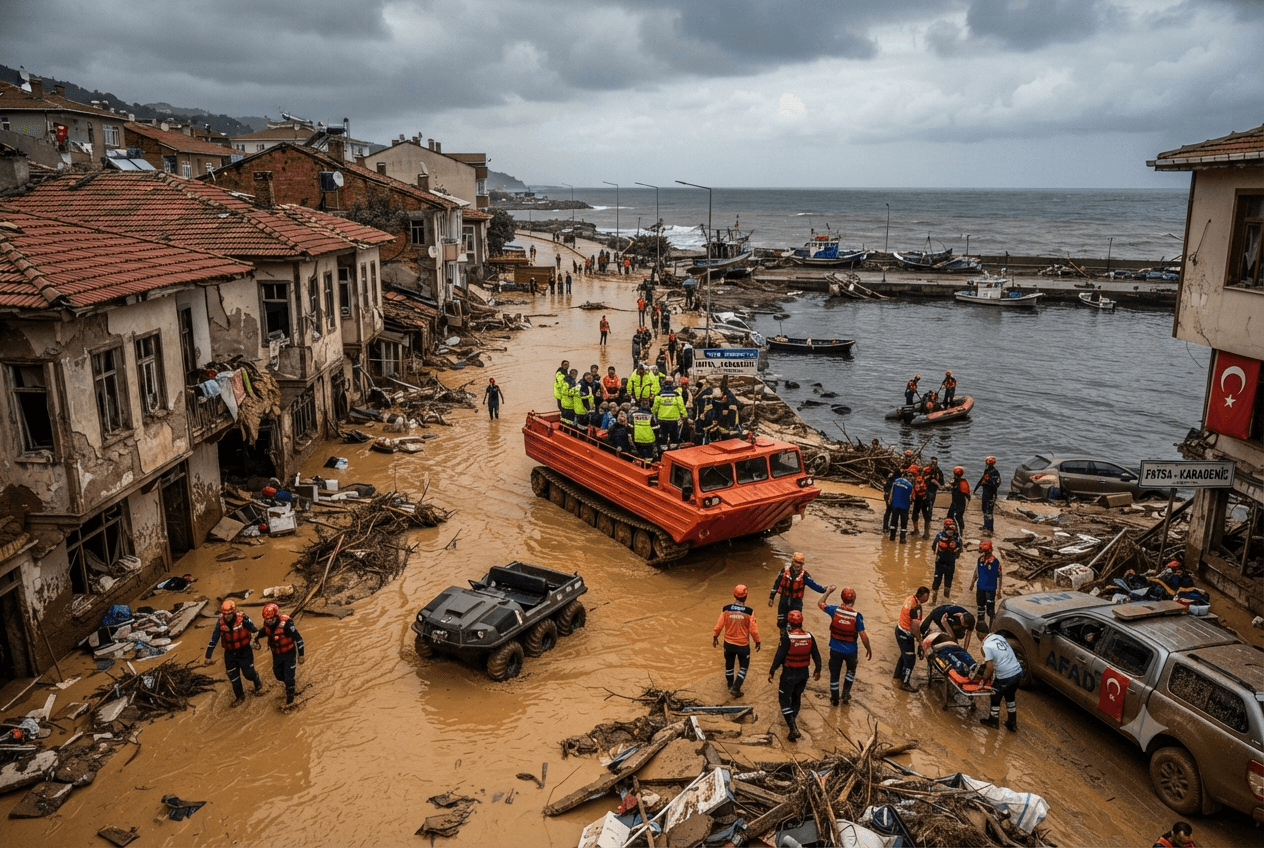
Torrential overnight downpours unleashed devastating flash floods and fast-moving mudslides across Turkey’s rugged Black Sea coastline on Monday morning, resulting in the tragic deaths of six individuals and the destruction of numerous homes. The deluge struck without warning around 2:00 AM local time, sending millions of tons of mud, rock, and debris cascading down steep mountain valleys directly into coastal settlements.
Emergency disaster management teams, alongside military rescue squads, quickly mobilized amphibious vehicles and helicopters to evacuate residents trapped on rooftops as floodwaters surged past two meters deep. Rescuers have recovered six bodies from collapsed masonry and sediment-choked ground-floor apartments across two of the hardest-hit coastal districts.
The local infrastructure has suffered catastrophic damage, with several historical stone bridges collapsing under the pressure of swollen river channels and floating timber debris. Power grids failed across dozens of mountain villages, plunging thousands of households into darkness and disrupting municipal water treatment plants, further complicating the emergency response efforts.
Meteorological analysts reported that localized storm cells dropped over a month’s average rainfall in less than six hours, overwhelming natural drainage basins and narrow river mouths. Municipal engineering crews have been deployed to clear blocked highway tunnels and remove thick layers of mud covering coastal transit routes, which are crucial for rescue operations.
Regional hospitals have established emergency triage centers to treat scores of residents suffering from hypothermia, lacerations, and acute shock caused by the sudden midnight inundation. In response to the crisis, government ministers have flown to the disaster zone by helicopter to inspect rescue operations and coordinate immediate emergency financial relief packages for displaced families.
Environmental geologists have long warned that aggressive coastal construction and modifications to narrow river channels exacerbate the lethal impact of seasonal downpours in the region. As search and recovery teams continue to scour debris-choked riverbanks, receding water levels are revealing the full scale of structural devastation.
In the aftermath of the floods, temporary tent encampments and school dormitories have been opened inland to shelter hundreds of individuals whose homes were rendered uninhabitable by the mudslides. Public utilities crews have begun emergency repairs on downed transmission lines, though officials warn that full power restoration will take several days, leaving many residents in uncertainty as they begin to assess the damage and recover from this catastrophic event.
Published by Banx Network. This article is part of the Banx decentralized media programme, powered by the BXE token on the XRP Ledger.



