Key Highlights
- Bitcoin advocates emphasize its potential as a long-term store of value.
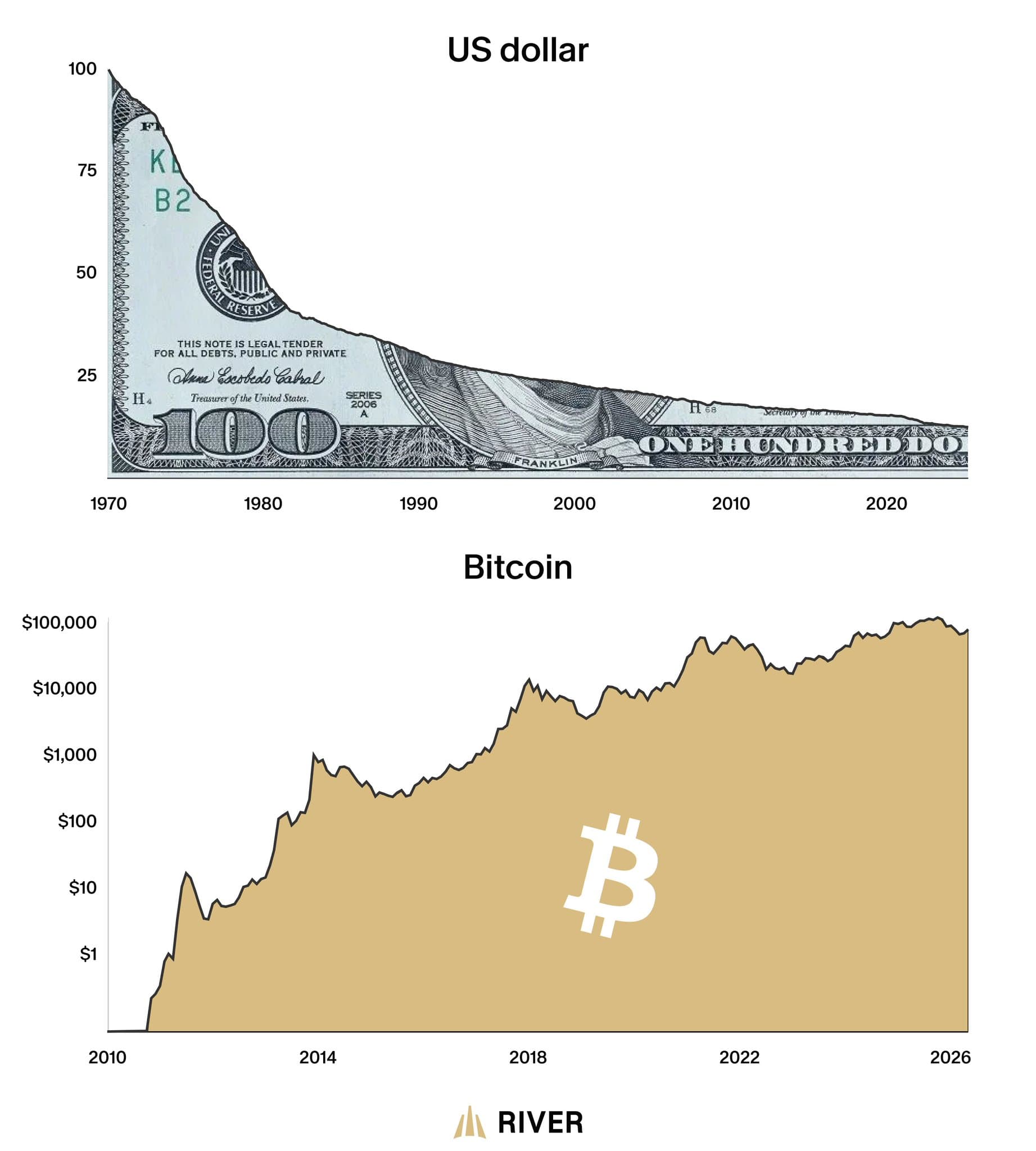
- The U.S. dollar has lost purchasing power over decades due to inflation.
- Critics point to Bitcoin's volatility as a challenge for investors.
The ongoing debate between Bitcoin and the U.S. dollar has gained renewed attention as inflation continues to impact the purchasing power of fiat currencies. Bitcoin supporters argue that the digital asset serves as a hedge against inflation, highlighting its fixed supply of 21 million coins. This characteristic, they assert, protects against monetary expansion and currency debasement, positioning Bitcoin as a modern alternative to gold.
Historically, the U.S. dollar has faced significant depreciation over the decades, primarily due to inflation. This trend has led many investors to reconsider traditional assets in favor of digital currencies. Bitcoin's dramatic appreciation since its inception has further fueled this narrative, with advocates claiming it can preserve wealth across generations.
However, the volatility of Bitcoin remains a critical point of contention. Critics argue that while inflation steadily erodes the dollar's value, Bitcoin's price can fluctuate wildly in short periods. This volatility raises questions about its reliability as a savings vehicle. Investors may find themselves facing substantial market corrections, which could undermine the asset's perceived stability as a store of value.
As governments, institutions, and corporations increasingly explore the potential of digital assets, the debate surrounding Bitcoin's role in the financial landscape intensifies. Some analysts predict that Bitcoin could evolve into a mainstream reserve asset, while others caution that it may remain a speculative investment, subject to the whims of market sentiment.
The future of Bitcoin as a store of value is uncertain, but its growing prominence in discussions about inflation and currency stability cannot be ignored. Investors are closely monitoring this evolving narrative, weighing the risks and rewards of incorporating Bitcoin into their portfolios. As the financial world adapts to the rise of digital currencies, the question of whether Bitcoin will solidify its status as a reliable alternative to traditional fiat currencies remains one of the most pressing issues in global finance.
Published by Banx Network. This article is part of the Banx decentralized media programme, powered by the BXE token on the XRP Ledger.