
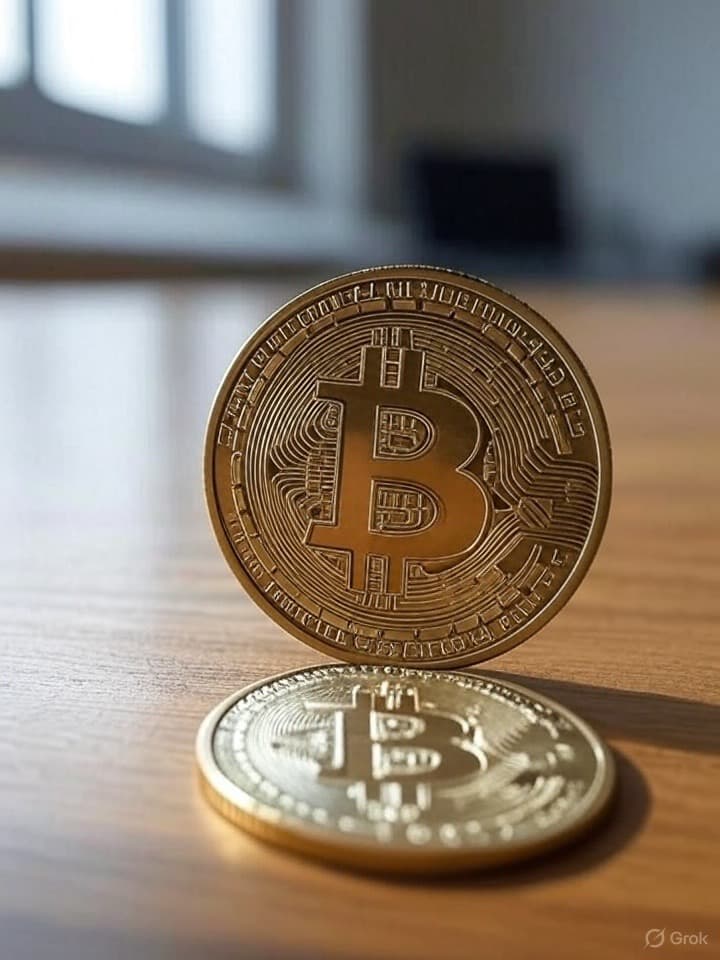
Key Highlights
- Bitcoin's Journey: From a niche experiment to a global financial phenomenon.
- Market Dynamics:Price volatility and institutional adoption trends.
- Future Prospects:Bitcoin's role in the digital economy by 2025.
Bitcoin, the first decentralized cryptocurrency, has fundamentally reshaped the financial landscape since its inception in 2009 by the pseudonymous Satoshi Nakamoto. Initially a niche experiment, Bitcoin has evolved into a global phenomenon, inspiring the creation of thousands of cryptocurrencies and innovations in blockchain technology. As of 2025, Bitcoin is recognized not only as a digital store of value but also as a technology platform with significant implications for financial sovereignty, inflation hedging, and participation in a borderless digital economy. This article explores Bitcoin’s journey, from its origins and technology to market behavior, risks, and future prospects.
Historical Context: The Birth of Bitcoin
Bitcoin emerged in the aftermath of the 2008 global financial crisis, a period marked by widespread distrust in centralized financial institutions. The release of Satoshi Nakamoto’s whitepaper, "Bitcoin: A Peer-to-Peer Electronic Cash System," proposed a decentralized, cryptographically secured currency. Unlike traditional currencies, Bitcoin could be created, validated, and transferred without intermediaries, utilizing a publicly distributed ledger known as the blockchain.
Early adoption was slow, with enthusiasts mining Bitcoin on personal computers. The first major transaction — the famous purchase of two pizzas for 10,000 BTC — illustrated its initial valuation and nascent use case. By 2010–2011, Bitcoin began gaining traction in tech communities, with its price rising from mere cents to several dollars per coin. The years 2013–2017 marked the first significant market boom, with Bitcoin reaching parity with the U.S. dollar, followed by dramatic increases driven by speculative investment and global media coverage. Regulatory attention began to emerge as governments recognized the potential and risks of this new financial instrument.
How Bitcoin Works: Blockchain, Mining, and Security
The Bitcoin blockchain is a distributed ledger maintained by a network of nodes. Each block contains a batch of transactions, cryptographically linked to the previous block, ensuring immutability and transparency. Key features include decentralization, transparency, and security through cryptographic algorithms that protect transaction integrity.
Mining introduces new Bitcoin into circulation while securing the network. Miners solve complex mathematical problems using computational power, validating transactions in return for newly minted coins and transaction fees. Mining ensures consensus, scarcity, and security, making fraudulent activity extremely difficult.
Bitcoin ownership is represented by private keys stored in digital wallets, which can be software-based, hardware devices, or even paper backups. Losing a private key means losing access to the corresponding Bitcoin.
Bitcoin Market Dynamics
Bitcoin is infamous for its volatility. Key historical events include: • 2013–2014: Bitcoin surged to over $1,000 before crashing amid exchange scandals. • 2017: Price hit nearly $20,000, followed by a bear market. • 2020–2021: Institutional adoption and global economic uncertainty drove prices to an all-time high above $64,000. • 2022–2025: Market consolidation, regulatory developments, and macroeconomic factors stabilized prices in the range of $30,000–$60,000.
Institutional adoption has grown steadily, with hedge funds, corporations, and ETFs increasingly including Bitcoin in their portfolios. Retail adoption has also expanded, supported by payment processors, remittance services, and integration into financial apps.
Bitcoin is often referred to as “digital gold.” Unlike gold, it is divisible, easily transferable, and programmable. Its scarcity and decentralized nature make it an attractive hedge against inflation, particularly in countries with unstable currencies. As Bitcoin continues to evolve, its role in the global financial system is likely to expand, paving the way for a new era of financial innovation and inclusion.
Published by Banx Network. This article is part of the Banx decentralized media programme, powered by the BXE token on the XRP Ledger.



