Key Highlights
- Study reveals birdsong shares acoustic patterns with human speech.
- Analysis included 367 bird species and 52 human languages.
- Findings suggest evolutionary connections in vocalization.
A recent study published in the journal Science has unveiled significant acoustic similarities between birdsong and human speech, suggesting that these parallels are not merely coincidental but rooted in the mechanics of sound production. The research, led by Logan James from McGill University, analyzed a comprehensive dataset of 367 bird species, which included over 74,500 vocal elements from approximately 5,900 songs. This extensive analysis aimed to explore the deep structural similarities between avian and human vocalizations, regardless of whether the birds learned their songs or were born with them.
The study encompassed both vocal learners, such as songbirds and hummingbirds, and non-learners like suboscines and nightjars. On the human side, the researchers examined 52 languages, analyzing more than 800 phrases and over 15,000 individual elements. This broad scope was essential to determine if the observed similarities were genuine or simply a product of selective comparison.
The findings revealed that birdsong exhibits shared acoustic features with human speech and music, including small pitch shifts, regular syllabic rhythms, and elongated sounds at the ends of phrases. Notably, these patterns were consistent across species, indicating that vocal learning did not significantly influence the degree of similarity to human vocalizations. Instead, the resemblance appears to stem from fundamental physical constraints and capacities inherent in the vocal apparatus of both birds and humans.
The researchers propose that these shared acoustic features may arise from convergent motor mechanisms, which are shaped by the anatomical and physiological characteristics of the vocal apparatus, lungs, and respiratory rhythms. This suggests that the similarities in vocalization patterns are not due to imitation but rather a result of shared evolutionary traits that govern sound production.
While the study highlights significant similarities, it also notes variations among different bird groups in their vocalization characteristics. Some species exhibit closer resemblances to human speech than others, and the degree of similarity varies between birdsong and human music. These differences provide valuable insights into the specific anatomical and physiological factors that influence communication across species.
Kazuo Okanoya, a researcher not involved in the study, acknowledged its importance, stating that it lays the groundwork for further exploration of the mechanisms behind shared vocal patterns. However, he emphasized that while linguistic concepts can inform research, they should not replace empirical data. The study maps the similarities but does not fully explain the underlying causes, indicating that further research is necessary to understand the implications of these findings for our comprehension of communication across species.
In conclusion, this research offers a fresh perspective on the relationship between birdsong and human vocalization. It challenges the notion that the musicality of birds is merely a metaphor or projection of human meaning. Instead, it reveals that the acoustic patterns we perceive in birdsong are genuine phenomena shaped by biological constraints, resonating with the sounds we produce. The next time one hears a bird sing, it may be worth considering that the connection between avian and human vocalizations is not just a figment of imagination but a reflection of our shared evolutionary history.
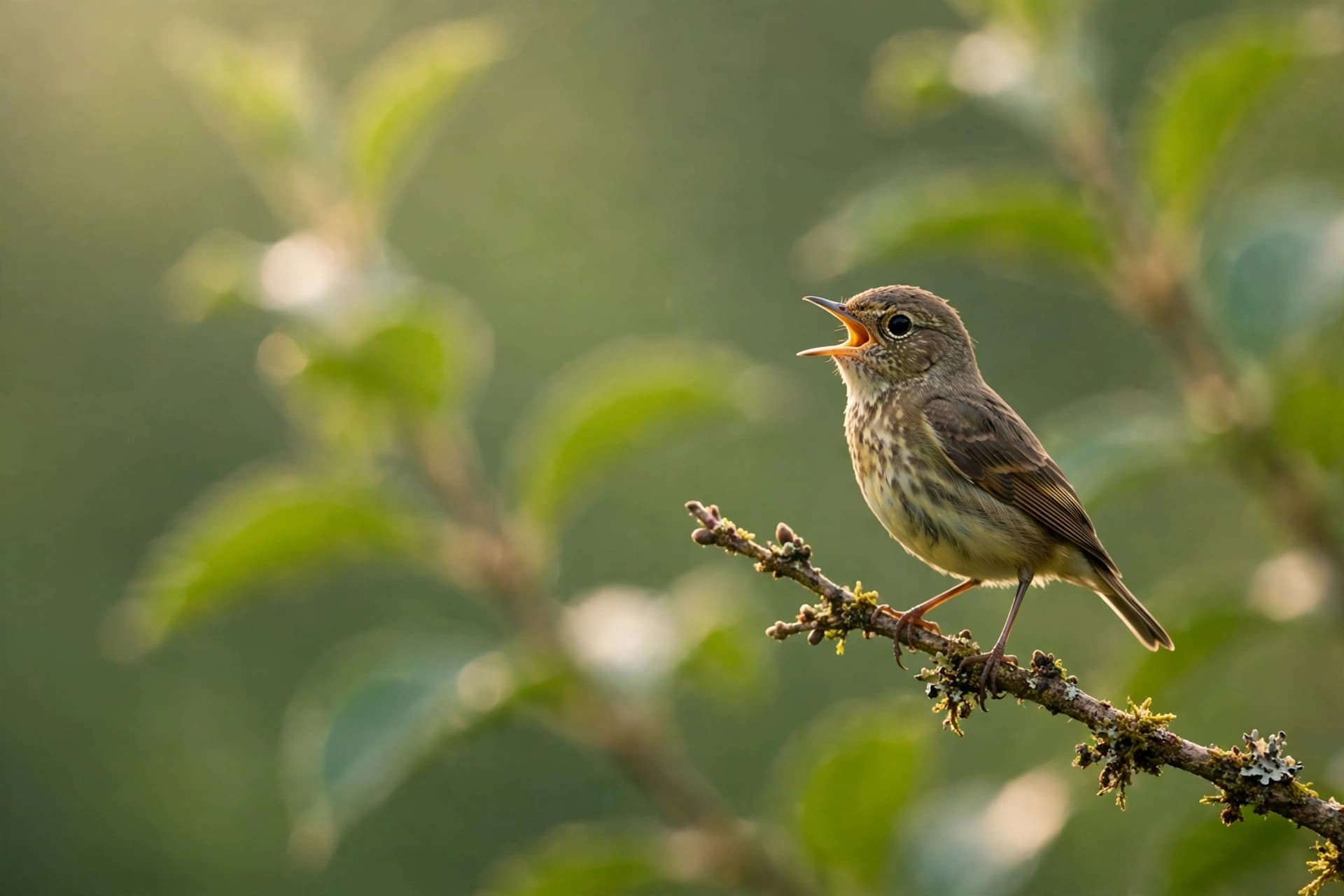
AI Image Disclaimer: The images accompanying this article are generated by artificial intelligence and are for illustrative purposes only; they do not depict the actual alligator eggs, nests, or researchers involved in the study.
Published by Banx Network. This article is part of the Banx decentralized media programme, powered by the BXE token on the XRP Ledger.