
Key Highlights
- Incident:A wildfire in Biobío, Chile, has claimed two lives.
- Response:Emergency services are battling the blaze and evacuating residents.
- Investigation:Authorities have launched a judicial inquiry into the fire's origins.
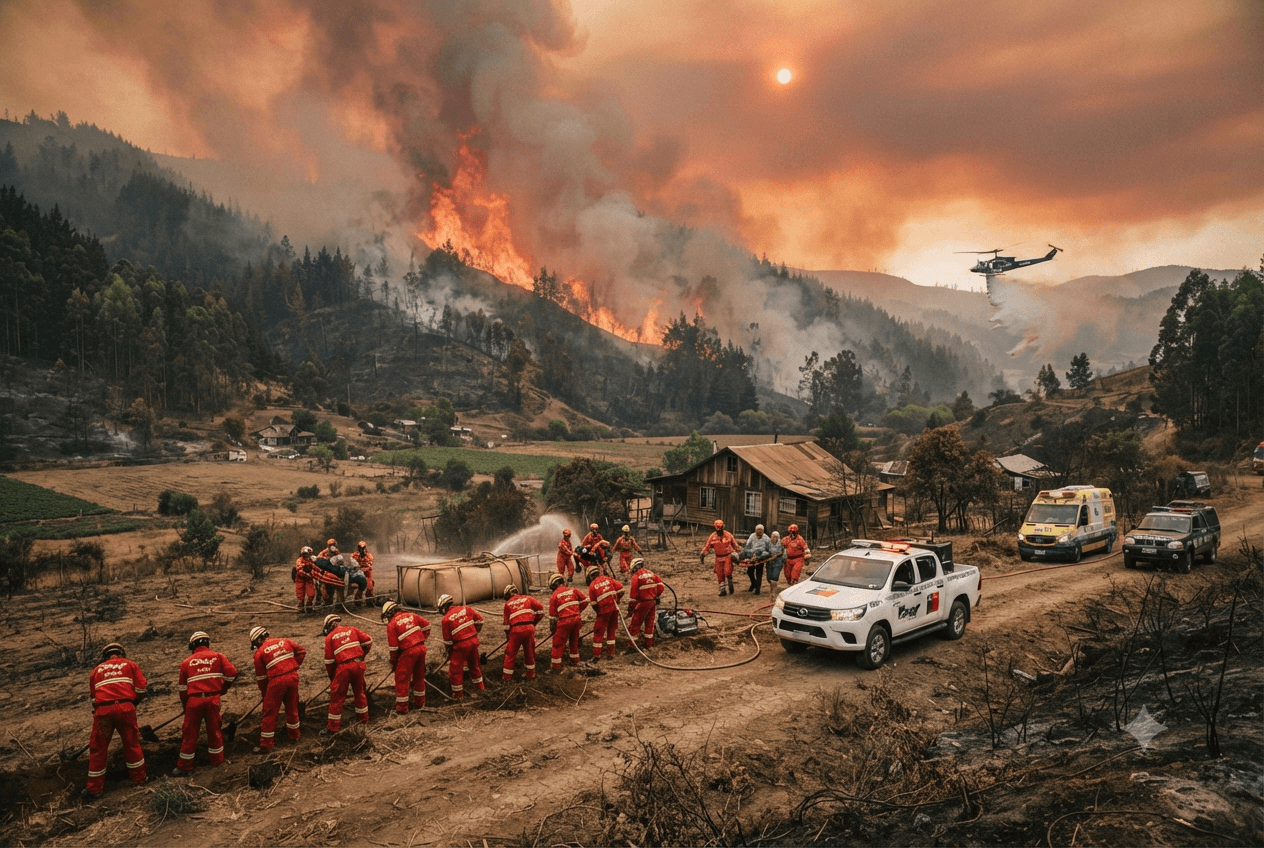
Biobío, Chile—A devastating wildfire has swept through a rural valley in Biobío, resulting in the tragic deaths of two farm workers. The fire ignited during the afternoon, fueled by high winds that rapidly spread the flames through dense pine plantations and dry agricultural fields. The workers, trapped near an isolated orchard, were unable to escape as the fire advanced, leading to their fatalities from severe thermal burns and smoke inhalation.
Regional emergency director Patricio Valenzuela reported that erratic wind gusts caused the fire front to shift unpredictably, creating a perilous situation for those in its path. Firefighting aircraft were deployed to drop water on the flames, while ground crews worked tirelessly to carve out emergency firebreaks to protect nearby settlements. In response to the escalating situation, regional authorities declared a red alert across the province, as the flames threatened dozens of residential properties.
The response from emergency services has been swift, with paramedics and forensic teams arriving at the scene shortly after the incident. Agricultural syndicates have expressed profound grief and outrage over the lack of workplace safety protocols during extreme fire-weather conditions. Union representative Claudia Soto emphasized the need for private agricultural employers to suspend field operations when red flag warnings are issued, highlighting the risks faced by workers in such environments.
As the situation unfolded, police highway patrols evacuated residents from three rural hamlets, with thick smoke reducing visibility on local roads to near zero. State prosecutors have opened an immediate judicial investigation into the potential origins of the wildfire, seeking to determine how such a catastrophic event could occur in a region already vulnerable to fire due to prolonged drought conditions.
In the wake of the disaster, municipal emergency committees have established relief centers in local schools to support displaced families and coordinate volunteer firefighting efforts. Utility companies have proactively cut electrical transmission lines in the affected area to prevent secondary transformer explosions and short circuits, further ensuring the safety of residents.
Aerial reconnaissance helicopters have been deployed to survey the blackened landscape, identifying active hot spots and flare-ups along the fire's perimeter. Ground brigades are committed to working continuously through the night to reinforce containment lines and extinguish lingering hot spots, as officials warn that the risk of additional catastrophic blazes remains high in southern Chile due to ongoing drought conditions.
The community is left grappling with the aftermath of this tragedy, as the loss of life underscores the urgent need for improved safety measures and emergency preparedness in the face of increasingly severe wildfire threats.
Published by Banx Network. This article is part of the Banx decentralized media programme, powered by the BXE token on the XRP Ledger.



