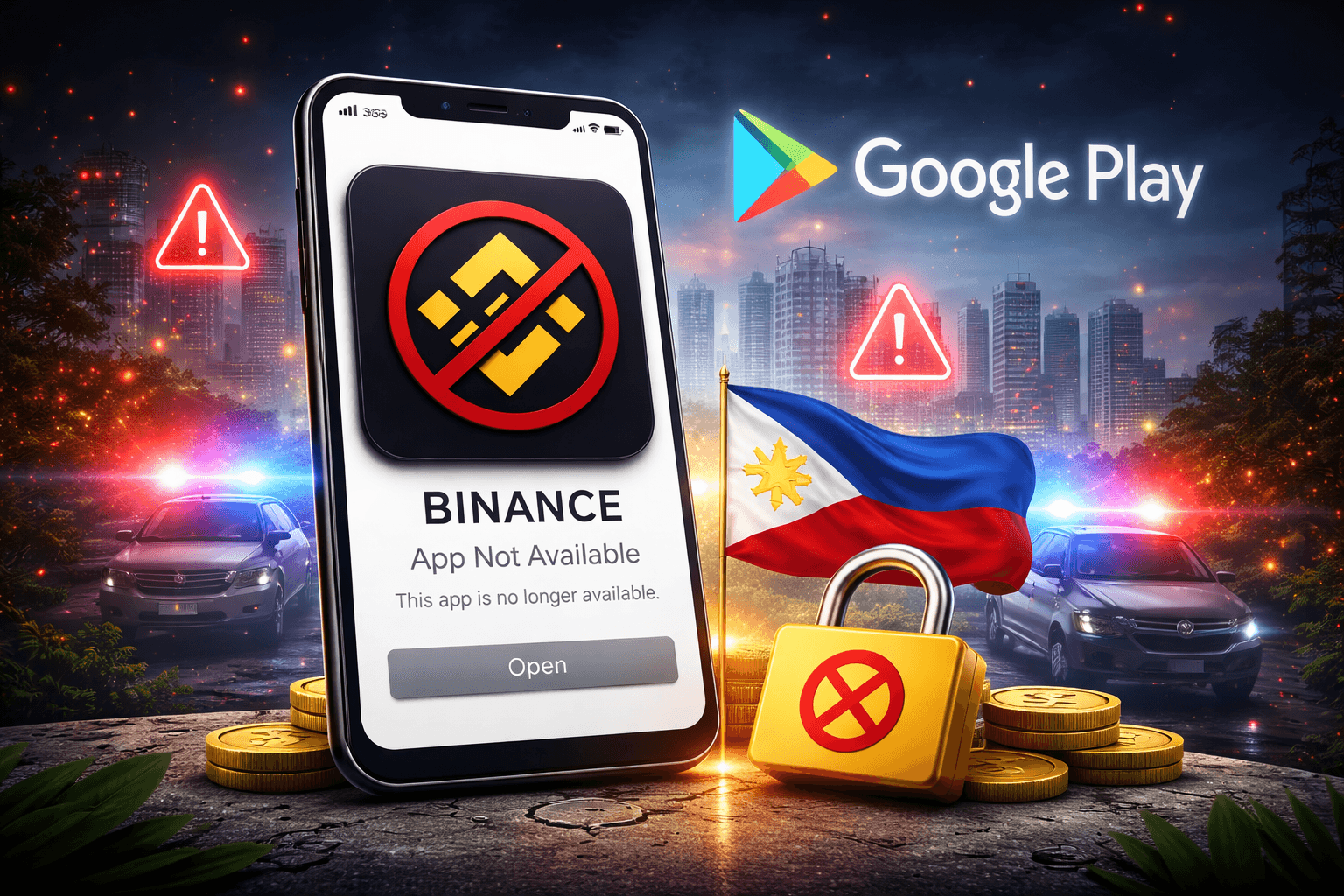
The Binance app has officially been removed from the Google Play Store in the Philippines, marking a significant escalation in the local government’s efforts to clamp down on unlicensed cryptocurrency platforms. The move comes as Philippine regulators continue to tighten enforcement against foreign crypto exchanges that are operating without proper domestic approval.
Filipino users searching for the Binance app on the Philippine version of the Google Play Store now find it missing — replaced in search results by listings for local alternatives and region specific Binance versions meant for other countries. The main global Binance app, which has been a popular platform for buying, selling, and trading digital assets, is no longer directly available to download through the official Android marketplace in the country.
This removal is part of a broader regulatory crackdown led by the Securities and Exchange Commission (SEC) of the Philippines, which has been actively challenging Binance’s operations for operating without a required license to offer securities and investment services in the country. Regulators argue that the platform’s presence poses a risk to the security of Filipino investors’ funds, given its unregistered status under local law.
Local authorities have taken growing action over the past year, including:
• Blocking Binance’s website access through local internet service providers.
• Requesting Google and Apple remove Binance from their app stores within the Philippines’ jurisdiction.
Although the app is no longer available on the Play Store in the Philippines:
• The Binance website and other services may still be accessible through direct links or alternative means.
• Existing users with the app already installed might continue using it, but official updates and downloads are now restricted.
Binance had not secured a cryptocurrency exchange license in the Philippines, a requirement under the country’s securities and investment laws. The SEC has repeatedly warned users about dealing with unregistered platforms, citing possible vulnerabilities such as fraud, market manipulation, and lack of legal protections.
For Filipino crypto traders and investors, this change likely signals a shift toward greater reliance on local, licensed virtual asset service providers (VASPs) — such as Coins.ph — which remain compliant with domestic regulations.
Traders who depended on Binance may need to:
• Consider alternative exchanges that are licensed in the Philippines
• Withdraw or transfer assets to wallets or compliant platforms
• Stay informed on regulatory developments, as enforcement actions continue to evolve
Published by Banx Network. This article is part of the Banx decentralized media programme, powered by the BXE token on the XRP Ledger.