
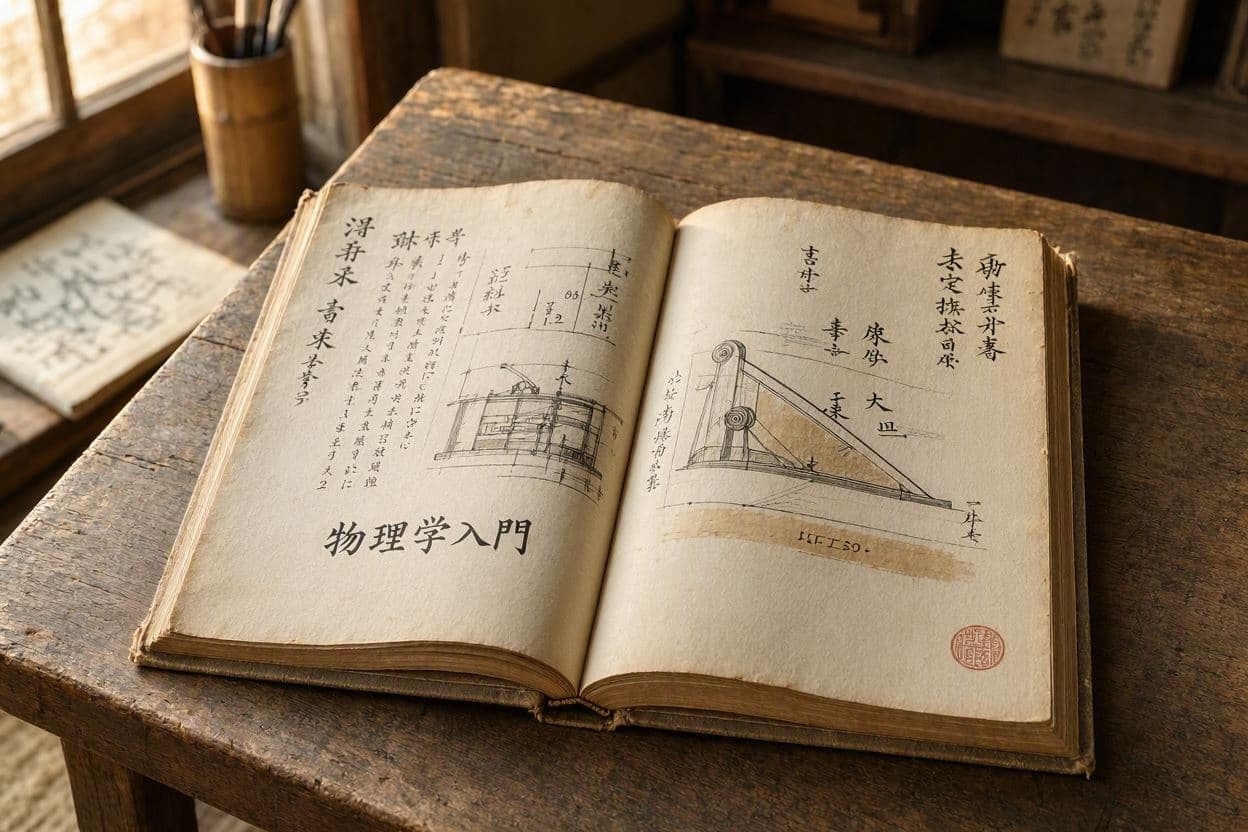
Science is often viewed as a universal language, yet its dialects can vary significantly across cultures. In Japan, the study of matter has long been guided by a distinct conceptual framework known as "Busseiron." This term, which translates to the theory of matter or substance, represents more than just a translation of Western physics; it embodies a unique intellectual tradition that has shaped Japanese scientific thought for over a century. Tracing the evolution of Busseiron invites reflection on how local contexts influence global knowledge. It is a story of adaptation, identity, and the quiet persistence of a native perspective in a rapidly modernizing world.
The term Busseiron emerged in the late 19th century during Japan’s Meiji era, a period of intense Westernization. As Japanese scholars translated European textbooks, they sought words that could capture the essence of physical phenomena while resonating with local philosophical concepts. Busseiron became a pedagogical tool, helping students bridge the gap between traditional ideas and new scientific principles. Language shapes understanding.
Throughout the early 20th century, Busseiron evolved from a teaching aid into a recognized discipline within Japanese universities. Physicists like Hantaro Nagaoka used the concept to explore atomic structure, blending Western models with indigenous interpretations. This hybrid approach allowed for creative insights that sometimes diverged from mainstream international trends. Diversity drives innovation.
By the mid-20th century, as Japan integrated more fully into the global scientific community, the specific use of Busseiron began to fade from international journals. However, its legacy remained embedded in the way Japanese physicists approached problems, emphasizing holistic views and material properties. Tradition informs practice.
Recent historical studies have revisited Busseiron to understand its role in the formation of Japanese physics. Researchers note that while the term itself is less common today, the underlying mindset continues to influence research priorities and educational methods. History leaves echoes.
For contemporary scientists, acknowledging this heritage offers a deeper appreciation of their field’s roots. It reminds us that science is not just about data but also about the cultural lenses through which we view the natural world. Perspective enriches discovery.
Busseiron, a unique Japanese branch of physics focused on the theory of matter, has evolved from a pedagogical tool in the Meiji era to a foundational concept in modern Japanese science. Its history highlights the interplay between local culture and global scientific progress. The hope is for continued recognition of diverse scientific traditions.
AI Image Disclaimer: The visual elements accompanying this report are AI-generated interpretations designed to reflect the historical and scientific context of the story.
Sources: American Institute of Physics Phys.org Science Tokyo
Published by Banx Network. This article is part of the Banx decentralized media programme, powered by the BXE token on the XRP Ledger.



