In the vast silence of the cosmos, there exists a mystery that has puzzled physicists for nearly a century: dark matter. It makes up about 85 percent of the matter in the universe, yet it remains invisible, detectable only through its gravitational pull. Now, a new theoretical framework suggests that the answer may lie not in what we can see, but in what we cannot—a hidden fifth dimension. This idea, while speculative, offers a fresh perspective on one of science’s greatest enigmas, inviting us to imagine a universe far more complex than our three-dimensional experience suggests.
The proposed theory, developed by researchers at the University of Sheffield and other institutions, posits that dark matter particles reside in a warped extra dimension alongside a force-carrying particle known as a dark photon. In this model, the fifth dimension acts as a reservoir for these elusive particles, explaining why they interact so weakly with ordinary matter. The geometry of this extra dimension naturally tunes the properties of dark matter, allowing it to exist in resonance with the visible universe without being directly observable.
This approach builds on earlier concepts in string theory and higher-dimensional physics, which suggest that our universe may have more than the familiar three spatial dimensions and one time dimension. By introducing a fifth dimension, physicists can address several shortcomings of the Standard Model, including the nature of dark matter and the hierarchy problem. The theory provides a mathematical framework that connects the hidden sector of dark matter with the visible sector through a scalar field portal.
Experimental verification remains a significant challenge. Since dark matter does not emit light or interact strongly with normal matter, direct detection is difficult. However, the theory predicts specific signatures that could be observed in high-energy particle collisions or through precise measurements of the Higgs boson. Future experiments at facilities like the Large Hadron Collider (LHC) may provide clues that support or refute this five-dimensional hypothesis.
The implications of such a discovery would be revolutionary. Confirming the existence of a fifth dimension would not only solve the dark matter puzzle but also reshape our understanding of fundamental physics. It would suggest that the universe is structured in ways that transcend our everyday perception, opening new avenues for exploration in cosmology and quantum mechanics.
For the scientific community, this theory represents a bold step forward. It encourages researchers to think beyond conventional boundaries and consider alternative explanations for observed phenomena. While skepticism is healthy in science, the elegance and predictive power of the model have garnered attention and interest from theorists worldwide.
Public interest in dark matter remains high, fueled by its mysterious nature and cosmic significance. The idea of hidden dimensions captures the imagination, offering a narrative that blends hard science with speculative wonder. It reminds us that despite centuries of inquiry, the universe still holds secrets waiting to be uncovered.
While the existence of a fifth dimension remains unproven, the theory offers a compelling solution to the dark matter mystery. As research continues, the quest to understand the invisible fabric of the cosmos persists. Whether through extra dimensions or new particles, the journey to uncover dark matter’s true nature is a testament to human curiosity and ingenuity.
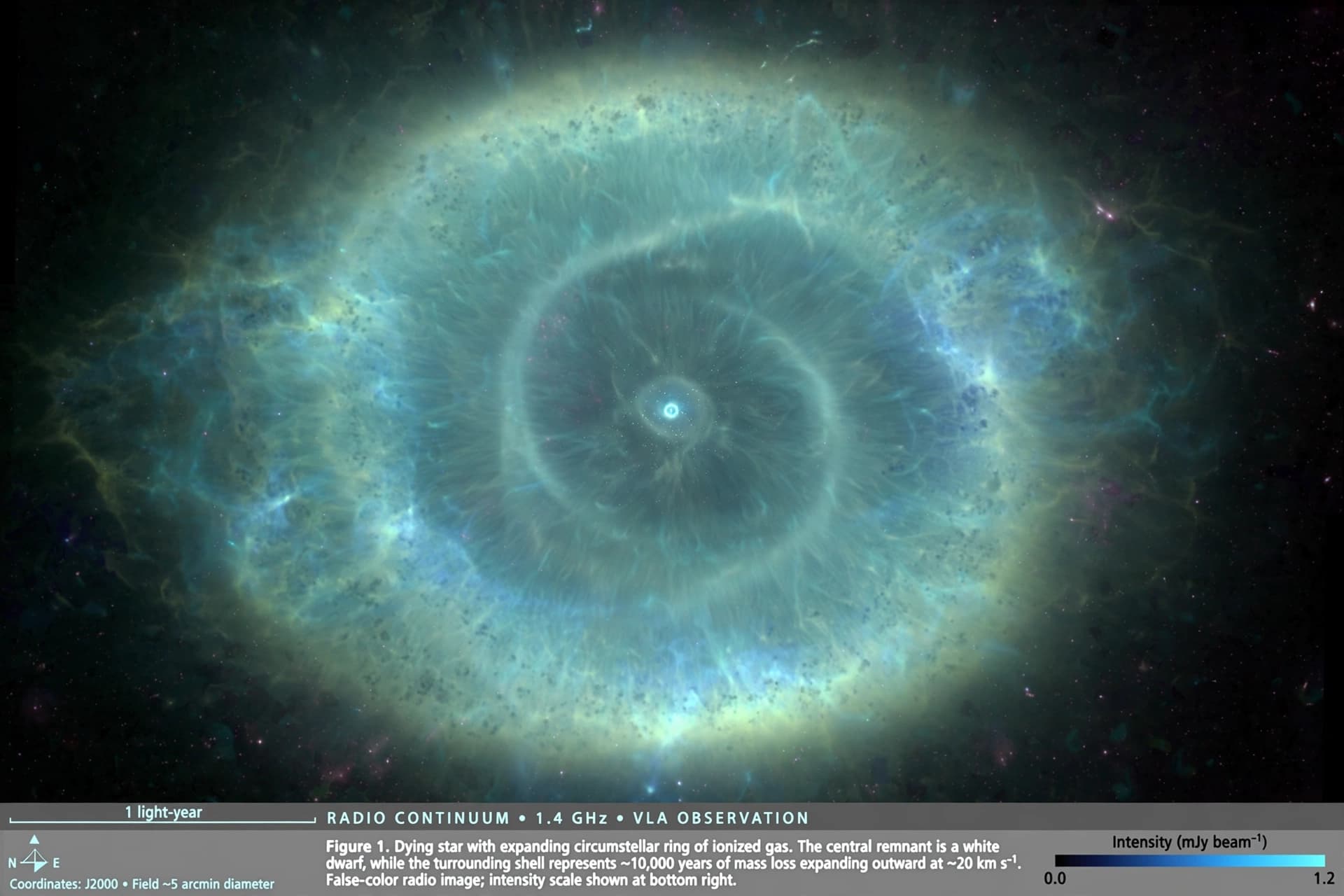
AI Image Disclaimer: Please note that the images in this piece are AI-generated illustrations created to depict the themes of theoretical physics and cosmic mysteries.
Sources: Phys.org, Popular Mechanics, University of Sheffield, Facebook (PhysOrg)
Published by Banx Network. This article is part of the Banx decentralized media programme, powered by the BXE token on the XRP Ledger.