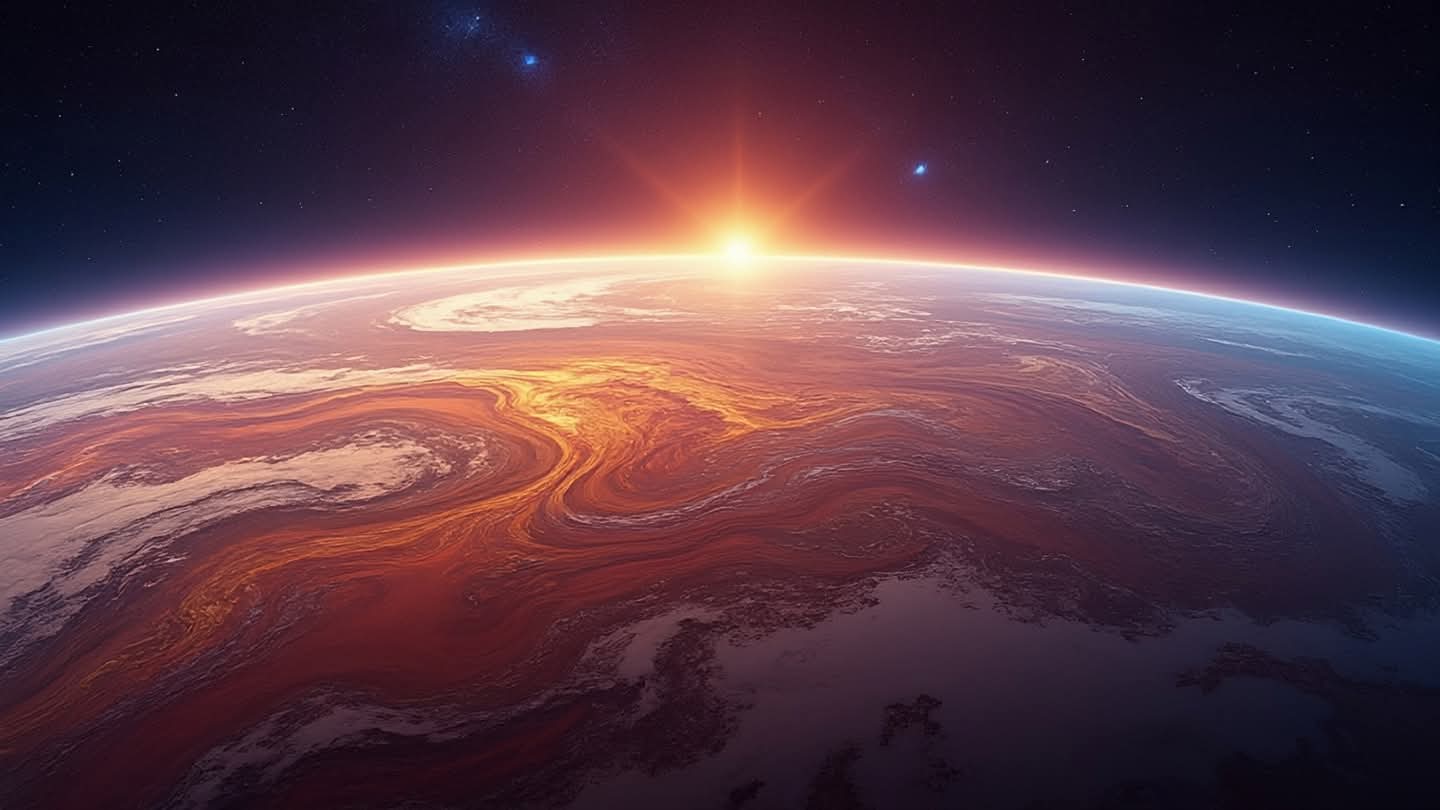
Science thrives on prediction, building models that map the expected behavior of the universe. But sometimes, nature refuses to follow the script. Recent observations of exoplanet atmospheres have revealed compositions and dynamics that defy current theoretical models, forcing astronomers to pause and reconsider the fundamental assumptions about how planets form and evolve. It is a humbling reminder that the cosmos is far more creative than our textbooks suggest.
Using powerful telescopes like the James Webb Space Telescope (JWST), scientists have been able to analyze the light passing through the atmospheres of distant worlds. What they found was unexpected: some hot Jupiters and super-Earths possess chemical signatures that do not align with standard equilibrium chemistry models. These discrepancies suggest that processes such as vertical mixing, photochemistry, or unknown cloud formations play a larger role than previously thought.
One particularly puzzling finding is the presence of certain molecules in abundances that models predict should be destroyed by intense stellar radiation. Conversely, other expected molecules are missing entirely. This mismatch indicates that our understanding of atmospheric circulation and chemical reaction rates in extreme environments is incomplete. It challenges the notion that we can simply scale up models from our own solar system to explain others.
The implications are profound for the search for life. If we cannot accurately model the atmospheres of sterile gas giants, how can we confidently identify biosignatures on rocky planets? The "rethink" called for by researchers is not a rejection of existing knowledge, but an expansion of it. It requires integrating new data into more complex, dynamic models that account for non-equilibrium processes.
This period of uncertainty is also a time of opportunity. New theories are being proposed to explain these anomalies, such as the influence of stellar flares on atmospheric chemistry or the role of deep interior heat in driving surface reactions. Each hypothesis offers a new avenue for exploration, driving the next generation of observational strategies.
The scientific community is responding with collaboration and openness. Data from multiple telescopes are being combined to create a more comprehensive picture of these exotic worlds. This multi-wavelength approach helps distinguish between instrumental artifacts and genuine physical phenomena, ensuring that the new theories are built on solid ground.
For the public, these findings highlight the dynamic nature of scientific discovery. It is not a straight line to truth, but a winding path of question and answer. The defying of theory is not a failure, but a sign that we are probing deeper into the complexities of the universe, uncovering layers we never knew existed.
As more exoplanets are characterized, the sample size grows, allowing for better statistical analysis. This will help determine whether the anomalies are rare exceptions or common features of planetary systems. Either way, the result will be a richer, more nuanced understanding of our place in the galaxy.
Astronomers continue to refine their models in light of the new data, with upcoming observations expected to provide further clarity. The dialogue between theory and observation remains the engine of progress in astrophysics.
AI Image Disclaimer: The images associated with this article are AI-generated visualizations created to reflect the themes of exoplanet research and atmospheric analysis.
Sources: Nature Astronomy Space Telescope Science Institute (STScI) Scientific American The Astrophysical Journal BBC Science
Published by Banx Network. This article is part of the Banx decentralized media programme, powered by the BXE token on the XRP Ledger.