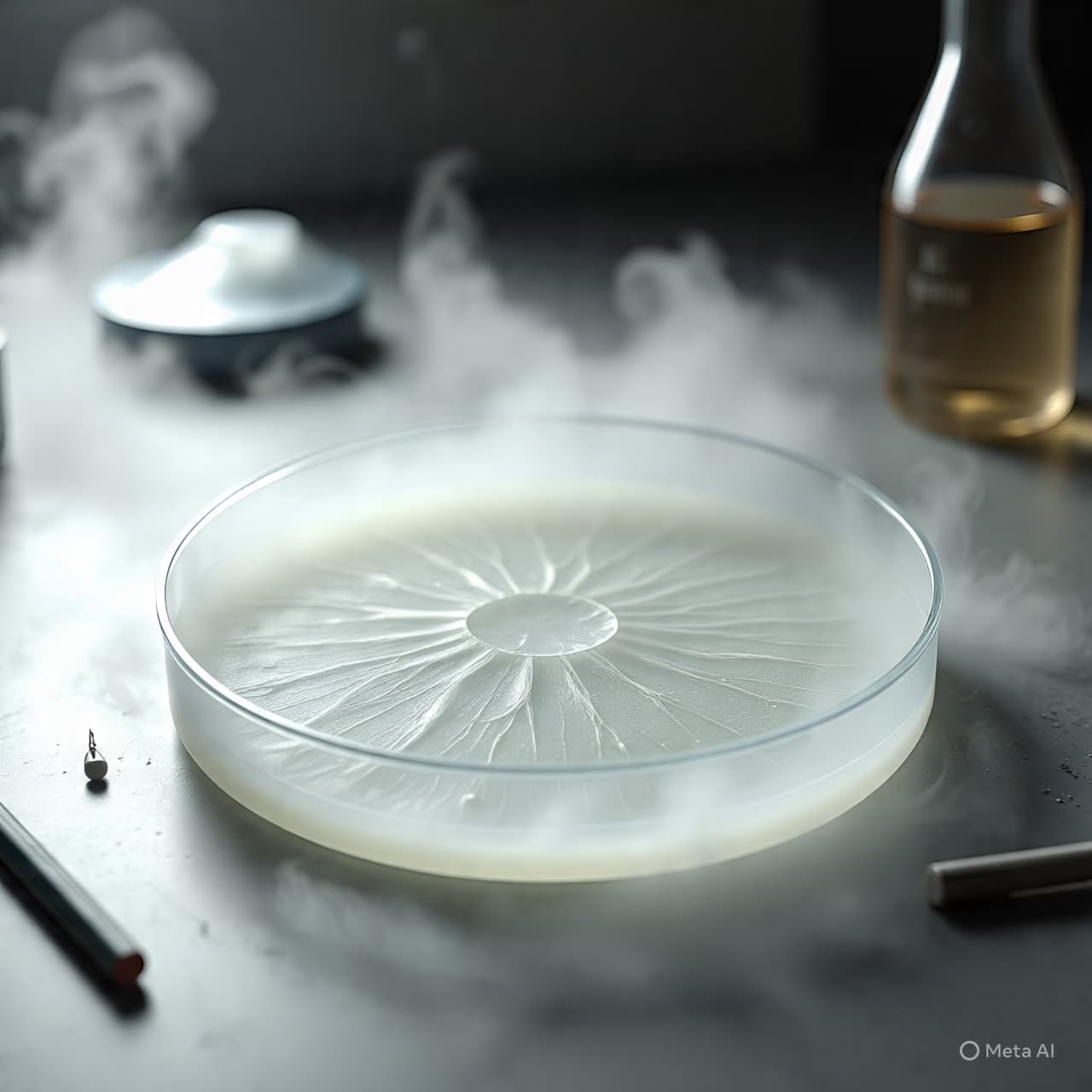
In the quiet laboratories of the city, where the hum of ventilation systems is the only constant companion, a quiet revolution is taking shape within microscopic worlds. It is a place where the rigid structures of the petroleum age are being met by the fluid, adaptive intelligence of the natural world. Researchers are looking not to the refinery, but to the forest floor and the ocean depth, seeking the blueprint for a new kind of matter that can perform the tasks of plastic without leaving its enduring ghost upon the planet.
There is a certain beauty in the contemplation of a material that is designed to disappear. The bio-synthetic substance recently unveiled is a testament to the belief that human ingenuity can harmonize with the ancient rhythms of decay and renewal. It is a polymer woven not from carbon locked away for epochs, but from the living breath of the biosphere, utilizing agricultural byproducts and fungal networks to create form and function.
Reflecting on the nature of plastic, one sees a material that has defined the modern era, offering unparalleled convenience while imposing a monumental burden. The persistence of its polymers is a kind of modern alchemy gone wrong, where the quest for durability has created an inheritance of pollution. The work being done in Toronto is an attempt to break this cycle, proposing a material that serves its purpose and then gently fades back into the earth, a transient guest rather than a permanent resident.
Across the university campus, the news of the breakthrough is met with a sense of hopeful focus. The development of the bio-synthetic material is a meticulous process, a series of experiments where the boundary between the organic and the engineered is blurred. It represents a shift from a chemistry of coercion, where materials are forced into shape, to a chemistry of cooperation, where natural processes are guided toward a specific end.
The potential applications of this new material are as vast as the industrial landscape itself. From packaging that dissolves in the rain to medical implants that are absorbed by the body, the bio-synthetic promises a future where our objects do not outlast our civilizations. This movement from the durable to the degradable is a fundamental rethinking of value, where the true measure of a material is not how long it lasts, but how gracefully it departs.
Within the scientific community, the achievement is viewed as a significant milestone in the field of sustainable materials science. The research team has successfully demonstrated that the bio-synthetic can be manufactured using existing industrial processes, overcoming a major hurdle for widespread adoption. This integration of the new into the old is a vital phase of the narrative, a step toward a reality where the logic of biology is the logic of industry.
As the technology moves from the laboratory to the market, the seasonal changes of the Canadian landscape provide a fitting backdrop. The spring thaw brings a rush of life through the streams, a reminder of the powerful forces of decomposition and growth that have shaped this region for eons. The bio-synthetic material must be resilient enough to perform its function, yet sensitive enough to respond to the natural cues of degradation, standing as a testament to human understanding in the face of a complex environment.
Beneath the technical details of tensile strength and molecular weight lies a broader vision of planetary health. By reducing our reliance on fossil fuels for material production, we are weaving a sense of balance back into our industrial fabric. This strategic pivot allows for a more respectful engagement with the natural world, ensuring that the objects of our daily lives contribute to the long-term well-being of the entire ecosystem. It is a journey of reclaiming the wisdom of the cell for the benefit of the planet.
A multi-disciplinary team at the University of Toronto has engineered a bio-synthetic material derived from agricultural waste and fungal mycelium, capable of replicating the performance characteristics of common industrial plastics. The material is fully biodegradable in a wide range of environments, offering a sustainable alternative for packaging and single-use applications. Initial life-cycle assessments indicate that the production of this bio-plastic generates 80 percent fewer greenhouse gas emissions compared to traditional petroleum-based counterparts.
Published by Banx Network. This article is part of the Banx decentralized media programme, powered by the BXE token on the XRP Ledger.