In the parched West, water moves like a slow current beneath the surface of every conversation — absent in rain gauges yet ever present in policy debates, city plans, and farmers’ daily calendars. And when a river that once carried hope dwindles, people begin to look beyond its banks toward horizons that once seemed distant, if not impossible. One such horizon lies where ocean meets shore: a desalination plant in Southern California whose quiet churn of seawater into drinkable water may soon ripple far beyond its coastal setting, touching lives where the Colorado River still flows too thinly.
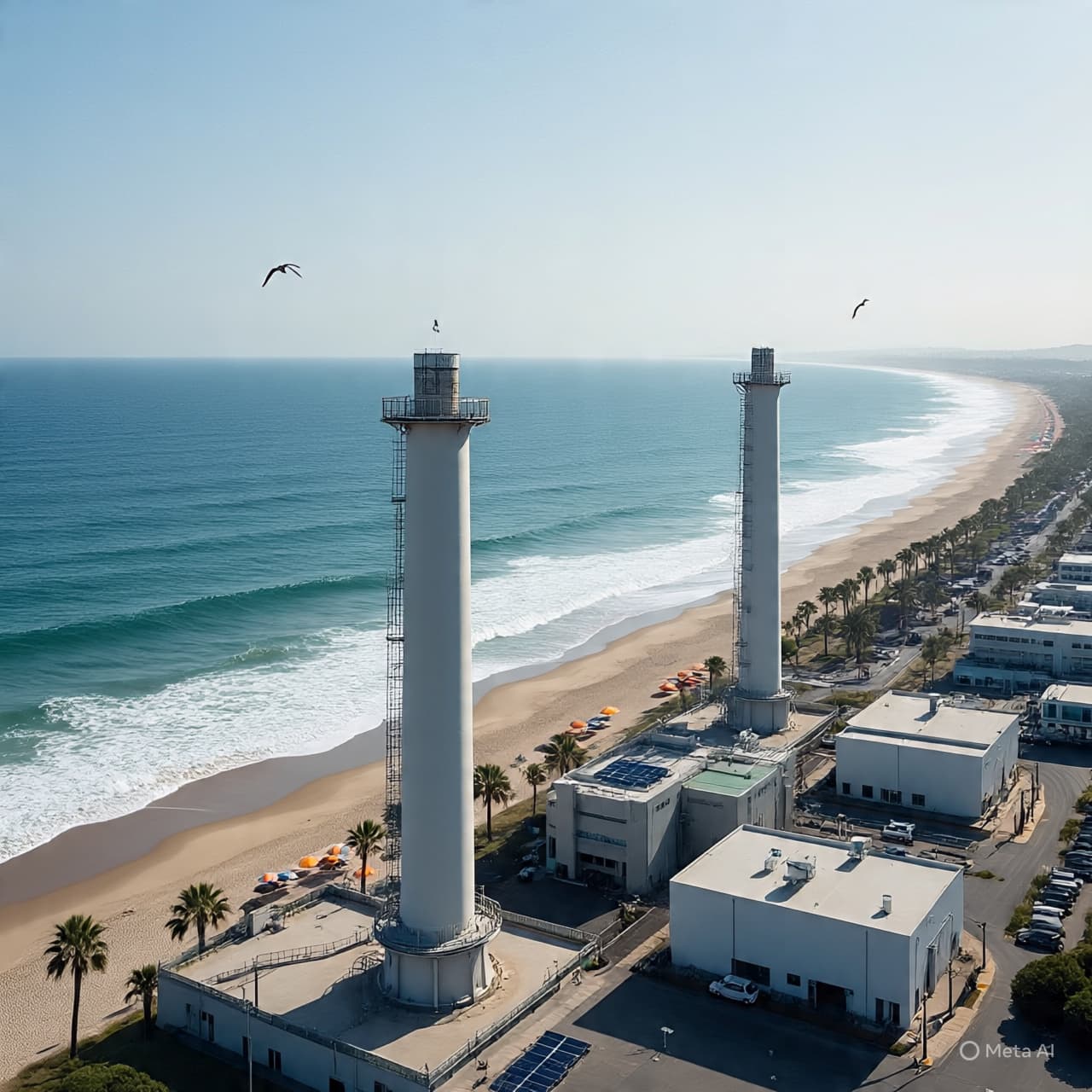
The Claude “Bud” Lewis Carlsbad Desalination Plant — the largest of its kind in the United States — stands on the Pacific, turning seawater into a reliable portion of drinking water for millions in San Diego County. Built in 2015 and operating 24/7 under a long‑term agreement with local water authorities, it produces tens of thousands of acre‑feet of freshwater each year, a steadfast but costly cadence of supply. What was once mainly a regional buffer against drought now attracts attention as a potential piece in a much larger puzzle: how to ease shortages farther inland where reservoirs shrink and climate change tightens its grip.
In early 2026, water managers approved a preliminary agreement exploring interstate water sharing with Arizona and Nevada — states wrestling with steep cuts to their Colorado River allotments. Under this proposal, San Diego could sell some of its Colorado River water to those states, and in return, reinvest those resources to expand desalination capacity and production. The plan doesn’t involve piping ocean water directly across state lines — that remains prohibitively expensive and technically daunting — but rather rests on agreements that would allow agencies to swap or transfer water “on paper,” using existing infrastructure while keeping more river water upstream.
For desert cities like Phoenix, Tucson and Las Vegas — where summers eclipse reservoirs and allocations have been trimmed — even modest amounts of traded water can mean breathing room. Early estimates suggest that San Diego’s water authority could sell up to 10,000 acre‑feet starting next year — nearly 5 % of water used around Las Vegas — with potential to increase that volume if demand and investment grow.
It is, in many ways, a gentle reframing of the West’s water challenges: instead of strictly defending historic shares of a shrinking river, agencies could leverage local innovations like desalination and wastewater recycling to supplement supplies and ease stress on shared sources. It’s not a sweeping silver bullet; desalination remains energy‑intensive and costly compared with traditional sources. But in a region where every drop counts, converting ocean water at the edges into collective resilience inland feels like a quiet accord with nature’s own vast but finite systems.
Amid continued drought and rising demand, California’s move toward greater water cooperation and innovation has been steady and reflective, balancing economics, ecology, and regional needs. A plant that once stood as a regional safeguard along the Pacific may yet help soften the blow of Colorado River cuts farther inland — not by redirecting tides, but by forging new patterns of shared stewardship across the West.
AI Image Disclaimer Visuals are created with AI tools and are not real photographs.
Sources Los Angeles Times, Yahoo News summaries based on LA Times reporting.
Published by Banx Network. This article is part of the Banx decentralized media programme, powered by the BXE token on the XRP Ledger.