Article
Sometimes science doesn’t unveil its secrets in dramatic flashes, but rather through a slow, illuminating dawn — a moment when a piece of the natural world quietly reveals a connection we once overlooked. In recent research emerging from neuroscience and cardiology labs, scientists have begun to uncover such a connection between two organs we typically think of as operating in very different realms: the brain and the heart. What once might have sounded like an abstract link now appears to play a role in how the body responds during and after a heart attack.
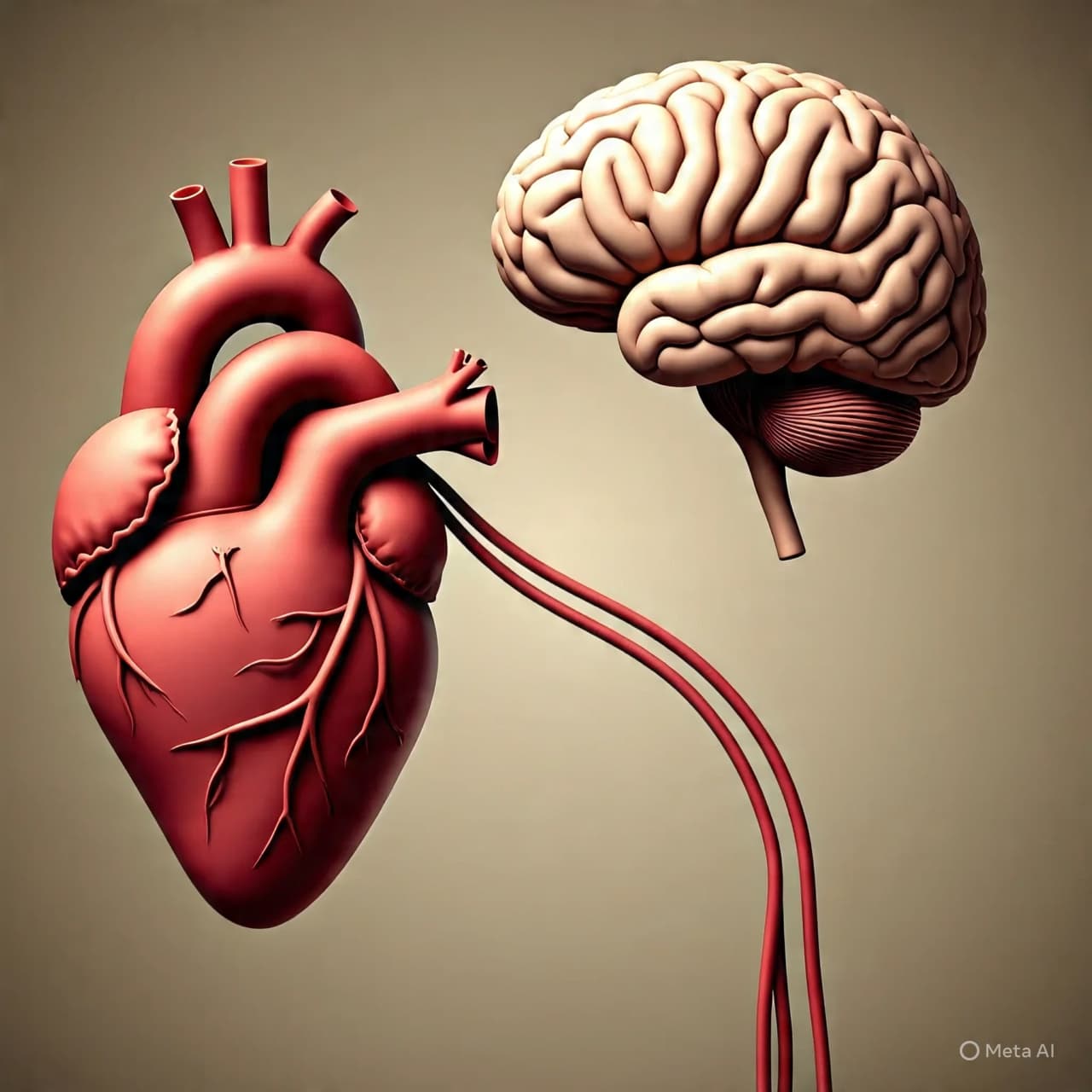
For decades, the heart has been studied largely on its own terms: how arteries deliver blood, how muscle fibers contract, how electrical signals pace each beat. But a growing body of work suggests that the heart does far more than pump; it also “talks” to the brain through a network of nerves and immune signals that, in turn, influence recovery and inflammation.
In the most recent studies, researchers focused on a specific subset of sensory neurons — tiny messengers that carry information from the heart to regions deep within the brain such as the hypothalamus, an area known for regulating everything from hunger to stress responses. In lab animals, when these neurons were suppressed, the heart’s ability to pump improved and the inflammation commonly associated with heart damage decreased. This surprising outcome hints at a much more dynamic conversation between heart and brain than previously appreciated.
This “heart-brain-immune loop,” as some scientists describe it, challenges the traditional idea that a heart attack is a purely local event confined to the heart alone. Instead, the heart’s distress signals engage neural circuits that loop through the brain and back again, ultimately influencing the immune response and tissue healing.
What makes these findings especially compelling isn’t just a technical advance — it’s the shift in perspective they signal. For generations, clinical care for heart attack patients has focused primarily on the blocked artery and restoring blood flow. Yet these new insights underscore that recovery involves an integrated biological system where the nervous and immune networks matter almost as much as the heart’s own muscle.
Of course, much of this work remains at the laboratory stage, and translating discoveries in mice to human medicine takes years. Still, the research opens doors to innovative therapeutic possibilities: tools that might one day modulate neural signals to improve healing or reduce inflammation after a cardiac event. Some experts even see links to existing technologies, such as vagus nerve stimulators, which are already used to treat autoimmune disorders, suggesting a future where neuro-cardiac therapies could complement conventional care.
In the broader scientific landscape, the excitement is palpable. Researchers who once worked in isolated “silos” — cardiology, neuroscience, immunology — now find themselves collaborating across disciplines, weaving a richer picture of how organs communicate and heal. As one scientist put it, this exploration isn’t just about the heart or the brain alone; it’s about understanding the language of life’s interconnected systems.
In the end, these discoveries remind us that our bodies are not a collection of separate parts, but an ensemble of interwoven networks. And just as conversations shape human relationships, the biological dialogue between the heart and the brain may hold keys to healing that we are only beginning to understand.
AI Image Disclaimer Visuals are created with AI tools and are not real photographs.
Sources (Credible Reporting)
• NPR affiliate coverage of the heart-brain research
• EurekAlert! research release on heart-brain-immune communication
• WUSF/WXXI NPR reporting on the study
Published by Banx Network. This article is part of the Banx decentralized media programme, powered by the BXE token on the XRP Ledger.