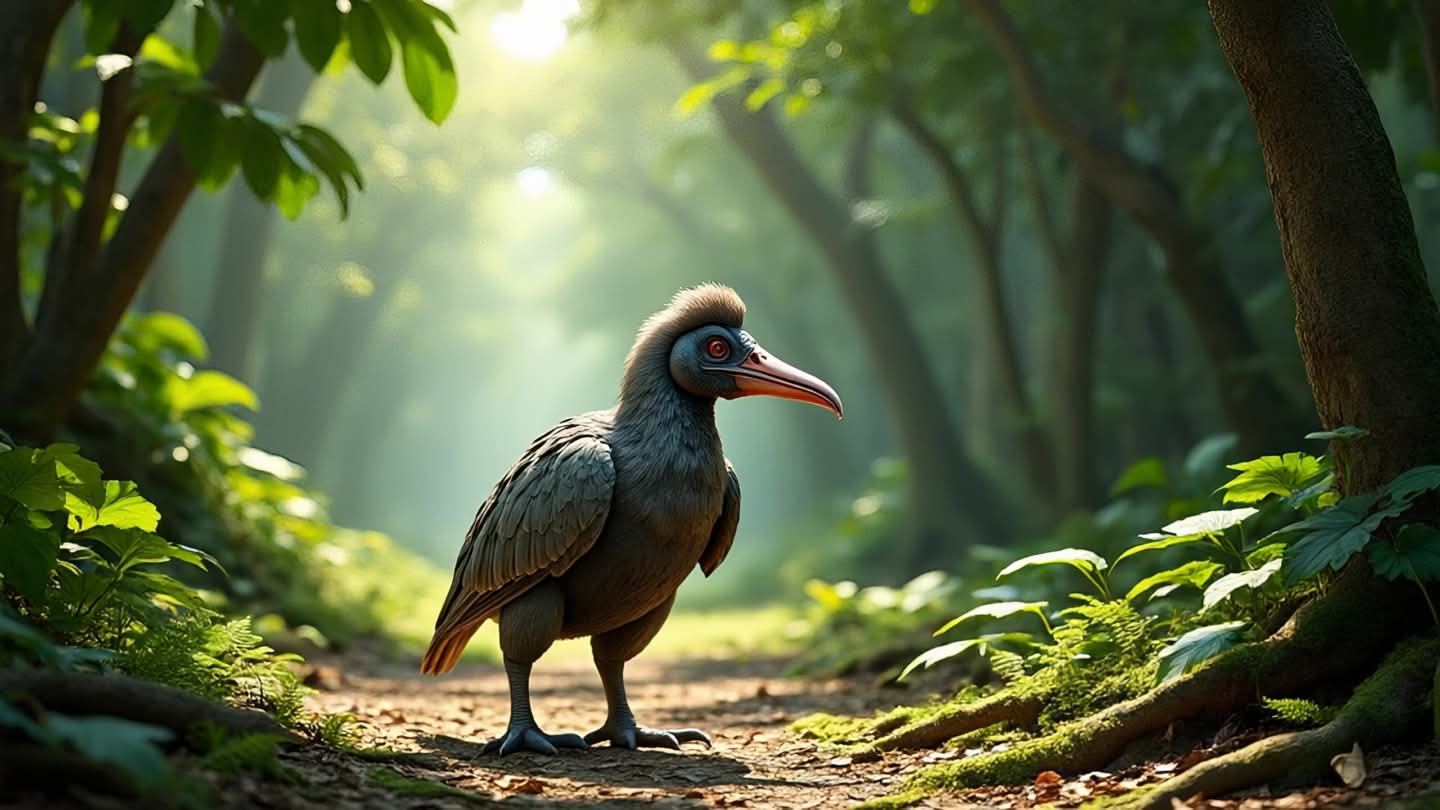
The dodo bird has long been a symbol of foolishness, its name synonymous with extinction and incompetence. Yet, new research suggests that this reputation is undeserved, revealing that the dodo was likely as intelligent as modern pigeons. This discovery invites reflection on how historical narratives can distort our understanding of nature and the importance of scientific revision. It is a moment where prejudice gives way to evidence, and a misunderstood creature finds its dignity restored.
Scientists used CT scans to analyze the brain case of a dodo specimen, comparing its brain-to-body size ratio with that of living relatives. The results showed that the dodo had a proportional brain size similar to pigeons, which are known for their cognitive abilities. Size indicates potential. Structure suggests function.
The study also revealed larger than expected olfactory bulbs, suggesting that the dodo had a keen sense of smell. This adaptation would have been useful for finding food in the dense forests of Mauritius, its native habitat. Smell guides survival. Adaptation defines success.
The myth of the dodo’s stupidity likely arose from its lack of fear toward humans, a trait common in island species that evolved without predators. This naivety, rather than low intelligence, led to its rapid extinction after human arrival. Trust is not stupidity. Innocence is not ignorance.
For historians and biologists, this finding underscores the need to reevaluate other extinct species with similar reputations. Many animals may have been misjudged due to limited fossil evidence or cultural bias. Perspective changes perception. Evidence corrects error.
As we learn more about the dodo, we gain a deeper appreciation for the diversity of life that has been lost. Restoring its intelligence restores its place in the natural world. Respect honors memory. Truth heals history.
New research using CT scans shows that the dodo bird had a brain size comparable to pigeons, challenging the long-held belief that it was unintelligent. The study highlights the role of naivety rather than stupidity in its extinction. The hope is for a revised understanding of the dodo and other extinct species.
AI Image Disclaimer: The images provided are AI-generated to visually represent the paleontological and biological aspects of the story.
Sources: Zoological Journal of the Linnean Society The Conversation New York Post
Published by Banx Network. This article is part of the Banx decentralized media programme, powered by the BXE token on the XRP Ledger.