Political campaigns are often described as battles of ideas, yet in the heat of election season, the language can sometimes shift from debate to denunciation. In Michigan, the Senate race has become a focal point of national attention, drawing in high-profile voices from across the political spectrum. Recent remarks by Senator JD Vance, who labeled his opponent’s ally or counterpart Dr. Abdul El-Sayed as "evil," have intensified the rhetorical temperature. This choice of words invites reflection on the nature of political discourse and the impact of such stark characterizations on public dialogue.
The comment was made during a campaign event where Vice Presidential candidate JD Vance sought to draw a sharp contrast between the Republican vision and the Democratic platform. By using the term "evil," Vance aimed to frame the opposition not just as incorrect, but as morally fundamentally flawed. Such language is designed to mobilize base voters by appealing to deep-seated values and fears, a strategy that has become increasingly common in polarized political environments.
Dr. Abdul El-Sayed, a former health official and prominent progressive voice, has been a key surrogate for the Democratic campaign in Michigan. His background in public health and his advocacy for marginalized communities have made him a significant figure in the state’s political landscape. For his supporters, Vance’s remarks are seen as an unfair personal attack that distracts from substantive policy discussions. They argue that demonizing opponents undermines the democratic process.
Supporters of Vance, however, view the rhetoric as a necessary clarification of stakes. They believe that certain policies promoted by the left pose existential threats to traditional values and economic stability. From this perspective, strong language is not merely an insult but a truthful assessment of the consequences of opposing ideologies. It reflects a belief that politics is a moral struggle as much as a procedural one.
The reaction in Michigan has been mixed. Some voters appreciate the clarity and passion of the statement, feeling that it validates their concerns. Others, including independents and moderates, express discomfort with the intensity of the language. They worry that such rhetoric deepens divisions and makes bipartisan cooperation more difficult, both locally and nationally. Political analysts note that while inflammatory language energizes the base, it may alienate swing voters who prefer civility.
This incident also highlights the role of national figures in local races. The presence of a vice presidential candidate brings media attention and resources to the state, but it also imports national cultural wars into local contexts. For Michigan voters, the challenge is to discern how these broader narratives align with their specific community needs and priorities.
Campaign strategists on both sides are closely watching the fallout. The Democratic campaign is likely to use the comment to portray Republicans as extreme or out of touch, while Republicans will double down on the moral framing. The coming weeks will test which narrative resonates more strongly with the electorate as voting day approaches.
Ultimately, the exchange serves as a reminder of the power of words in shaping political reality. Language can build bridges or burn them. As the race continues, the question remains whether the discourse will evolve toward policy substance or remain entrenched in moral absolutism.
JD Vance’s characterization of Abdul El-Sayed as "evil" has heightened the intensity of the Michigan Senate race. While the remark energizes some voters, it raises questions about the tone of political debate. As the election nears, the focus will be on how such rhetoric influences voter sentiment and the broader democratic dialogue.
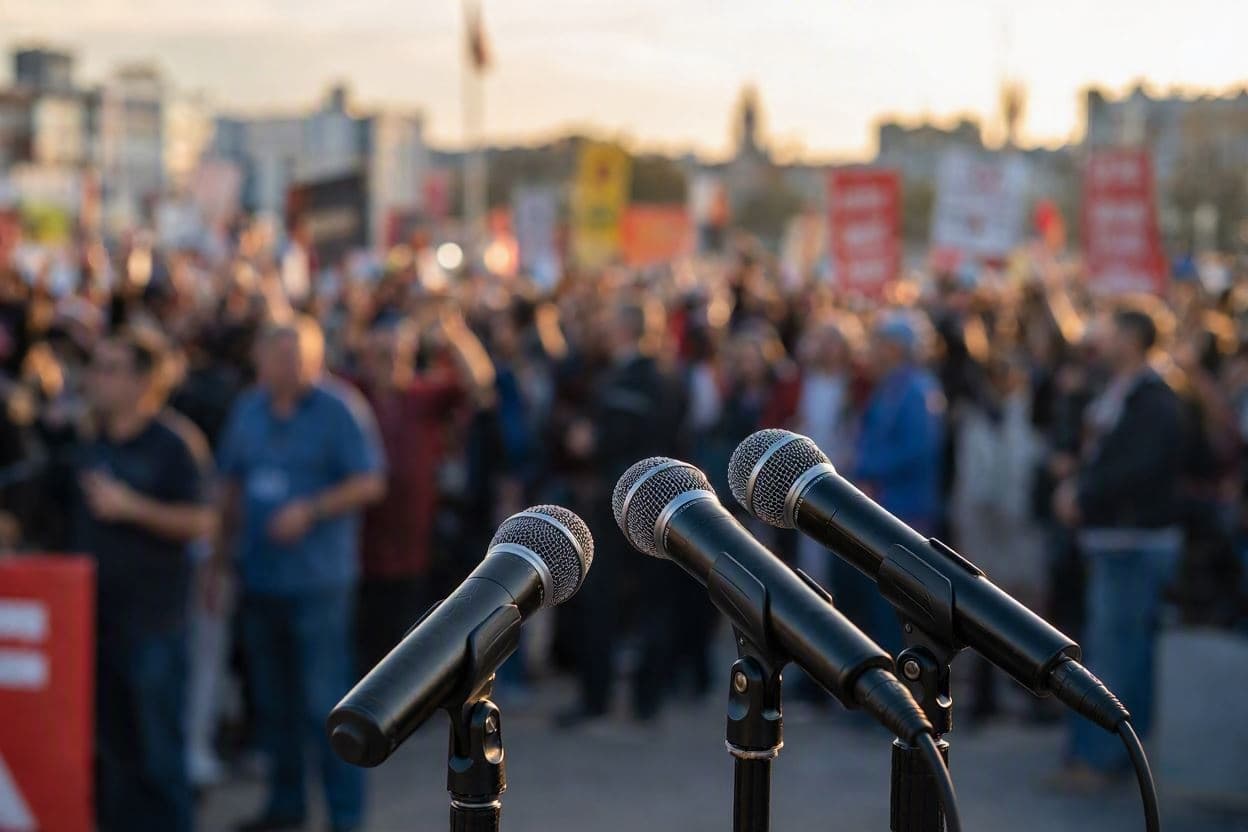
AI Image Disclaimer: The visual representations accompanying this article are AI-generated interpretations designed to symbolize political discourse and campaign dynamics, using abstract imagery of podiums and diverse crowds.
Sources: Detroit Free Press Politico The Hill
Published by Banx Network. This article is part of the Banx decentralized media programme, powered by the BXE token on the XRP Ledger.
.jpg&w=3840&q=75 "Trump Calls Latest US Attack on Iran “Justified” and Threatens Bigger Strikes")