The dawn over a quiet reef is often a stillness that belies a hidden complexity — a mosaic of colour, life, and unseen currents that shape whole ecosystems. In such waters, the cadence of science and the rhythm of nature have long danced together, sometimes in harmony, sometimes in challenge. Now, a new kind of partner has joined this dance: an autonomous vessel, slender and steadfast, moving with quiet purpose across the mirror of the sea, gathering insights that human eyes alone could scarcely collect.
At the heart of this evolution is the Australian Institute of Marine Science (AIMS), an institution with decades of experience in understanding coastal and tropical marine environments. As pressures on reefs and coastal waters grow — from changing temperatures to shifting ecosystems — the sheer scale of monitoring required can overwhelm traditional methods. In response, AIMS has embraced a new generation of autonomous surface vehicles (ASVs) — robotic boats that glide above reefs, map depths, and collect data with precision and patience.
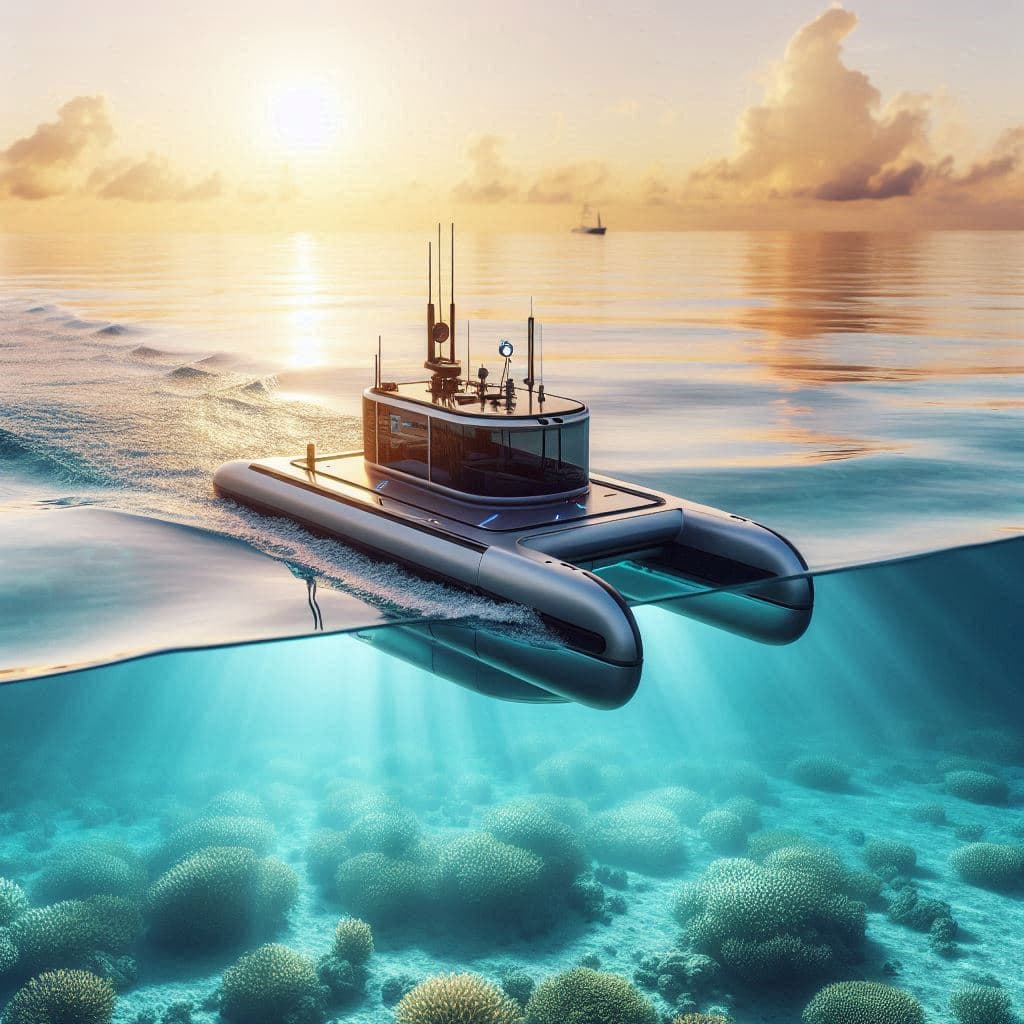
Among these robotic partners is the purpose-built ReefCat, a compact, 3-meter autonomous catamaran that behaves like an extra hand in the sea. Designed in collaboration with engineers from Pipar Automation, ReefCat carries an array of scientific instruments — cameras, sonar, and environmental sensors — and can operate for extended periods, day or night. In missions off Cairns, ReefCat surveyed dozens of reef sites, sending images and measurements back to shore where machine learning models helped scientists identify optimal locations for coral seeding with remarkable accuracy.
The poetry of this work is that it is not merely about machines replacing people, but about machines enabling people to do more of what matters most: to understand, to observe, and to care. When an ASV undertakes a methodical “mow-the-lawn” pattern over a reef, it’s not sterile automation it brings — it is an extension of the quiet curiosity that drives marine science. With the data it gathers, researchers can better track water quality, coral health, and emerging threats like bleaching events or predator outbreaks, at a scale and speed previously out of reach.
For many scientists, the relationship between human intuition and robotic efficiency is not adversarial but collaborative. AIMS engineers have described how deploying ASVs alongside diving teams broadens the scope of field work, freeing human researchers from routine data collection to focus on deeper interpretation and strategy. In this sense, the vessel becomes a partner — an observant companion charting the movements of currents while human minds shape the questions that drive discovery.
This shift is part of a broader vision: to build a layered marine monitoring system that integrates observations made underwater, from the surface, from the air, and even from space. As AIMS and its collaborators refine this network of tools, they unlock the ability to see more of the oceans’ subtleties and respond with knowledge rather than guesswork. In a world where coastal ecosystems are both fragile and vital, the measured progress of autonomous vessels offers a hopeful cadence — one defined not by haste but by attentive observation and careful stewardship.
In the gentle rise and fall of the tides, the interplay of human and autonomous intelligence now weaves another layer into the tapestry of marine science — quiet, precise, and profoundly curious.
AI Image Disclaimer (Rotated) “Visuals are created with AI tools and are not real photographs.”
Source EcoMagazine Australian Institute of Marine Science (AIMS) official news The National Tribune AIMS ReefScan technology overview Marine Technology News / ASV autonomous platform history
Published by Banx Network. This article is part of the Banx decentralized media programme, powered by the BXE token on the XRP Ledger.