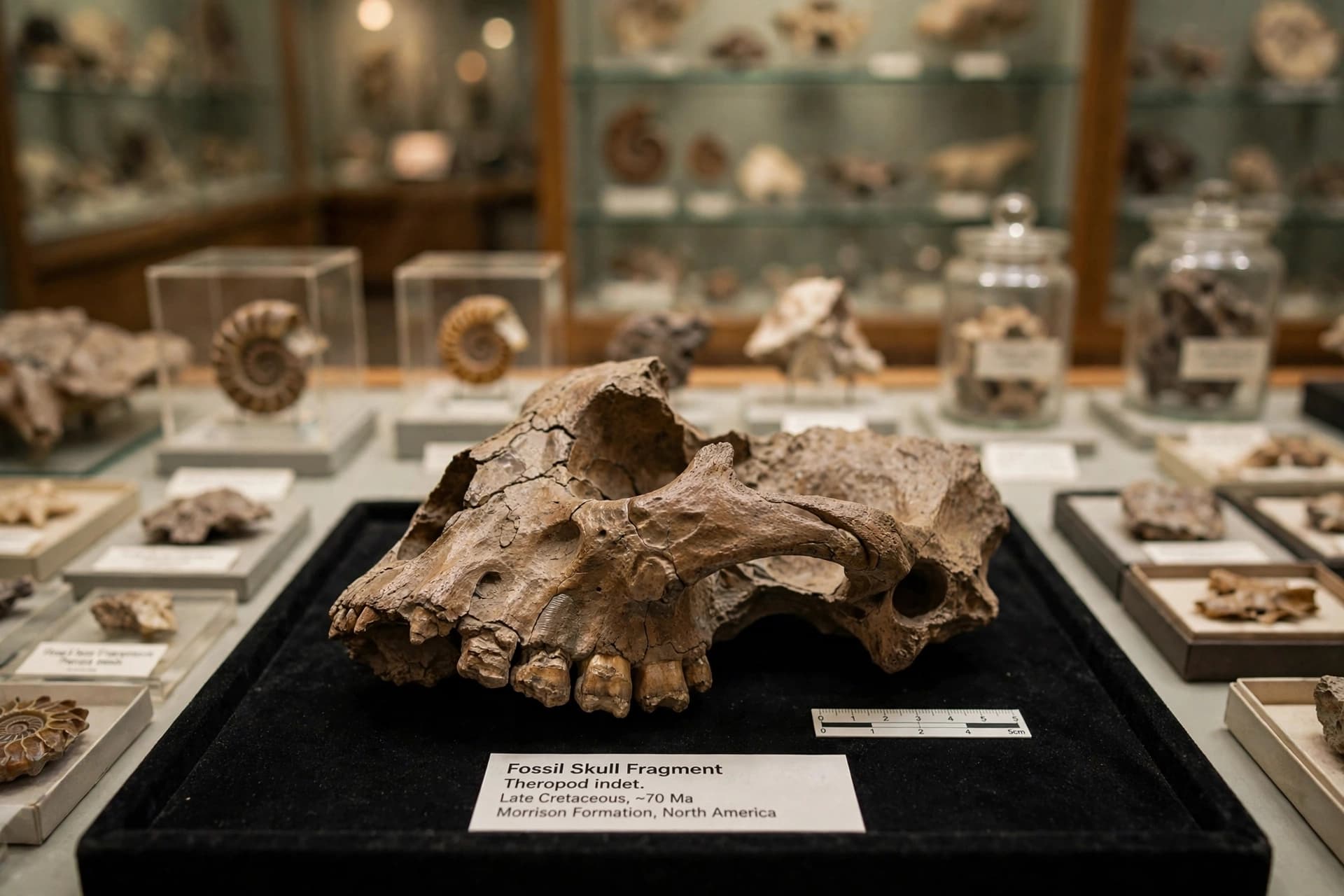
There are moments when the past does not simply remain behind us, but rises gently into view, as if the earth itself has chosen to remember aloud. Fossils, in their quiet stillness, carry a kind of patience—waiting beneath layers of time until chance, curiosity, and careful hands bring them back into conversation. And sometimes, when they do, they arrive not where we expect them, but where our understanding has yet to reach.
In parts of Africa long associated with early primate evolution, researchers have uncovered fossils of an ape dating back approximately 18 million years. Such discoveries are not uncommon in a continent often described as a cradle of early life. Yet what has drawn particular attention is not only the age of these remains, but their location—an environment that had not previously been considered a likely habitat for apes of that period.
Traditionally, fossil evidence has suggested that early apes thrived in dense, forested regions, where trees provided both food and shelter. These environments, rich in vegetation, offered the conditions thought necessary for their survival and development. The newly discovered fossils, however, were found in a setting that appears to have been more open, possibly resembling woodland or even semi-arid landscapes.
This shift in context invites a reconsideration of long-held assumptions. If early apes were present in such environments, it suggests a degree of adaptability that may not have been fully appreciated. Rather than being confined to specific ecological niches, they may have been capable of navigating a broader range of conditions—adjusting their behavior and diet in response to changing surroundings.
The fossils themselves, though fragmentary, provide valuable clues. Teeth and bone structures can reveal aspects of diet, movement, and evolutionary relationships. By analyzing these features, scientists can begin to place the newly discovered ape within the broader family tree of primates, exploring how it may be connected to other known species.
There is also a deeper narrative unfolding within this discovery. The landscapes of ancient Africa were not static; they shifted over millions of years, influenced by climate changes, tectonic activity, and evolving ecosystems. Forests expanded and receded, giving way at times to more open terrain. In this context, the presence of apes in unexpected locations may reflect not an anomaly, but a response to these gradual transformations.
For researchers, such findings serve as both answers and questions. They offer evidence that can refine existing models of evolution, while also opening new lines of inquiry. How widespread were these adaptable apes? What strategies allowed them to survive in less densely forested environments? And how might these traits have influenced the later evolution of primates, including early human ancestors?
The process of interpreting these fossils is careful and ongoing. Each fragment must be examined, compared, and contextualized within a broader scientific framework. Collaboration across disciplines—paleontology, geology, and environmental science—helps to build a more complete picture of the past.
There is a quiet humility in this work. Even as new discoveries emerge, they often remind us of how much remains unknown. The story of evolution is not a fixed narrative, but a mosaic assembled piece by piece, each addition subtly altering the overall image.
In recent reports, researchers have indicated that further analysis of the site and surrounding areas is planned, with the aim of uncovering additional fossils and refining the environmental context. While the discovery has already contributed to a growing body of knowledge, it is expected that future findings will provide greater clarity.
AI Image Disclaimer Graphics are AI-generated and intended for representation, not reality.
Source Check (Credible Media & Journals): Nature Science National Geographic BBC News Smithsonian Magazine
Published by Banx Network. This article is part of the Banx decentralized media programme, powered by the BXE token on the XRP Ledger.