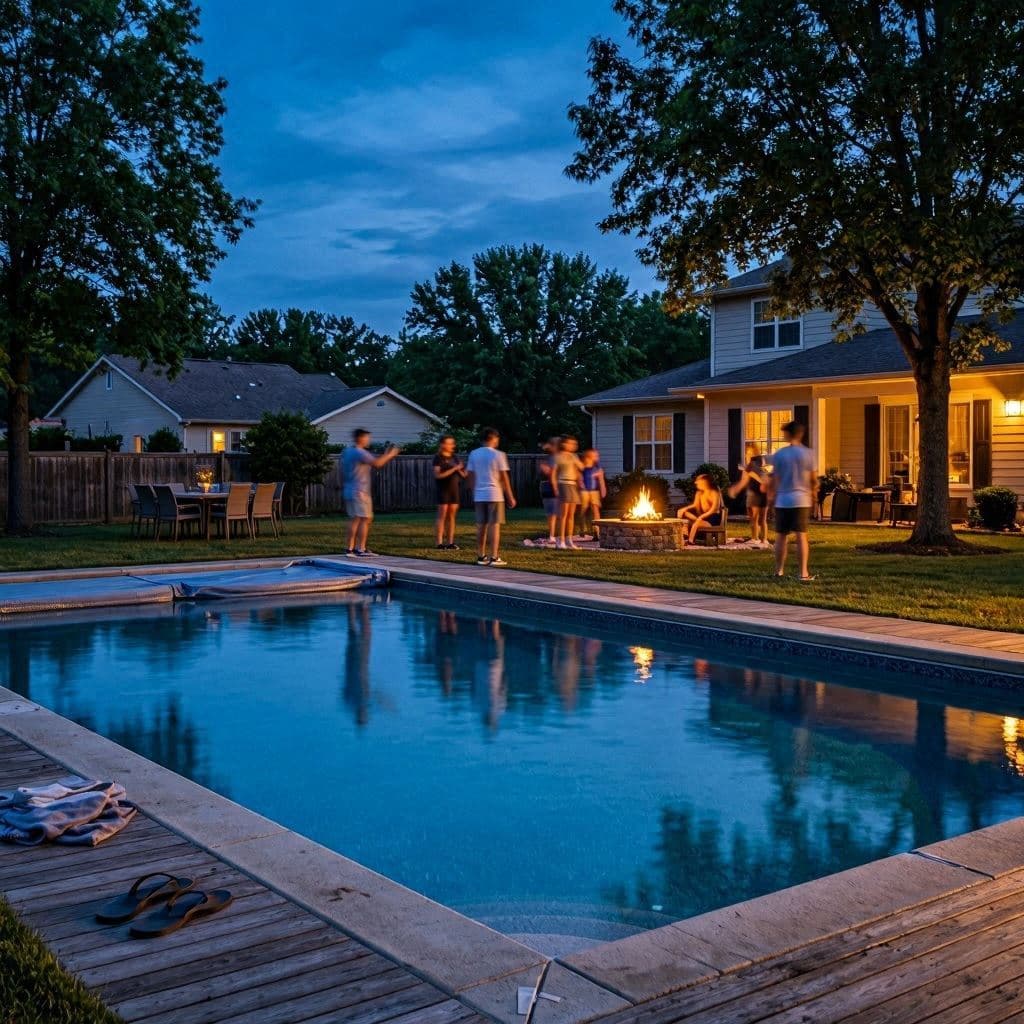
Opening: Summer evenings are often defined by the sound of laughter and the splash of water, symbols of youth and freedom. Yet, in some communities, these sounds have become sources of tension and concern. Residents in a local neighborhood are raising their voices after dozens of teenagers began gathering at private pools, straining the limits of community patience and law enforcement resources. The situation highlights the delicate balance between personal property rights, public safety, and the challenges of monitoring informal social gatherings. It is a moment that invites reflection on how communities navigate the complexities of shared spaces and generational differences.
Body: The issue arose when multiple homeowners reported large groups of teens arriving at their private residences, often invited by one resident but expanding beyond manageable numbers. These gatherings, while seemingly harmless, have led to noise complaints, property damage, and concerns about safety. For neighbors, the sudden influx of strangers into a quiet residential area disrupts the sense of security and tranquility they value. The private nature of the properties complicates the response, as law enforcement’s ability to intervene is limited without clear violations of law.
Local police have acknowledged the difficulty of enforcing regulations in such scenarios. Without explicit trespassing charges or evidence of illegal activity, officers often find themselves mediating rather than arresting. This limitation frustrates residents who feel that their concerns are not being adequately addressed. The gap between expectation and reality in law enforcement capabilities has become a focal point of community dialogue, prompting calls for clearer guidelines and stronger municipal support.
Homeowners associations and neighborhood groups are stepping in to fill the void, organizing meetings to discuss solutions. Some propose stricter rules for pool usage, requiring registration of guests or limiting hours. Others suggest increased communication between parents and neighbors to prevent misunderstandings. These grassroots efforts reflect a desire for collective responsibility, recognizing that the behavior of a few can impact the well-being of many.
The role of social media in amplifying these gatherings cannot be ignored. Invitations spread quickly through digital networks, drawing teens from across the region to specific locations. This digital dimension adds a layer of complexity, as traditional community policing methods struggle to keep pace with virtual organization. Residents are calling for education on digital citizenship and responsible hosting, aiming to address the root causes of the overcrowding.
For the teenagers involved, these gatherings are often seen as harmless fun, a way to connect with peers during the summer break. Understanding their perspective is crucial for finding a balanced solution. Community leaders are exploring ways to provide alternative recreational opportunities, such as supervised events at public pools or community centers. By offering positive outlets, the hope is to redirect energy away from private residences and toward inclusive, safe environments.
As the summer progresses, the community remains engaged in finding a sustainable resolution. The dialogue between residents, law enforcement, and local officials continues, driven by a shared desire for peace and safety. The situation serves as a reminder that community harmony requires ongoing effort, communication, and mutual respect among all generations.
Closing: The issue of teen gatherings at private pools underscores the need for collaborative community solutions. While enforcement challenges remain, open dialogue and proactive measures can help restore balance. Residents and authorities alike are committed to ensuring that summer remains a time of joy and safety for everyone.
AI Image Disclaimer: Visuals in this piece are artificially generated and should be viewed as artistic interpretations rather than factual documentation.
Sources: Local News Networks Community Facebook Groups Municipal Police Reports Neighborhood Association Statements
Published by Banx Network. This article is part of the Banx decentralized media programme, powered by the BXE token on the XRP Ledger.