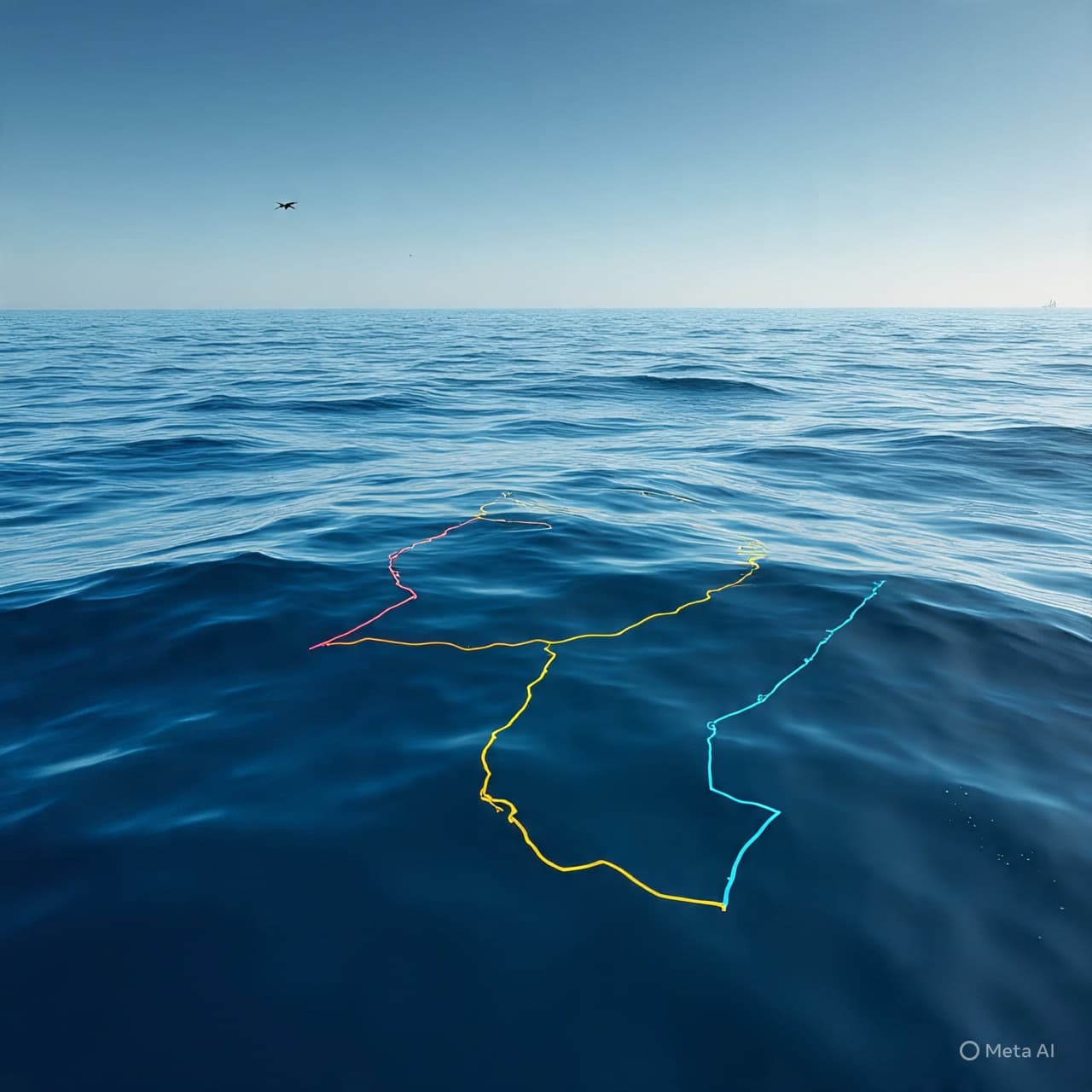
Far from coastlines, where maps lose their detail and the horizon folds into itself, the ocean exists without clear boundary. It moves in long, unbroken rhythms, carrying currents that connect continents without ever settling into a single place. In these waters—beyond the reach of any one nation—life continues largely unseen, shaped by forces that rarely enter public conversation.
It is here, in this vast and unclaimed expanse, that a new kind of attention has begun to gather.
Australia has taken steps toward aligning its national framework with the United Nations High Seas Treaty, an agreement designed to protect marine biodiversity in areas beyond national jurisdiction. The treaty, often referred to as BBNJ, represents a coordinated global effort to establish rules for conservation, sustainable use, and environmental oversight in international waters.
The process, however, is still unfolding. While Australia has formally signed the treaty and signaled its intention to ratify it, the passage of domestic legislation required to fully implement its provisions remains in progress. Government agencies have begun consultations and preparatory work to ensure that national law can support the treaty’s objectives once ratification is complete.
The treaty itself marks a significant shift in how the high seas are understood. For much of modern history, these waters have been governed by a patchwork of regulations, often focused more on resource use than on protection. The BBNJ agreement introduces new mechanisms, including the potential creation of marine protected areas, requirements for environmental impact assessments, and frameworks for sharing benefits derived from marine genetic resources.
Such measures reflect a broader recognition that the ocean’s most remote regions are not separate from the rest of the planet. What happens in these waters—whether in the movement of species, the health of ecosystems, or the balance of climate systems—carries consequences that extend far beyond their immediate boundaries.
For Australia, a nation defined in part by its relationship with the ocean, participation in this framework aligns with existing commitments to marine conservation and environmental stewardship. Yet the process of translating international agreements into domestic law is often deliberate, requiring careful alignment between policy, science, and governance.
This gradual progression mirrors the nature of the ocean itself. Change does not arrive all at once; it moves through layers, shaped by time and interaction. Agreements are drafted, refined, and adopted, each step bringing the abstract closer to something that can be enacted.
There is a quiet significance in this stage of the process. It is not yet the moment of completion, but one of preparation—a space where intention begins to take form within the structures that will eventually carry it forward.
Beyond the shoreline, the ocean remains as it has always been: vast, interconnected, and largely unseen. Yet the way it is regarded is beginning to shift, as nations move, slowly and collectively, toward a more defined sense of responsibility.
Australia has signed the United Nations High Seas Treaty and is progressing toward ratification. Domestic legislation required to implement the treaty’s provisions is under development, and no law has yet been formally passed.
AI Image Disclaimer
Images are AI-generated to illustrate concepts and do not depict real-world events or locations.
Sources:
Reuters The Guardian Australia ABC News Australia United Nations Australian Department of Climate Change, Energy, the Environment and Water
Published by Banx Network. This article is part of the Banx decentralized media programme, powered by the BXE token on the XRP Ledger.