The universe often reveals its greatest wonders not in a single moment, but through years of patient observation. Every new image captured by a space telescope represents countless hours of engineering, scientific planning, and careful analysis. Beyond their visual beauty, these images allow researchers to explore regions of space that have remained hidden from view, gradually expanding humanity's understanding of how stars and galaxies evolve across cosmic time.
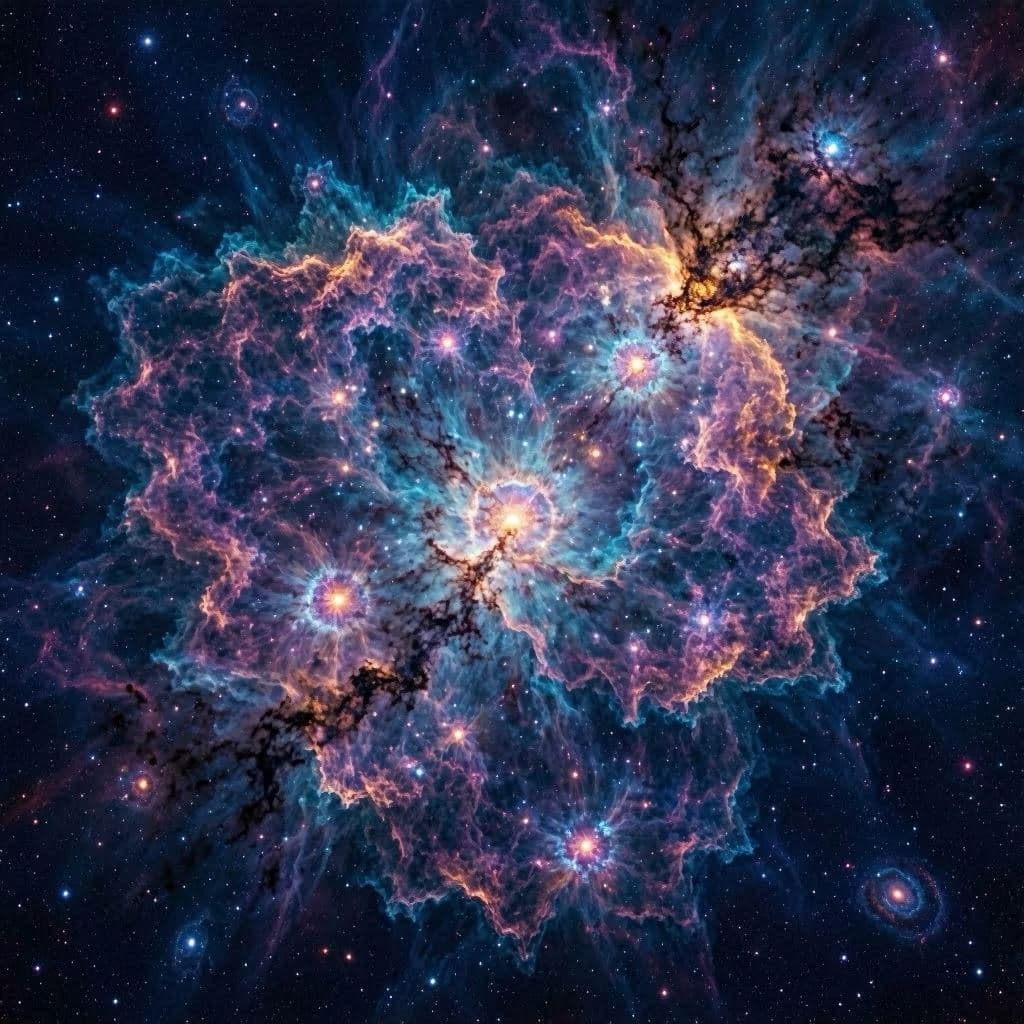
NASA has released a new collection of high-resolution images revealing previously unseen structures within a distant nebula. The observations were made using advanced space-based instruments capable of detecting wavelengths of light beyond the range of human vision. According to the agency, the newly processed images provide astronomers with valuable information about the complex clouds of gas and dust where stars are born and continue to evolve.
Researchers explained that the hidden structures became visible through infrared observations, which allow telescopes to peer through dense clouds of interstellar dust that normally obscure internal features. The images reveal intricate filaments, cavities, and regions of active star formation, offering scientists a more detailed look at the dynamic processes occurring inside the nebula. These observations help researchers better understand how stellar nurseries develop over millions of years.
Nebulae are enormous clouds composed primarily of hydrogen, helium, and microscopic dust particles. Within these vast regions, gravity gradually causes gas and dust to collapse into dense pockets where new stars begin to form. As young stars emerge, their intense radiation and stellar winds reshape the surrounding material, creating the striking patterns and colorful structures often seen in astronomical imagery.
Scientists note that studying the internal structure of nebulae provides important clues about the life cycle of stars. By examining how gas moves, cools, and condenses, astronomers can improve computer models describing stellar evolution and the formation of planetary systems. Every new observation contributes additional data that refine existing theories about the physical processes governing the universe.
The latest images also demonstrate the remarkable capabilities of modern space observatories. Advanced infrared instruments can detect faint emissions from objects located thousands of light-years away while capturing extraordinary levels of detail. Continued improvements in telescope technology are allowing researchers to investigate increasingly distant and complex regions of space that were once beyond observational reach.
International scientific teams are expected to continue analyzing the newly released data over the coming months. Researchers from universities and space agencies around the world will compare the observations with previous surveys to identify additional features, measure gas composition, and investigate how the nebula has changed over time. Collaborative research remains essential for maximizing the scientific value of these observations.
NASA's latest images remind both scientists and the public that the universe remains filled with remarkable discoveries waiting to be explored. While each photograph captures only a small portion of the cosmos, together they deepen our understanding of the processes shaping stars, planets, and galaxies. As future missions continue to expand humanity's view of space, every new observation becomes another step toward understanding the vast universe we call home.
AI Image Disclaimer: This illustration was generated using artificial intelligence to visualize an astronomical scene and does not represent the actual NASA imagery described in the article.
Sources (verification check): NASA, European Space Agency (ESA), Reuters, Space.com, Astronomy Magazine
Published by Banx Network. This article is part of the Banx decentralized media programme, powered by the BXE token on the XRP Ledger.